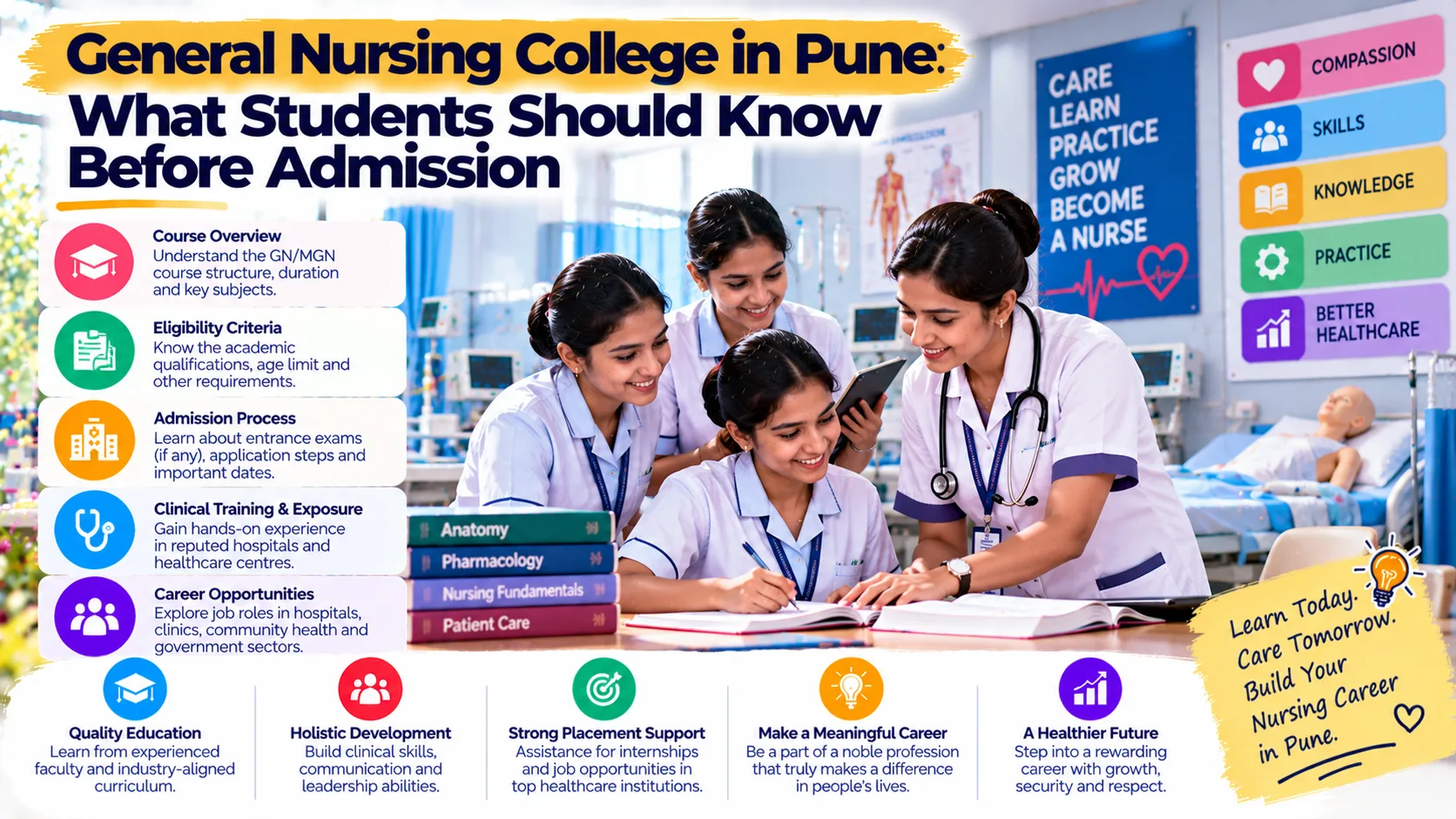
Nursing is a healthcare field that combines scientific knowledge, practical skills and compassionate patient care. Students considering a General Nursing College in Pune should understand the educational requirements, subjects, clinical learning and professional responsibilities involved before applying. Choosing a programme carefully can help students prepare for the demands of nursing education and make decisions that suit their interests and long-term goals.
What Is General Nursing Education?
General nursing education prepares students to understand patient needs, support healthcare teams and follow appropriate nursing procedures. Depending on the programme, students may study human anatomy, physiology, nutrition, infection prevention, basic nursing care, community health and patient communication.
Clinical learning is an important part of nursing education because students need to understand how theoretical concepts apply to patient care. The structure and requirements of clinical training depend on the qualification and applicable educational regulations.
Students should first confirm the exact nursing programme they intend to pursue. Similar course names do not necessarily mean the same qualification, duration or professional eligibility.
What Do Nursing Students Learn?
The syllabus varies according to the programme, but nursing education generally covers a combination of scientific foundations and patient-care practices.
1. Anatomy and Physiology
Students learn about the structure and functions of the human body. This foundation helps them understand health conditions, common symptoms and the purpose of different clinical procedures.
2. Fundamentals of Nursing
This area introduces basic patient-care principles, hygiene, comfort, observation and safe working practices. Students learn the importance of following instructions and respecting each patient's dignity.
3. Nutrition and Health Education
Nutrition plays an important role in general health and recovery. Students may learn about dietary needs, basic nutritional principles and how healthcare professionals communicate health information to patients and families.
4. Infection Prevention
Healthcare environments require careful attention to infection control. Students learn about hand hygiene, protective equipment, cleanliness and safe practices intended to reduce the risk of infection.
5. Community Health
Depending on the programme, students may study health education, disease prevention and community-based healthcare. These subjects help explain how health services support individuals and communities beyond hospital settings.
6. Communication and Documentation
Clear communication helps nursing teams share information and coordinate care. Accurate documentation is also important because patient information must be recorded and communicated according to professional requirements.
Why Clinical Training Matters
Classroom teaching provides essential knowledge, but nursing students also need suitable practical learning opportunities. Clinical training helps them understand patient interaction, observation, communication and healthcare procedures in supervised settings.
Before admission, ask the institution how clinical training is organised and how it relates to the programme's curriculum. Confirm the training requirements, assessment methods and applicable arrangements rather than relying on general claims.
Students should also understand that practical responsibilities increase according to training, competence and authorised supervision. Patient safety and professional conduct remain essential throughout nursing education.
How to Check Eligibility Before Applying
Eligibility depends on the exact qualification, institution and applicable nursing education requirements. Students should not assume that every nursing course has identical entry conditions.
Confirm the following details before applying:
- Minimum educational qualification
- Required school subjects, if applicable
- Minimum marks or other academic criteria
- Age requirements, where applicable
- Admission process and selection criteria
- Documents needed for registration
- Course duration and examination requirements
Ask the institution to provide current, official admission information. If you are uncertain about your eligibility, share your educational background with the admissions team and request confirmation before paying fees.
How to Select a Suitable Nursing College
Choosing a college involves more than comparing locations or advertised fees. Students should assess the programme, educational environment and credentials associated with the qualification.
Verify the Qualification and Approval
Check the exact name of the programme and the applicable recognition, affiliation or approval. Nursing qualifications may be subject to specific regulatory requirements, so verify the details with the relevant official authority.
Review the Curriculum
Request the syllabus and check the theoretical subjects, practical components, assessment structure and clinical training requirements.
Understand the Training Arrangements
Ask how practical and clinical learning is organised. Confirm which facilities and supervised learning opportunities are included in the programme.
Compare the Complete Fees
Request an itemised fee structure covering tuition and any additional charges. Ask whether examination, uniform, learning material or other costs are separate.
Assess Student Support
Find out how students receive academic guidance and where they can ask questions about practical requirements, examinations and course progression.
Students researching a General Nursing College in Pune should compare the same criteria across institutions. This makes it easier to evaluate programme suitability instead of relying on broad promotional claims.
Skills That Can Help Nursing Students
Nursing education requires commitment, patience and an interest in working with people. Students can develop several useful skills throughout their training.
Communication: Healthcare workers need to share information clearly and respectfully.
Observation: Noticing changes and reporting them appropriately is an important part of patient care.
Organisation: Students must manage coursework, practical sessions and academic responsibilities.
Teamwork: Nursing professionals work with doctors, other nurses and healthcare support staff.
Professional conduct: Confidentiality, respect, punctuality and following established procedures are important in healthcare settings.
These skills develop with learning and practice. Students do not need to be experts before beginning an appropriate programme, but they should be willing to improve continuously.
Career Planning After Nursing Education
Career opportunities depend on the nursing qualification, applicable registration requirements, employer criteria and individual competence. Depending on the programme and eligibility, graduates may pursue suitable nursing roles in hospitals, clinics, community health settings or other healthcare organisations.
Students should check the professional requirements for the role they wish to pursue. Some positions may require registration, additional qualifications or further training. Completing a course alone does not guarantee employment or a specific salary.
It is helpful to review actual job descriptions and understand the requirements before choosing a programme. This can help students connect their educational plans with realistic career goals.
Exploring Healthcare Education at Scope College
Scope College offers paramedical education options for students exploring healthcare-related career pathways. Students interested in nursing should verify the specific nursing programme available, its eligibility, current intake details and applicable credentials directly with the institution.
Visit scopecollege.co.in to explore available programmes and request current information before making an admission decision.
Conclusion
Nursing education requires a combination of theoretical understanding, practical learning and professional responsibility. Before selecting a programme, review the syllabus, eligibility requirements, clinical training arrangements, fees and qualification awarded.
Careful research can help you choose a suitable educational pathway and prepare for the responsibilities associated with nursing and patient care.