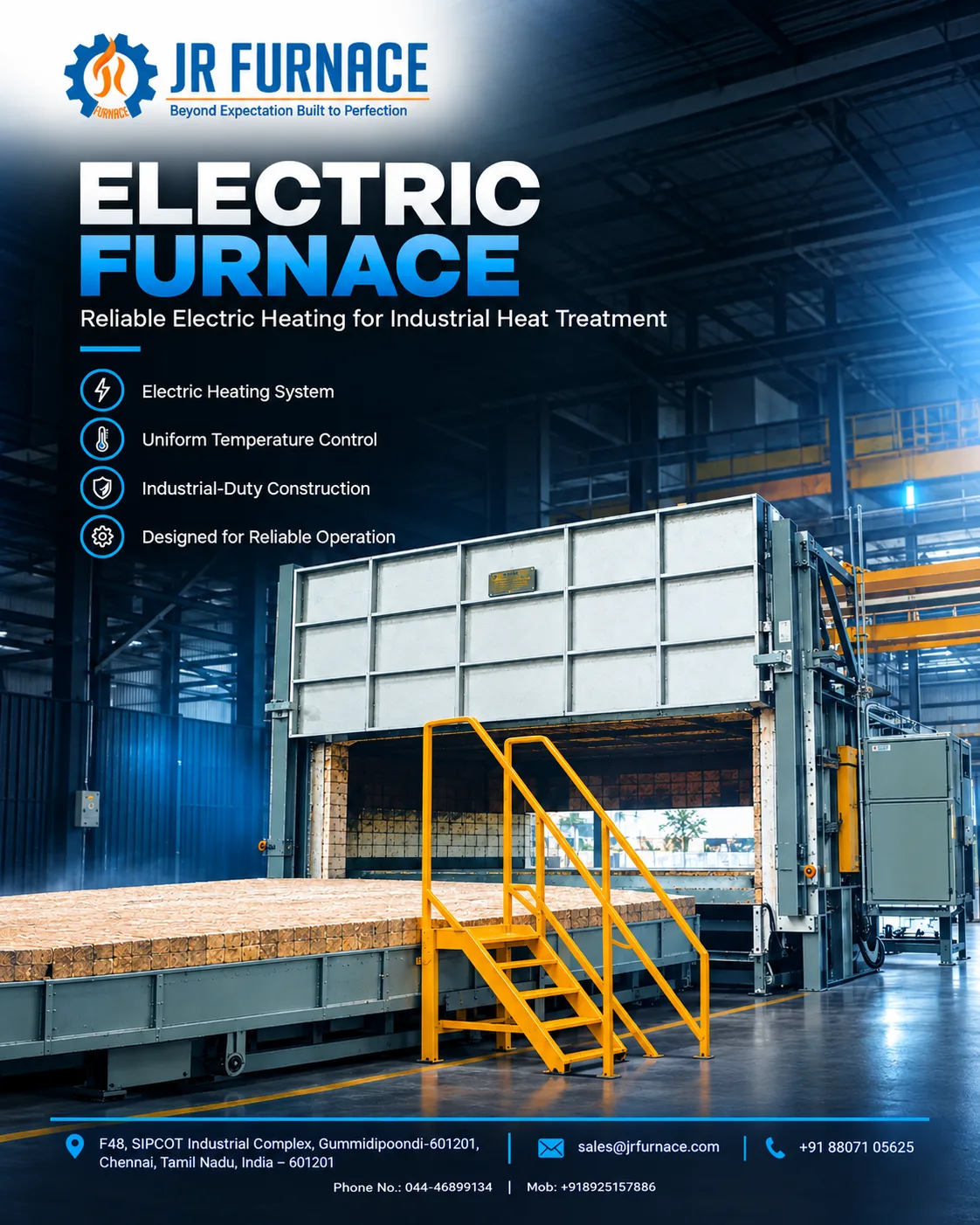
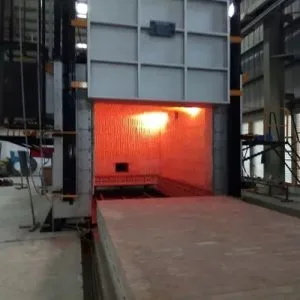
Gas Fired Furnaces for Efficient Industrial Heat Treatment
Industrial heat treatment requires controlled heating, reliable temperature management, and a furnace system that can handle demanding production conditions. For many manufacturing processes, a gas fired furnace provides a practical heating solution by using fuel-fired burners to deliver controlled and efficient heat to the furnace chamber.
These furnaces are used across industries where components need processes such as annealing, stress relieving, hardening, tempering, normalizing, solution annealing, or reheating.
What Is a Gas Fired Furnace?
A gas fired furnace is an industrial heating system that uses gaseous fuel and a controlled combustion system to generate heat. Depending on the furnace design and application, fuels such as LPG or PNG can be used.
The combustion system generally includes burners, combustion fans, gas trains, safety controls, ignition systems, and temperature control equipment. Modern designs can also incorporate automated burner management and monitoring systems to improve operational control.
How Does a Gas Fired Furnace Work?
The basic operation begins with the controlled supply of fuel and combustion air to the burners. The burners generate heat inside the furnace chamber, while the control system regulates the heating cycle according to the required process temperature.
Temperature sensors continuously monitor conditions inside the furnace. The control system can then adjust burner operation to maintain the required temperature during heating and soaking.
Good insulation and appropriate airflow are also important because they help reduce unnecessary heat loss and support more uniform heating throughout the working chamber.
Applications of Gas Fired Furnaces
Gas fired furnace systems can be used for a wide range of industrial thermal processes. Common applications include:
- Annealing of metal components
- Stress relieving after fabrication or welding
- Hardening and tempering
- Normalizing of steel components
- Solution annealing
- Reheating before forming or forging
- Heat treatment of castings and fabricated parts
The furnace configuration can vary according to the component size, batch weight, temperature requirement, and production process.
Important Features to Consider
When selecting an industrial gas fired furnace, manufacturers should consider several technical factors. Working temperature is one of the most important because the furnace heating system must be suitable for the intended process.
Other considerations include furnace capacity, chamber dimensions, burner arrangement, insulation quality, temperature uniformity, fuel type, control automation, loading arrangement, and safety systems.
For heavy industrial applications, furnace construction also needs to accommodate repeated loading and unloading cycles. Depending on the application, chamber, bogie, continuous, and batch furnace configurations can be developed.
Why Furnace Efficiency Matters
Fuel consumption has a direct impact on the operating cost of a thermal processing system. Furnace insulation, burner efficiency, combustion control, heat recovery, and appropriate process settings can all influence energy performance.
Advanced systems may use recuperative or regenerative technologies to recover heat from combustion gases and improve the efficiency of the heating process. The appropriate solution depends on the furnace design, operating temperature, production requirements, and available fuel.
Gas Fired Furnace Solutions from JR Furnace & Ovens
JR Furnace & Ovens (P) Ltd manufactures industrial furnace systems for different heat treatment and thermal processing requirements. The company provides gas fired furnace configurations with features such as automatic ignition, flame monitoring, burner management, temperature control, and PLC-based automation depending on the project requirements.
JR Furnace's published specifications include designs operating up to 1300°C and batch capacities up to 200 MT, with options for gas, oil, or dual-fuel configurations.
For industries looking for Gas Fired Furnace Manufacturers in India, the furnace should be selected according to the actual production process rather than simply comparing heating capacity. Component dimensions, load weight, required temperature, heating cycle, fuel availability, and automation requirements should all be considered before finalizing a system.
Selecting the Right Industrial Furnace
Every heat treatment application has different requirements. A furnace intended for stress relieving large fabricated structures may require a different configuration from one designed for smaller production batches.
Before purchasing a furnace, manufacturers should discuss the complete process with the furnace supplier. Important information includes the material being treated, component dimensions, maximum batch weight, operating temperature, heating and soaking time, required temperature uniformity, fuel type, and production frequency.
A properly engineered furnace can then be configured around the actual manufacturing process.
Conclusion
Gas fired furnaces continue to be an important option for industrial heating and heat treatment applications. With suitable burners, insulation, temperature controls, safety systems, and automation, they can support demanding production environments across several manufacturing sectors.
For companies evaluating a new furnace, focusing on the complete process requirement is essential. A well-designed system should provide the required temperature control, heating capacity, safety, and operational efficiency while matching the specific needs of the production facility.