Game-A-Thon Franchise Opportunities: A New Gaming Business Concept
The entertainment industry is changing with the growth of technology and digital experiences. Gaming has become a popular activity for people of different age groups, especially teenagers, college students, young professionals, and gaming enthusiasts. Along with playing games at home, many people are interested in visiting gaming centres where they can enjoy advanced systems and play with friends.
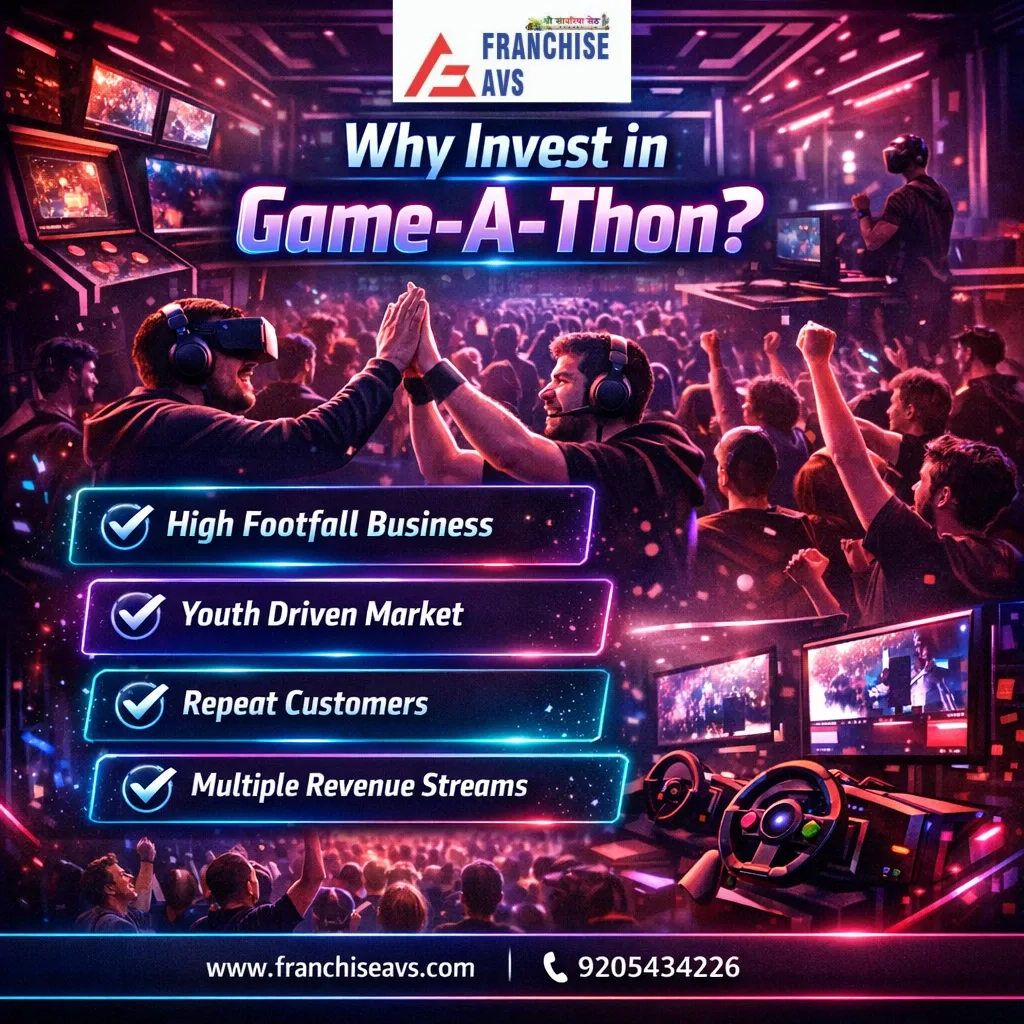
A Game-A-Thon Franchise offers a dedicated gaming arena concept that combines technology, competition, and social entertainment. The concept is designed to provide customers with several gaming experiences in one location.
The Growing Role of Gaming in Entertainment
Gaming has developed into more than a hobby. Multiplayer games, esports competitions, virtual reality, and advanced gaming systems have created new forms of entertainment.
Physical gaming centres can give customers an opportunity to enjoy these experiences in a shared environment. Friends can meet, play together, participate in competitions, and spend time in a dedicated gaming space.
This makes gaming arenas an interesting concept for entrepreneurs who want to explore a business connected with technology and entertainment.
What Game-A-Thon Can Offer
A gaming arena needs variety to appeal to different types of players. The Game-A-Thon concept includes several gaming options that can provide customers with different experiences.
These include:
- PC gaming
- Console gaming
- Virtual reality zones
- Racing simulators
- Multiplayer gaming stations
- Team competitions
- Gaming tournaments
These facilities can help create an environment where customers can choose activities according to their interests.
The Game-A-Thon Franchise focuses on bringing these gaming experiences together under one dedicated entertainment concept.
Creating a Social Gaming Environment
One of the key differences between home gaming and a physical gaming arena is the social experience. Customers can meet their friends, challenge other players, form teams, and participate in gaming events.
Regular competitions can help build a community around the venue. For example, a gaming centre can organise weekend tournaments, team challenges, college competitions, and special gaming events.
A strong gaming community can also encourage customers to return regularly.
Potential Customer Groups
A gaming arena can attract a wide range of customers. Teenagers may visit with friends, while college students may become regular customers through multiplayer gaming and tournaments.
Young professionals can visit during evenings and weekends. Gaming enthusiasts and esports players may be interested in competitive events and advanced gaming equipment.
Families can also be considered as a customer group when the venue provides suitable entertainment activities.
Understanding the local audience can help the franchise owner create relevant packages and promotions.
Different Revenue Possibilities
Gaming sessions can provide the main service, but a gaming arena can also explore additional revenue sources.
Potential options include:
- Hourly gaming sessions
- Membership packages
- Tournament fees
- Private events
- Group bookings
- Food and beverages
- Gaming accessories
- Merchandise
Membership programmes can encourage repeat visits, while group packages can be offered for birthdays, college groups, corporate events, and other gatherings.
Location and Space Requirements
Location is an important factor when developing an entertainment business. Gaming arenas may be considered in malls, high streets, entertainment areas, commercial hubs, and locations near colleges or residential communities.
Accessibility is important because customers need to reach the venue conveniently. Local competition, customer demographics, parking availability, and surrounding businesses can also be evaluated.
The current Franchise AVS listing mentions approximately 25,000 sq. ft. of space for the Game-A-Thon concept and an investment figure of Rs. 4,000 per sq. ft. plus GST. Entrepreneurs should verify the latest investment amount, space requirements, and franchise terms directly before making any decision.
Marketing Strategies for a Gaming Arena
Digital marketing can help a gaming business connect with its target audience. Gaming-related videos and event content can be shared through platforms such as Instagram and YouTube.
Useful content can include:
- Tournament announcements
- Gaming highlights
- Player achievements
- Short gaming clips
- New game updates
- Event photographs
- Special offers
Influencer collaborations can also help attract attention from gaming communities. Local gaming creators can participate in events and introduce the venue to their audiences.
Offline marketing can include college partnerships, local tournaments, referral campaigns, and opening promotions.
Importance of Technology and Maintenance
Gaming equipment is at the centre of the customer experience. Computers, consoles, controllers, VR systems, racing simulators, displays, and internet infrastructure need regular maintenance.
Technology also changes quickly. New games and equipment can become popular, so gaming businesses may need to update their offerings over time.
Proper maintenance can reduce interruptions and help customers enjoy a smoother gaming experience.
Building a Comfortable Gaming Venue
The atmosphere of the venue is another important consideration. Comfortable seating, attractive interiors, organised gaming zones, suitable lighting, and clean facilities can contribute to the overall experience.
Staff should also be trained to assist customers with gaming systems and basic technical issues.
A combination of reliable equipment, a comfortable environment, and helpful service can create a better experience for visitors.
Challenges to Consider Before Starting
A gaming business requires careful planning. Equipment costs, rent, electricity, internet services, staffing, maintenance, upgrades, and marketing can all contribute to operating expenses.
The business may also need to respond to changing gaming trends. Customers can quickly move towards new games and technologies, so the venue needs to understand changing preferences.
Entrepreneurs should research the local market, study competitors, and evaluate customer demand before selecting a location.
Future Scope of Gaming Entertainment
Esports, VR, immersive gaming, and multiplayer entertainment continue to create new possibilities for gaming businesses. Physical gaming arenas can adapt to these developments by adding new activities and organising regular events.
The Game-A-Thon Franchise brings together several gaming formats while focusing on technology, competition, and community entertainment.
The concept can be explored by entrepreneurs interested in building a business within the modern entertainment sector.
Conclusion
Gaming has become an important part of the entertainment landscape, and physical gaming centres can provide customers with experiences that go beyond playing games at home. They can offer advanced technology, multiplayer activities, tournaments, and opportunities for social interaction.
The Game-A-Thon concept combines PC gaming, console gaming, VR, racing simulators, multiplayer gaming, and competitive events.
Entrepreneurs interested in this opportunity should carefully study the franchise model, investment requirements, location, operating costs, competition, and customer demand. Proper planning and effective management can help create a gaming venue that responds to the changing interests of today's entertainment audience.