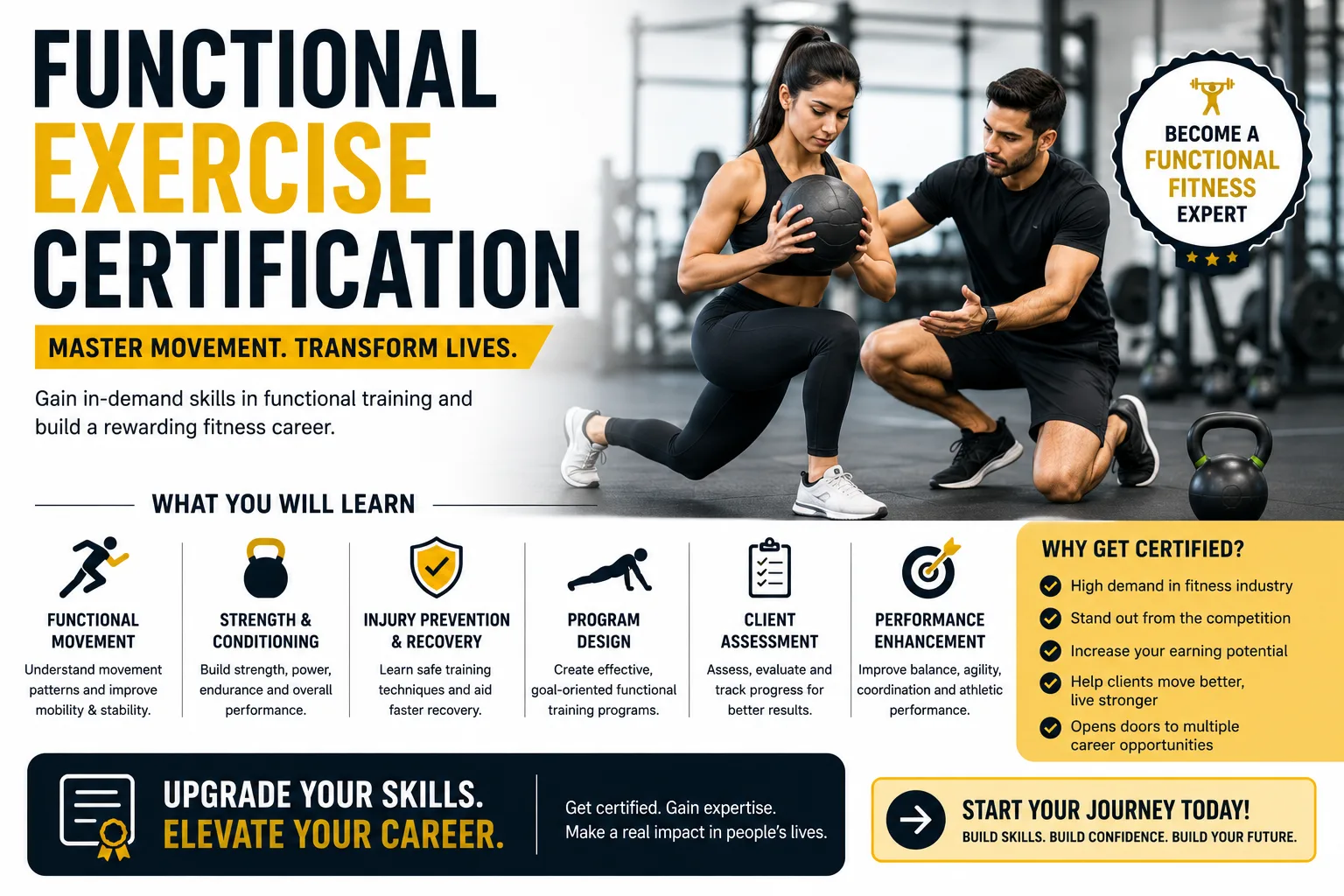
The fitness industry is evolving faster than ever, and today’s clients want more than traditional workouts. They are looking for smarter training methods that improve mobility, balance, strength, flexibility, posture, and overall movement quality. This growing demand has made functional exercise certification one of the most valuable qualifications for aspiring fitness professionals.
Functional training is no longer just a trend—it has become an essential part of modern fitness coaching. From athletes and working professionals to senior citizens and rehabilitation clients, everyone benefits from exercises that improve real-life movement patterns. Trainers who specialize in this area are now in high demand across gyms, fitness studios, wellness centers, and online coaching platforms.
In this article, we’ll explore why a functional exercise certification can transform your fitness career, the skills you’ll learn, career opportunities, and why functional training has become a game-changer in the modern fitness industry.
Why Functional Exercise Certification Is in High Demand
Traditional gym training often focuses on isolated muscle groups, but functional fitness emphasizes movements that mimic real-life activities. This approach helps improve overall body performance while reducing injury risks.
A professional functional exercise certification helps trainers understand:
- Human movement patterns
- Core stability and balance
- Functional strength development
- Mobility and flexibility training
- Injury prevention techniques
- Sports performance enhancement
- Correct posture and movement mechanics
As fitness awareness increases, clients now prefer trainers who can provide scientifically designed and result-oriented functional workouts.
What Is Functional Training?
Functional training is a style of exercise designed to improve everyday physical activities. Instead of training muscles individually, it focuses on movement efficiency, coordination, stability, and strength.
Some common functional exercises include:
- Squats
- Lunges
- Kettlebell training
- Battle rope workouts
- Suspension training
- Medicine ball exercises
- Plyometric movements
- Core stabilization workouts
A trainer with a functional exercise certification learns how to combine these exercises into customized programs based on client goals and fitness levels.
Learn more about professional fitness learning here:
Fitness Training Courses
Benefits of Earning a Functional Exercise Certification
1. Better Career Opportunities
The demand for trainers with functional training certification is growing rapidly. Fitness studios and gyms prefer trainers who can offer specialized training methods rather than standard gym workouts.
Career opportunities include:
- Functional Fitness Trainer
- Personal Trainer
- Strength & Conditioning Coach
- Group Fitness Instructor
- Sports Performance Coach
- Online Fitness Coach
- Rehabilitation Fitness Trainer
Functional training expertise also increases your credibility and professional value in the industry.
2. Learn Advanced Functional Fitness Training
Modern clients expect advanced workout techniques that produce visible results while improving overall health and movement quality.
Through functional fitness training, trainers learn:
- Movement screening techniques
- Exercise modifications
- Dynamic warm-up strategies
- Functional strength programming
- Balance and coordination exercises
- Agility and endurance drills
This knowledge helps trainers design safer and more effective workout programs for different age groups and fitness goals.
Why Clients Prefer Functional Fitness Trainers
Today’s fitness clients are more educated and goal-oriented. They don’t just want bigger muscles—they want pain-free movement, better posture, improved athletic performance, and overall wellness.
Functional training helps clients:
- Improve daily movement efficiency
- Increase flexibility and mobility
- Reduce injury risks
- Enhance athletic performance
- Build practical strength
- Improve body balance and coordination
A certified trainer with expertise in exercise science certification and functional movement can provide better long-term results.
Essential Skills You Learn in a Functional Training Program
A high-quality functional exercise certification program focuses on both theoretical and practical learning.
Core Skills Covered
Functional Movement Assessment
Learn how to analyze posture, mobility limitations, and movement patterns.
Core Stability Training
Understand how to strengthen the core for improved balance and injury prevention.
Strength & Conditioning
Develop performance-focused workout plans for different fitness levels.
Mobility & Flexibility
Learn corrective exercises and stretching techniques for movement improvement.
Client-Specific Program Design
Create customized training plans for fat loss, athletic performance, rehabilitation, and general fitness.
Recovery Strategies
Understand muscle recovery, foam rolling, and active recovery techniques.
These skills help trainers become more confident and versatile fitness professionals.
Explore advanced personal training education here:
Personal Training Certification Programs
The Role of Strength and Conditioning Certification in Functional Fitness
Functional training and strength and conditioning certification often work together to create complete athletic development programs.
Strength and conditioning focuses on:
- Explosive power
- Speed development
- Endurance enhancement
- Athletic performance
- Injury reduction
- Recovery improvement
When combined with functional fitness knowledge, trainers can work with athletes, sports enthusiasts, and advanced-level fitness clients more effectively.
This combination significantly improves career growth opportunities for trainers.
Functional Fitness and the Future of the Fitness Industry
The fitness industry is moving toward smarter and more sustainable workout approaches. Functional fitness is becoming a standard part of modern gym training because it offers practical health benefits for people of all ages.
Current fitness trends include:
- Hybrid functional workouts
- Group functional training
- Mobility-focused fitness
- Sports-specific training
- Functional HIIT workouts
- Online functional coaching programs
Professionals with a functional exercise certification are better prepared for these future industry trends.
Digital Opportunities for Functional Fitness Trainers
Online coaching has created massive opportunities for fitness professionals. Functional training works exceptionally well in online formats because many exercises require minimal equipment.
Online opportunities include:
- Virtual personal training
- Social media fitness coaching
- Online transformation programs
- Functional workout memberships
- YouTube fitness content creation
- Fitness app coaching
Trainers who combine practical skills with digital branding can build a highly profitable fitness career.
How Functional Training Improves Client Retention
Clients stay longer with trainers who deliver noticeable improvements in movement, flexibility, posture, and energy levels.
Functional training creates:
- Faster visible improvements
- Reduced workout boredom
- Better body control
- Improved daily activity performance
- Sustainable fitness habits
This leads to higher client satisfaction and stronger referral-based business growth.
Tips to Succeed as a Functional Fitness Trainer
If you want to build a strong career in functional fitness, focus on these strategies:
Keep Learning Continuously
Fitness science evolves constantly. Upgrade your knowledge regularly.
Practice Hands-On Training
Practical experience improves coaching confidence and exercise execution.
Build Strong Communication Skills
Motivating and educating clients is equally important as workout programming.
Develop Social Media Presence
Share fitness content and transformations to build your professional identity.
Focus on Client Results
Long-term success depends on client satisfaction and visible outcomes.
Explore nutrition-focused fitness learning here:
Fitness Nutrition Courses
Why Structured Education Matters in Functional Fitness
Self-learning from videos and social media can provide basic understanding, but professional education offers structured knowledge and practical exposure.
A proper functional exercise certification program helps trainers:
- Understand exercise science deeply
- Learn safe training methods
- Gain real-world practical experience
- Build coaching confidence
- Improve career opportunities
- Stay updated with industry standards
Professional education creates a strong foundation for long-term growth in the fitness industry.
Conclusion
The demand for functional fitness experts is growing rapidly across the global fitness industry. A professional functional exercise certification equips trainers with advanced knowledge, practical coaching techniques, and industry-relevant skills needed to succeed in modern fitness careers.
From functional fitness training and strength and conditioning certification to exercise science certification and movement-based coaching, functional fitness opens doors to multiple career opportunities. It helps trainers deliver better client results while building a strong professional reputation.
If you want to future-proof your fitness career and stand out in the competitive fitness industry, functional training is one of the smartest specializations you can choose today.
Start building your professional fitness journey here:
Explore Professional Fitness Programs
FAQs About Functional Exercise Certification
1. What is a functional exercise certification?
A functional exercise certification is a professional fitness qualification that teaches trainers how to design movement-based workout programs focused on strength, mobility, balance, and injury prevention.
2. Who should take a functional fitness course?
Aspiring trainers, personal trainers, gym instructors, athletes, and fitness enthusiasts can benefit from functional fitness education.
3. Is functional fitness training good for weight loss?
Yes, functional training improves calorie burning, muscle activation, endurance, and overall body conditioning, making it highly effective for fat loss.
4. What career opportunities are available after certification?
Career options include personal trainer, functional fitness coach, sports conditioning coach, online trainer, and rehabilitation fitness trainer.
5. How does functional training help clients?
Functional training improves movement quality, posture, flexibility, coordination, strength, and injury prevention.
6. Is strength and conditioning certification useful with functional training?
Yes, combining both specializations helps trainers work with athletes and advanced fitness clients more effectively.
7. Can functional trainers work online?
Absolutely. Functional fitness programs can easily be delivered through online coaching platforms and virtual training sessions.