Ever typed “professional website development” into Google and felt your wallet preemptively panic? You’re not alone. Getting a website built isn’t like ordering pizza. There’s no “one large, extra SEO, hold the bugs” option. And if someone says they’ll build your entire site for $199, run. No, seriously, run.
Because a professionally developed website is more than a pretty homepage. It’s architecture, engineering, design, marketing, SEO, analytics, content, and strategy, crammed into one beast of a project. So yes, it can get expensive. But it can also be absolutely worth it, if you know exactly what you’re paying for.
You just need to decode and analyze the costs the right way!
Professional Website Development: The Basics
So, what does professional web development really mean?
Short answer? Everything. Long answer? Everything... done right. A high-functioning website isn’t stitched together with drag-and-drop dreams. It takes a full team of experts to craft a digital presence that actually performs.
Here’s what’s typically included in a professional website development project:
- Competitive analysis, market research, and user persona creation
- Creating wireframes, layouts, and design mockups that look and feel natural to navigate
- Coding the visible parts of your site, what users see and interact with
- Building the server, database, and application logic to make things work behind the scenes
- WordPress, Shopify, Webflow, whatever fits your needs
- Ensuring your site works on any screen, from phones to ultra-wide monitors
- Fast load speed, meta tags, clean code, and search-friendly structures
- SSL certification, HTTPS setup, and protection against attacks
- Moving old content or writing fresh copy
- Browser testing, device testing, bug fixes, and more
- Deployment, monitoring, and maintenance options
Factors That Influence The Cost
Think about the time you were searching for different web development service providers and comparing costs. Different agencies, different packages! Why does one website cost $2K and another $40K? Because cost isn’t about pages. It’s about purpose. The price tag reflects what’s under the hood, not just what you see on the screen. Let’s break down the biggest cost drivers in professional website development:
Complexity Of Features
Booking systems, user logins, dashboards, and multilingual setups sound impressive, and they are. But behind the scenes, they require significant back-end development, security measures, and custom functionality. The more custom logic involved, the more development hours you’re buying.
Number Of Pages
More pages mean more layout variations, more testing, and more content to design and develop. A 5-page brochure site? Quick and simple. A 50-page e-commerce site? That’s architecture, navigation strategy, and content production multiplied tenfold.
Design Requirements
Design is where businesses get ambitious, and rightfully so. But the price difference between a premade template and a fully custom UI/UX mockup is massive. If you’re going for tailored animations, branded experiences, and user-centric journeys, be ready to pay for expert designers and extra development time.
Content Creation
Someone’s got to write the copy, optimize it for search, and ensure it sounds like you. Then come visuals, photos, videos, and illustrations. If your team isn’t providing these, you’ll need content writers, photographers, or designers, and yes, they come with their own fees.
Integrations
Adding tools like CRM systems, payment gateways, email marketing platforms, chat widgets, or shipping APIs isn’t just plug-and-play. Each one needs a custom setup, data syncing, and security testing to make sure they work seamlessly with your site.
Team Location
Labor costs vary globally. A top-tier developer in New York or London may charge $150–$250/hour. A developer with similar skills based in Eastern Europe or Asia might charge $30–$70/hour. You're often paying for location, overheads, and brand reputation, not just code.
Timelines
Need it done yesterday? Expedited timelines usually mean the team has to work overtime, shuffle priorities, or dedicate more resources to meet the deadline. That kind of pressure comes at a premium; rushed timelines always carry extra costs.
Breakdown Of Website Development Costs
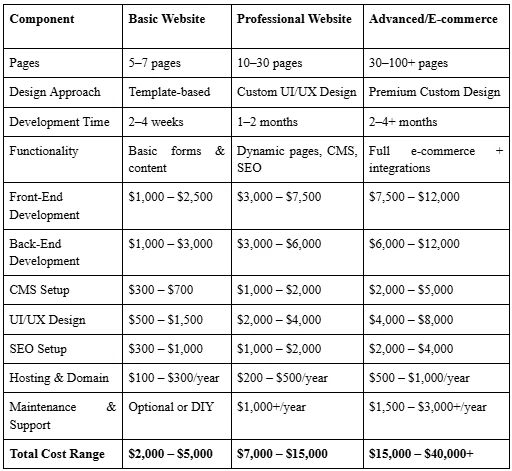
You probably came here because you want to know what a professional website costs, and not in that vague “it depends” way. The truth is, the price tag shifts depending on how big you go, what you need it to do, and who’s building it. Here is a simple breakdown of where the money usually goes.
Scope and Size of the Website
Think of your website like a house. The more rooms you want, the higher the cost. A basic site with five or six pages is affordable. Once you start looking at full-scale platforms with 50 or more pages, things climb quickly. E-commerce sites add another layer since you need payment gateways, product databases, and custom carts. The scope alone can swing your budget from a few thousand to well into the tens of thousands.
Design Approach
This is where you choose between convenience and personality. Templates are cheaper and get you live faster. They work well for smaller businesses that just need a clean, functional presence. Custom design, on the other hand, means your site looks and feels like nobody else’s. It takes longer and costs more, but it delivers a unique user experience. The decision comes down to whether you want “good enough for now” or a truly branded digital home.
Functionality and Features
Here’s where costs often surprise people. A simple site with static pages and a contact form is easy to budget. But once you add features like booking systems, membership portals, or customer dashboards, you are paying for extra development and testing hours. Every added function multiplies complexity. It is the difference between buying a car with standard features and asking for custom upgrades. Each one adds to the bill but also makes your site more useful.
Development Team
Who you hire changes the price almost as much as what you build. Freelancers are cheaper, but timelines can stretch, and scalability is limited. In-house developers give you control but add long-term costs in salaries and benefits. Agencies cost more upfront, but they bring everything under one roof: design, strategy, coding, testing, and support. The tradeoff is simple. Freelancers save money, agencies save time and headaches. The best choice depends on your goals and resources.
Tech Stack and CMS
The tools powering your site matter. Platforms like WordPress or Webflow keep costs manageable, and they are flexible enough for most businesses. Custom CMS builds or headless architecture give you incredible flexibility and future-proofing, but you pay a premium for that control. The decision depends on whether you need something straightforward and affordable or a highly scalable, tailor-made system. Hosting, integrations, and framework choices all get factored into the final number.
Ongoing Maintenance
A website is not finished the day it goes live. It needs care. Think software updates, bug fixes, backups, and security patches. Some brands handle this in-house, but it takes technical know-how and consistency. Most businesses go with monthly or yearly support retainers, which keep the site safe and running smoothly. Skipping maintenance is a gamble. If something breaks, downtime can cost more than the price of regular upkeep. It is like insurance for your digital presence.
Estimated Cost Table For Professional Website Development:
Small Business Website Development: What’s Different?
Let’s zoom in on website development for small businesses. Having a website isn’t limited to giant brands or businesses only. If you run a small shop or startup, you may think you can skip it or keep it bare bones. But you still need the basics done right.
Ideally, small business website development should focus less on flash and more on what actually works. What matters is: Clean design. Clear messaging. And, an easy navigation. Trust us, they go a long way. Additionally, the budget matters too, so it makes sense to focus on must-haves now and add extras later. Platforms like WordPress or Webflow usually do the trick, and they scale with you as you grow.
Don’t forget the essentials. Basic SEO so locals can actually find you, fast load times so people don’t click away, and solid security. The real trick is knowing what’s necessary and what can wait. Most small business sites land in the $2,000 to $8,000 range, but the smartest ones stretch that budget by planning for long-term value.
What You Actually Get With The Best Web Development Services
What does it feel like to work with the best web development services? It doesn’t feel like buying a website. It feels like building a digital growth machine. When you hire top-tier teams, you get:
- Clarity: You’re never guessing what’s happening or why
- Expertise: They know the tech, the trends, and the traps to avoid
- Custom Strategy: Built around your business, not a template
- User-First Thinking: Designs that convert, not just impress
- Scalable Code: So you’re not rebuilding from scratch in 12 months
- Responsive Communication: No ghosting. No surprises. Just results!
The best web development services don’t just ask “What pages do you want?” They ask, “What’s your business goal? And how should the website drive that?” Big difference. And that level of thinking, that’s what you’re really paying for.
Budget Smarter, Not Just Smaller
Building a website is like building a house. Do you want a shed with WiFi? Or a modern smart home? There’s no shame in starting small. Especially in the world of small business website development. But know this: your website is your first impression, your sales tool, and your credibility badge, all rolled into one. So ask better questions. Know what you're buying. And understand that with the best web development services, you’re not just buying pixels. You’re investing in performance. Because professional website development isn’t a cost. It’s an asset!