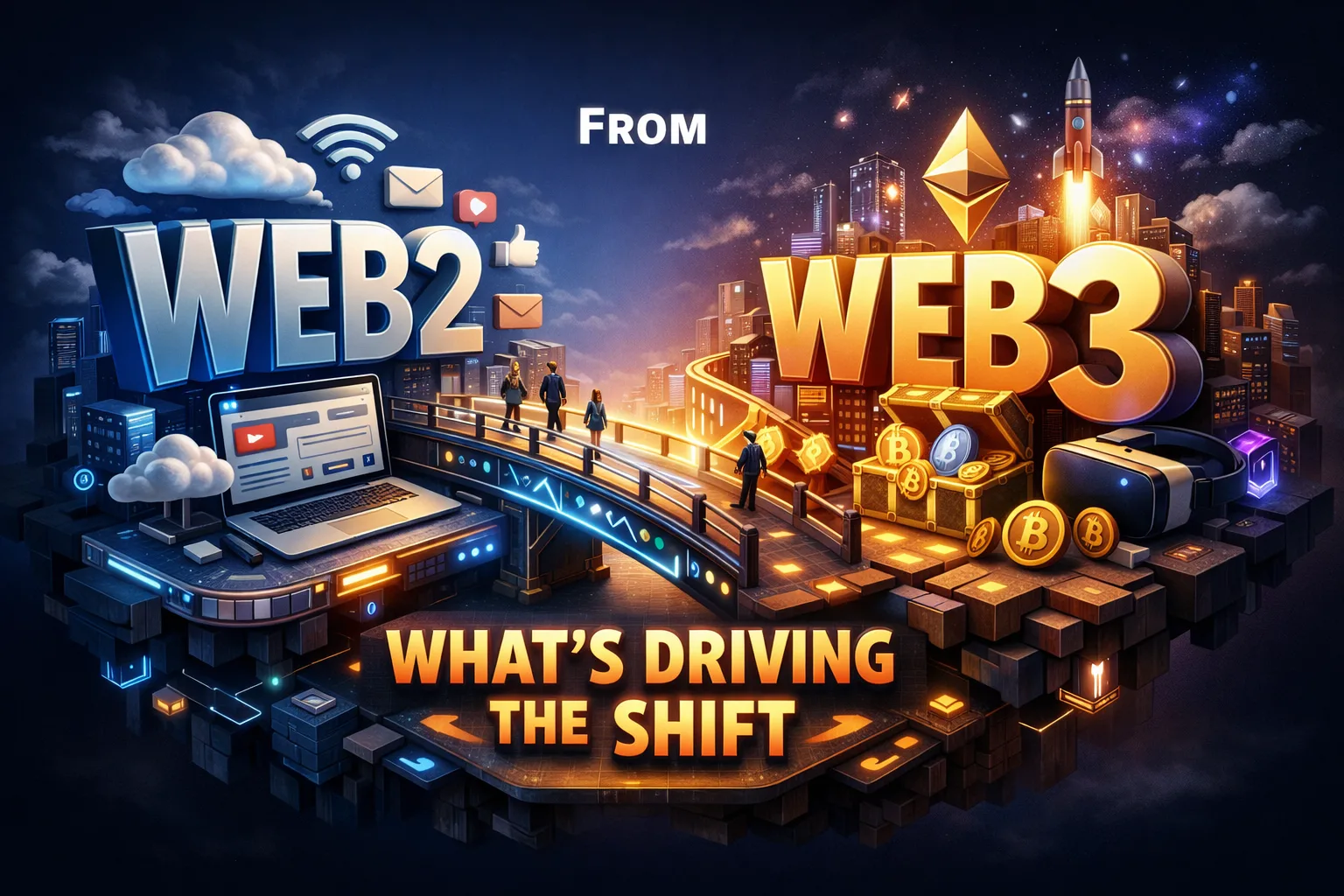
The internet is undergoing one of its most significant transformations since its inception. What started as static web pages (Web1) evolved into interactive platforms (Web2), and now we are stepping into a decentralized era known as Web3. This shift is not just a technological upgrade it represents a fundamental change in how users interact with digital systems, own data, and build trust online.
Businesses that once relied heavily on centralized platforms are now exploring decentralized alternatives to improve transparency, security, and user engagement. The transition from Web2 to Web3 is driven by both technological advancements and changing user expectations, making it one of the most important shifts in the digital economy today.
What Is Web3 Development
Web3 development refers to the creation of decentralized applications (dApps), blockchain-based platforms, and smart contract ecosystems that operate without centralized control. Unlike traditional web applications, Web3 solutions give users ownership over their data and digital assets.
A professional Web3 development company plays a crucial role in building these systems by leveraging blockchain technologies such as Ethereum, Polygon, and Solana. These platforms enable secure, transparent, and tamper-proof interactions, which are essential for modern digital ecosystems.
Web3 development is not limited to cryptocurrency it extends to industries like finance, gaming, supply chain, healthcare, and more, making it a versatile and future-ready solution.
The Evolution from Web2 to Web3
Web2 Limitations
Web2 brought interactivity and user-generated content, but it also introduced several challenges:
- Centralized control over user data
- Privacy concerns and data misuse
- Dependency on intermediaries
- Limited user ownership
These issues have led to growing dissatisfaction among users and businesses alike.
Key Drivers Behind the Shift to Web3
1. Demand for Data Ownership
One of the biggest drivers of Web3 adoption is the growing demand for data ownership. In Web2, platforms control user data, often monetizing it without transparency. Web3 changes this by giving users control over their digital identity and assets.
Key Points:
- Users own their data through wallets
- No centralized authority controls information
- Increased trust and transparency
2. New Revenue Models
Web3 introduces innovative monetization opportunities that were not possible in Web2.
Key Points:
- Token-based economies
- NFTs for digital ownership
- Decentralized finance (DeFi)
- Peer-to-peer transactions
Businesses are leveraging these models through Web3 Development Services to create new income streams and enhance user engagement.
3. Elimination of Intermediaries
Web2 systems rely heavily on intermediaries such as banks, payment gateways, and platforms. Web3 removes these middlemen using smart contracts.
Key Points:
- Direct peer-to-peer transactions
- Reduced costs
- Faster execution
- Increased efficiency
4. Enhanced Security and Transparency
Blockchain technology ensures that all transactions are recorded on a public ledger, making them immutable and secure.
Key Points:
- Tamper-proof data
- Transparent operations
- Reduced fraud risks
- Increased accountability
5. Global Accessibility
Web3 platforms are inherently borderless, allowing users from anywhere in the world to participate without restrictions.
Key Points:
- No geographical barriers
- Financial inclusion
- Open access to services
- Decentralized participation
Why Businesses Are Moving Towards Web3
Businesses are no longer viewing Web3 as an experimental technology. Instead, it is becoming a strategic investment.
Business Advantages
- Greater user trust through transparency
- Reduced operational costs
- Improved data security
- New business models and opportunities
A reliable Web3 development company helps businesses navigate this transition by building scalable and secure decentralized solutions tailored to their needs.
Real-World Use Cases Driving Adoption
Finance (DeFi)
- Decentralized lending and borrowing
- Crypto payments
- Yield farming
Gaming
- Play-to-earn models
- NFT-based assets
- True ownership of in-game items
E-commerce
- Tokenized loyalty programs
- Secure transactions
- Decentralized marketplaces
Healthcare
- Secure patient data management
- Transparent record sharing
Challenges Slowing the Shift
While Web3 offers numerous benefits, there are still challenges:
- Regulatory uncertainty
- Scalability issues
- Lack of awareness
- Technical complexity
However, these challenges are gradually being addressed as technology matures and adoption increases.
The Future of Web3 Adoption
The shift from Web2 to Web3 is not a temporary trend—it is a long-term transformation. As more businesses and users recognize the benefits of decentralization, Web3 will continue to gain momentum.
What to Expect
- Increased enterprise adoption
- Improved user experience
- Stronger regulatory frameworks
- Wider integration across industries
Final Thoughts
The transition from Web2 to Web3 is being driven by the need for transparency, security, and user empowerment. Businesses that adapt early will have a significant competitive advantage in the evolving digital landscape.
Web3 is not just about technology it’s about redefining how the internet works. Companies that embrace this change through the right Web3 Development Services will be better positioned to innovate, grow, and lead in the decentralized future.