Modern businesses are no longer judged solely by the quality of their products or services; they are also evaluated by how quickly they can adapt, innovate, and develop a skilled workforce. As enterprises take advantage of digital transformation, employee education has become a clever arrangement rather than just an HR function. Companies that continuously purchase ability development are better put to develop productivity, maintain ability, and gain sustainable business development.
This shift is able to make the Learning Management System an essential business tool. More than just a platform for delivering online courses, a new LMS empowers organizations to manage, monitor, and develop the whole learning journey. Whether it's onboarding new employees, upskilling existent groups, ensuring agreement, or fitting future leaders, the right Learning Management Platform helps businesses conceive determinable learning outcomes while lowering policy-making efforts.
In this article, we'll explore how a LMS drives business progress, the key features arranging should look for, and reason investing in the Best LMS can give long-term competitive benefits.
Why Traditional Training No Longer Delivers Business Results
For decades, employee preparation relied heavily on school room gatherings, printed manuals, and in-person workshops. While these forms offered valuable knowledge experiences, they frequently came up with meaningful restraints. Coordinating schedules, arranging venues, printing elements, and tracking employee assistance necessary for considerable time and resources. More importantly, measuring the influence of these preparation programs was difficult.
Today's trained workers wish knowledge to be possible anytime and anywhere. Employees want the flexibility to learn at their own pace, revisit training materials when wanted, and approach content across multiple devices. Businesses, in another way, demand visibility into learner progress, accomplishment rates, skill development, and training ROI.
Traditional knowledge methods struggle to meet these expectations.
Common challenges involve:
- Limited approachability for remote and distributed groups.
- High preparation and travel costs.
- Manual tracking of attendance and certifications.
- Difficulty updating knowledge materials.
- Lack of personalized education experiences.
- Minimal visibility into employee performance.
These challenges not only slow employee development but likewise impact organizational output. As businesses grow, manual preparation administration becomes increasingly complex, making digital education solutions an essentiality rather than a luxury.
What Is a Learning Management System?
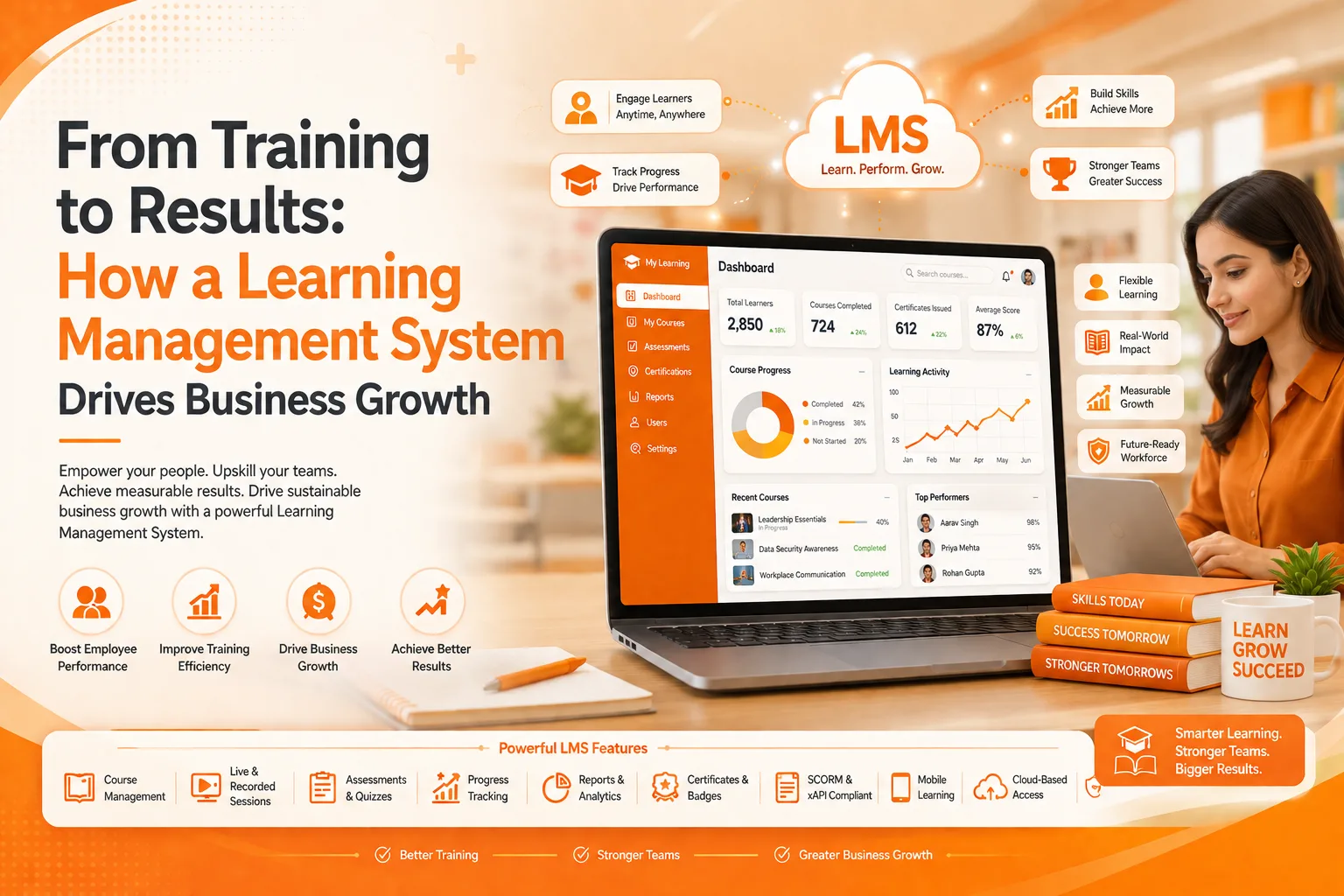
A Learning Management System (LMS) is a concentrated digital platform that authorizes organizations to create, transfer, control, and track training programs. Instead of depending on multiple tools and manual processes, enterprises can manage the complete education lifecycle from a single dashboard.
Modern LMS Software supports various education formats, containing:
- Self-paced online courses
- Instructor-influenced virtual preparation
- Video-based learning
- Interactive quizzes and assessments
- Assignments and certifications
- Mobile knowledge
- Collaborative discussion forums
Beyond content delivery, an LMS supplies valuable data that helps organizations understand trainee engagement, course influence, and skill breach. These insights allow conclusion-makers to steadily enhance preparation strategies while joining knowledge initiatives with enterprise objectives.
Whether used by limited enterprises, educational organizations, or international enterprises, a Learning Management Platform guarantees consistent information delivery while simplifying administration.
1. How a Learning Management System Drives Business Growth
First impressions matter. An organized onboarding process helps new members understand company procedures, workflows, commodities, and organizational culture fast.
With a Cloud LMS, organizations can automate onboarding by designating learning paths, welcome modules, compliance courses, and assessments urgently after hiring. Employees can complete training from any place before their first day or all during their beginning weeks, reducing onboarding time and reconstructing productivity. An organized onboarding experience also upgrades employee confidence and retention.
2. Continuous Skill Development
Technology progresses rapidly, and employee experiences must evolve with it. The Best LMS enables organizations to build continuous education cultures by offering personalized training ways established job duties, departments, abilities, and career aims. Employees do not need to wait for annual workshops. Instead, they receive continuous education opportunities that hold them modernized with industry currents, technical knowledge, and guidance skills. Continuous knowledge not only corrects employee act but also helps arranging remain competitive in fast changing markets.
3. Increased Productivity Through Automation
Administrative tasks consume an important amount of time for HR and Learning & Development teams.
An up-to-date Learning Management Platform automates repetitive endeavors in the way that:
- Course admission
- Training notices
- Assignment scheduling
- Certificate generation
- Assessment ranking
- Progress tracking
- Report invention
Automation reduces manual effort, minimizes human mistakes, and allows administrators to focus on strategic workforce growth instead of routine operational tasks.
4. Smarter Learning with AI
Artificial intelligence is redefining digital learning experiences.
An AI LMS goes further simply to transfer courses. It resolves learner behavior, approves personalized content, identifies skill breach, forecasts learning outcomes, and automates administrative processes.
For example, AI can recommend increased education resources to employees struggling accompanying specific concepts or planning advanced courses to high-operating learners. Managers accept intelligent insights that help them identify future leaders, improve preparation of influence, and make data-driven talent resolutions. Rather than replacing trainers, AI enhances education by making it more personalized, adjusting, and impactful.
5. Cloud LMS: Enabling Learning Without Boundaries
Modern enterprises work across multiple locations, time zones, and mixture of work environments. A Cloud LMS removes the disadvantages of traditional, on-premises preparation systems by providing secure, anytime-anywhere access to knowledge resources.
Employees can complete courses using laptops, tablets, or smartphones without being tied to a particular office or preparation center. This adaptability is particularly valuable for organizations with detached teams, field employees, or global movements.
A cloud-based platform too reduces IT support costs since renovates, protection patches, and new looks are managed automatically by the provider. As your organization evolves, the system scales effortlessly to shelter more learners without additional infrastructure.
Benefits of a Cloud LMS: -
- 24/7 access from any part
- Reduced infrastructure and sustenance costs
- Automatic software modernizes
- Improved data safety and backups
- Faster arrangement and scalability
- Better collaboration across delivered teams
A Cloud LMS guarantees that learning continues uninterrupted, making it an ideal answer for organizations grasping digital transformation.
Key Features Every Business Should Look for in the Best LMS
Selecting high-quality LMS includes more than equating pricing or interface design. Organizations should judge the platform supports long-term education goals while contributing to the flexibility to adapt as enterprise needs progress.
Essential features include:
Personalized Learning Paths
Allow staff members to follow customized knowledge of journeys established by their duties, skills, or course ambitions.
Mobile Learning
Enable learners to access training materials on smartphones and tablets, guaranteeing continuous education within the office.
AI-Powered Recommendations
An AI LMS can suggest relevant courses in established staff member performance, interests, and ability gaps.
Assessment and Certification
Create quizzes, appointments, and certification programs to measure learning outcomes and perceive employee achievements.
Reporting and Analytics
Generate inclusive dashboards that supply original-time insights into beginner performance and training influence.
Integration Capabilities
The platform should merge seamlessly with HRMS, CRM, ERP, ideas tools, and broadcast conferencing applications for an affiliated education ecosystem.
Security and Compliance
Protect impressionable learner data through advanced protection features, role-based access, and agreement with industry guidelines.
Real-World Business Applications
A Learning Management Platform supports organizations across diverse industries.
Corporate Organizations
- Employee onboarding
- Leadership development
- Compliance training
- Sales enablement
- Product knowledge programs
Educational Institutions
- Online classes
- Student assessments
- Assignment management
- Certification programs
- Faculty development
Healthcare
- Medical compliance
- Clinical training
- Continuing education
- Patient safety programs
Manufacturing
- Safety training
- Equipment operation
- Process standardization
- Technical skill development
Retail
- Product training
- Customer service improvement
- Store operations
- Franchise training
Regardless of industry, enterprises that invest in unending learning build more powerful, more experienced workforces prepared for future challenges.
Conclusion
Training is not any more just an HR initiative—it has enhanced a key driver of business benefit. Organizations that invest in staff member education are better equipped to innovate, adapt to change, and maintain a competitive advantage. A new LMS empowers businesses to move further traditional preparation by creating organized, measurable, and engaging knowledge experiences that straightforwardly cause organizational progress.
From automating routine administrative tasks to transferring personalized learning through AI Learning Management System capabilities, today's Learning Management Platform offers far in addition to course delivery. Whether you're onboarding new employees, upskilling existing groups, or guaranteeing agreement, the right LMS Software helps correct output, enhance employee engagement, and increase training ROI.