
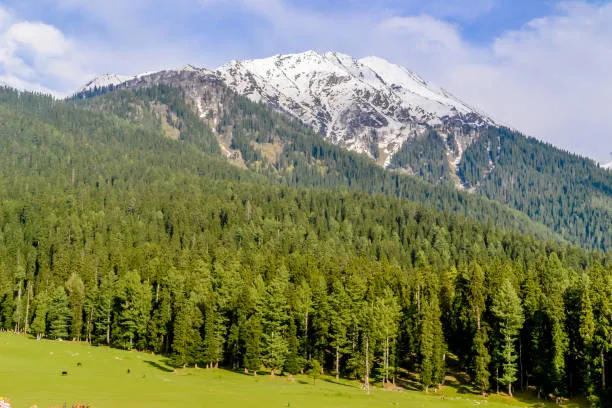
India is not a destination that can be defined by a single landscape.
Within one country, travellers can move from mist-covered tea gardens in Kerala to the dramatic cliffs of the Western Ghats and then onward to high-altitude Himalayan valleys. There are tropical forests, alpine meadows, river valleys, orchard-covered mountains and remote villages—all separated by thousands of kilometres but connected by one thing: an extraordinary diversity of landscapes.
For travellers, this means a holiday in India does not have to follow the conventional beach-city-fort itinerary. Sometimes the most memorable journeys are built around the landscape itself.
Whether you want to wake up among tea plantations, watch clouds roll through a mountain valley or drive along roads carved into the Himalayas, these seven destinations offer a different perspective on travelling through India.
1. Munnar: Life Among Kerala's Tea-Covered Hills
Munnar feels almost surreal when morning mist settles over its rolling plantations. Located in the Western Ghats of Kerala, this hill destination is surrounded by layers of green hills, tea estates, forests and valleys.
The landscape changes as you travel through the region. One moment you may be driving between endless rows of tea plants; the next, the road opens towards a mountain viewpoint or disappears into a forested section of the Western Ghats.
Munnar is also known for its biodiversity. Eravikulam National Park provides an opportunity to experience the area's natural environment, while attractions such as Top Station and Kundala Lake add scenic variety to a trip.
For travellers who want to explore the destination without worrying about coordinating every element themselves, Munnar tour packages can bring together accommodation, local transport and sightseeing while leaving room for personal preferences.
What makes Munnar memorable?
It is the combination of landscape and atmosphere. The cool weather, mountain air and vast tea plantations create an experience that feels very different from Kerala's coastal destinations.
A relaxed morning overlooking the hills can be just as rewarding as visiting another attraction.
2. Mahabaleshwar: Where the Western Ghats Open Into Endless Valleys
Mahabaleshwar offers a completely different interpretation of a hill holiday.
Located in Maharashtra's Sahyadri range, the destination is characterised by forested hills, deep valleys, elevated viewpoints and winding roads. During the monsoon, the surrounding landscape becomes particularly dramatic, with mist and waterfalls adding another layer to the scenery.
One of the pleasures of visiting Mahabaleshwar is simply moving through the landscape. Roads wind through dense vegetation before suddenly opening to panoramic views over the valleys below.
Arthur's Seat, Wilson Point, Elephant's Head Point and Lingmala Waterfall are among the area's well-known attractions, but the destination does not have to be experienced as a race between viewpoints.
Travellers can slow down, explore local produce and farms, enjoy the cooler climate and use the hill station as a base for discovering the surrounding region.
For families, couples and travellers seeking an accessible mountain break, Mahabaleshwar tour packages can make it easier to combine the major sights with comfortable accommodation and flexible sightseeing.
3. Kinnaur: The Himalayas in Their More Dramatic Form
If Munnar is defined by green tea-covered slopes and Mahabaleshwar by forested Western Ghats, Kinnaur introduces an entirely different scale.
Located in Himachal Pradesh, Kinnaur is a land of high mountains, river valleys, orchards and traditional Himalayan settlements. The landscape becomes increasingly dramatic as the journey progresses, with towering peaks appearing beyond narrow valleys and winding mountain roads.
Kalpa is known for its Himalayan views and peaceful setting, while Sangla Valley combines forests, orchards, villages and mountain scenery. Further into the region, Chitkul offers a remote village experience close to the Indo-Tibetan border.
The appeal of Kinnaur lies partly in its journey. Travelling between destinations becomes an experience in itself, with the scenery continually changing outside the window.
A well-planned Kinnaur holiday package can be particularly useful for travellers who want to explore multiple valleys and villages rather than simply visit one Himalayan town.
The Kinnaur experience
Kinnaur is not necessarily about having a packed itinerary.
It is about watching the landscape change, walking through mountain villages, stopping beside a river, discovering local architecture and experiencing a quieter side of Himachal Pradesh.
4. Coorg: Coffee Country in the Western Ghats
Moving south again, Coorg—or Kodagu—offers yet another landscape shaped by India's Western Ghats.
Here, coffee plantations replace Munnar's tea gardens. Thick forests, rolling hills, plantation roads and streams create a setting that is particularly appealing to travellers looking for a combination of nature and rural experiences.
The region is also associated with coffee culture. Visiting a plantation can provide insight into how the crop is grown and processed, while the surrounding countryside offers plenty of opportunities for scenic drives and relaxed walks.
Waterfalls and forest areas add to the destination's appeal, while the local Kodava culture gives a Coorg trip a distinct identity.
Rather than treating Coorg as a checklist destination, travellers can use it as an opportunity to slow down and experience the landscape through plantations, food and village life.
5. Tawang: High-Altitude Scenery in Northeast India
For a more dramatic Himalayan experience, Tawang in Arunachal Pradesh offers a landscape that feels worlds away from India's popular hill stations.
The journey to Tawang is an important part of the experience. Mountain roads climb through changing terrain, eventually reaching high-altitude landscapes surrounded by rugged peaks.
The region is known for its Buddhist heritage as well as its natural scenery. Tawang Monastery is one of the area's most important cultural landmarks, while lakes, mountain passes and valleys provide opportunities to experience the region's spectacular environment.
Travellers should remember that high-altitude destinations require more careful planning than conventional holidays. Weather, road conditions and altitude can affect travel plans, particularly during winter.
That extra effort, however, is part of what makes the journey memorable.
6. Valley of Flowers: A Himalayan Landscape in Bloom
Few Indian landscapes demonstrate the seasonal power of nature quite like the Valley of Flowers in Uttarakhand.
During its flowering season, the high-altitude valley becomes a carpet of alpine plants surrounded by Himalayan peaks. The destination is part of a protected national park and is best experienced through trekking rather than conventional sightseeing.
The journey requires preparation and a reasonable level of fitness, but the reward is an environment that feels dramatically different from the towns and cities most travellers associate with India.
For nature lovers, the Valley of Flowers or offbeat destinations like Harsil Valley demonstrates an important aspect of Himalayan travel: sometimes the destination is not a viewpoint or monument but the landscape itself.
7. Wayanad: Where Forests, Plantations and Wildlife Come Together
Wayanad offers a softer, greener Himalayan alternative for travellers who want to experience Kerala's inland landscapes.
Situated in the Western Ghats, the region combines forests, plantations, waterfalls, caves and wildlife habitats. Unlike a destination centred around one major attraction, Wayanad is best understood as a collection of landscapes and experiences.
A day might involve exploring a plantation in the morning, visiting a waterfall later and ending with a quiet evening surrounded by forest.
The Wayanad Wildlife Sanctuary adds a wildlife dimension, while attractions such as Edakkal Caves provide a connection to the region's ancient history.
For travellers who enjoy variety without constantly changing hotels, Wayanad can be an especially rewarding destination.
Why Landscape-Based Travel Is Becoming More Appealing
Traditional sightseeing often focuses on individual attractions: a fort, a temple, a viewpoint or a museum.
Landscape-based travel works differently.
The destination itself becomes the experience.
A tea plantation is not simply something to photograph in Munnar. It becomes part of the journey.
A Himalayan road is not merely a way of reaching Kinnaur. The changing scenery along the route becomes part of the holiday.
A misty valley in Mahabaleshwar can be just as memorable as the viewpoint overlooking it.
This style of travel encourages people to spend more time in a place instead of constantly moving from one attraction to another.
Choosing the Right Landscape for Your Holiday
Different landscapes naturally suit different types of travellers.
For greenery and cooler weather
Munnar, Coorg and Wayanad are excellent choices for travellers who enjoy forests, plantations and the softer landscapes of the Western Ghats.
For viewpoints and short mountain breaks
Mahabaleshwar is particularly convenient for travellers looking for a hill escape without committing to a long Himalayan journey.
For dramatic mountain scenery
Kinnaur and Tawang offer much more rugged Himalayan landscapes and a greater sense of remoteness.
For trekking and adventure
The Valley of Flowers provides a more active way to experience India's mountain environment.
The important thing is to choose a destination based not only on what you want to see, but also on how you want to travel.
How to Experience India's Landscapes Responsibly
Beautiful landscapes can be fragile, particularly in mountain and forest regions.
Travellers can help protect these destinations by following a few simple principles:
- Carry reusable water bottles instead of relying heavily on single-use plastic.
- Take all waste back with you when visiting remote areas.
- Stay on designated trails in protected areas.
- Respect local communities, traditions and religious sites.
- Avoid disturbing wildlife.
- Choose local guides and businesses where possible.
- Check weather and road conditions before travelling to remote mountain regions.
Responsible travel is not simply about protecting nature for future visitors. It also helps ensure that tourism benefits the communities that call these destinations home.
Beyond the Destination Checklist
India's geographical diversity gives travellers the chance to experience remarkably different environments within the same country.
You can follow a tea plantation road through Munnar, look across a misty Western Ghats valley in Mahabaleshwar or watch Himalayan peaks rise above an orchard in Kinnaur. Elsewhere, forests in Wayanad, coffee plantations in Coorg and high-altitude landscapes in Tawang reveal still more sides of the country.
The most rewarding journey may therefore not be the one with the longest list of attractions.
It may simply be the one where you have enough time to stop, look around and appreciate where you are.
From the quiet rhythm of plantation country to the immense scale of the Himalayas, India's landscapes offer countless reasons to travel a little slower—and discover places that stay with you long after the journey home.