Generating an admission enquiry is important, but what happens after the enquiry can be just as significant. Prospective students need accurate information, timely responses, and a straightforward path to the next step.
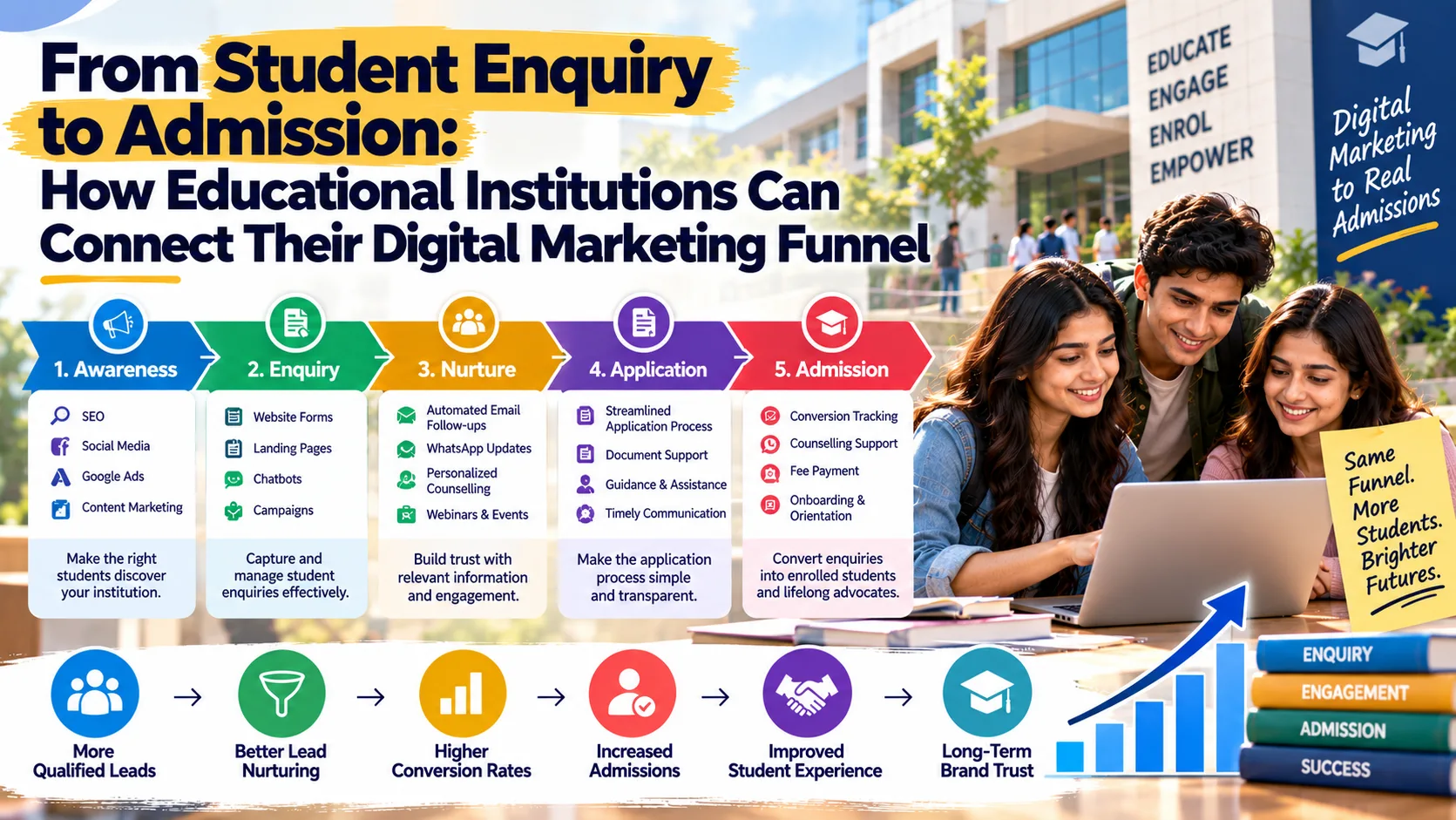
A connected approach to digital marketing for educational institutions brings campaigns, landing pages, lead management, and admission follow-ups into one measurable process.
Attract the Right Prospective Students
The process begins with reaching people who are genuinely interested in the institution's programmes.
Search engine optimisation, paid advertising, social media content, and relevant educational resources can help prospective students discover suitable courses.
An education lead generation agency should understand the difference between generating large numbers of enquiries and attracting people who meet the institution's programme requirements.
Campaign messages should be accurate and relevant to the intended audience.
Create Landing Pages That Answer Important Questions
When students click a campaign, they should arrive at a page that matches their interests. A course-specific landing page can explain eligibility, duration, curriculum, admission steps, and the available enquiry options.
Professional landing page design services for educational institutions can help organise this information, improve mobile usability, and reduce unnecessary barriers in the enquiry process.
The aim is to help visitors understand their options before asking them to share their contact details.
Respond and Follow Up Consistently
After an enquiry arrives, the admission team needs to know who will respond and when.
An organised workflow can acknowledge the enquiry, assign it to the appropriate counsellor, create reminders, and track whether the student has received the information requested.
Lead automation services in India can support these routine activities, particularly when institutions handle enquiries across several courses or campuses.
An experienced lead automation agency for educational institution workflows should also account for different student needs. A person asking about eligibility may require a different response from someone ready to begin an application.
Keep Human Support at the Centre
Automation can organise the process, but it cannot replace every conversation. Students may have questions about programme suitability, financial considerations, accommodation, or application requirements.
Admission counsellors should have access to relevant enquiry history so they can provide informed responses rather than asking students to repeat the same information.
Communication should remain respectful, useful, and consistent with the student's preferences.
Measure the Whole Journey
Institutions should track performance from the initial campaign through to admission. Useful measures include:
- Qualified enquiries by channel.
- Time taken to respond.
- Successful contact and counselling rates.
- Applications started and completed.
- Campus visits where relevant.
- Confirmed admissions and cost per admission.
These metrics help teams identify whether the challenge lies in campaign targeting, website experience, response speed, or later admission stages.
Conclusion
A connected admission funnel helps educational institutions understand how prospective students move from discovering a course to making an informed decision.
By combining relevant marketing, useful landing pages, organised lead automation, and personal admission support, institutions can improve consistency and make better use of their marketing efforts.