
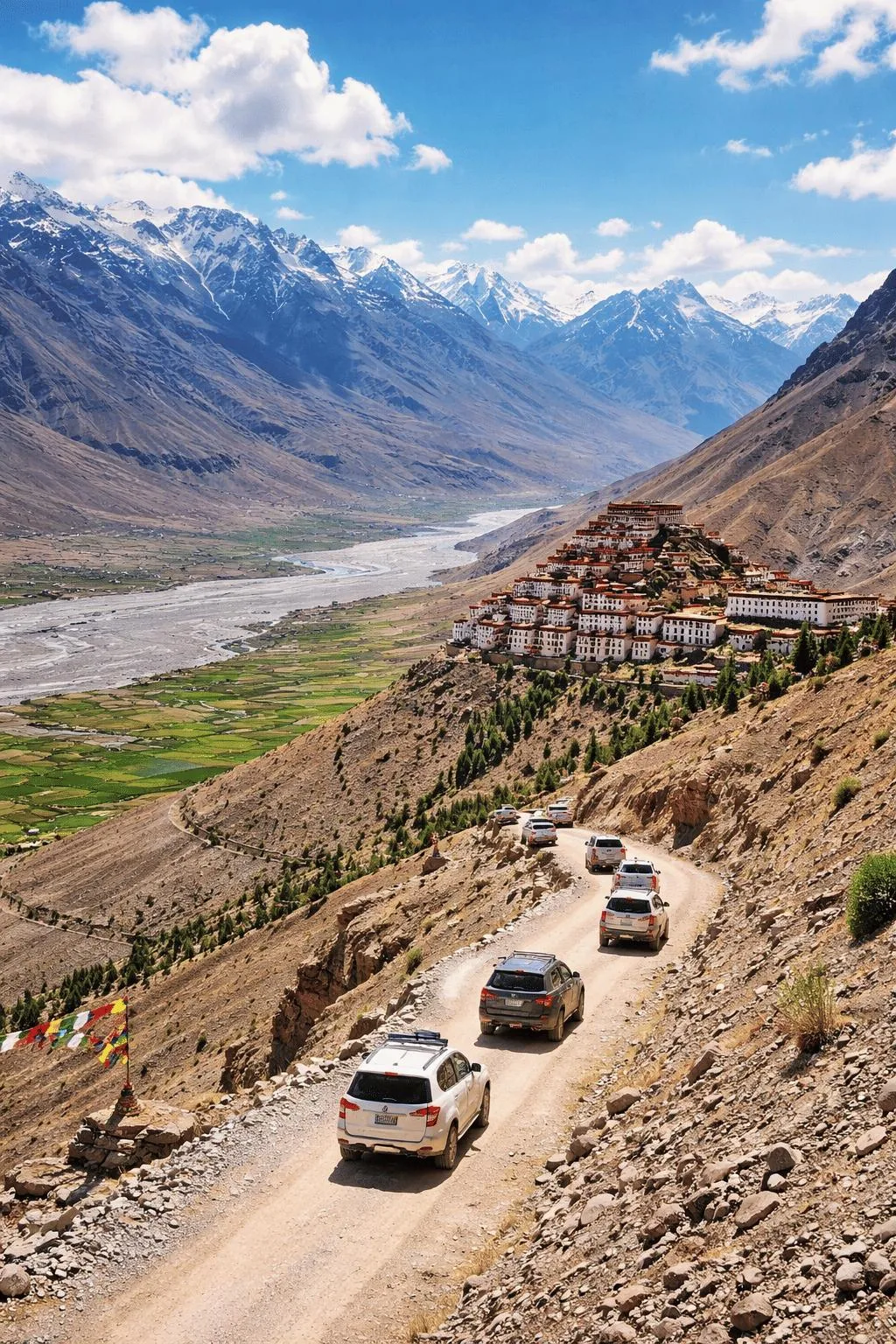
If you are looking for a Himalayan road trip that combines dramatic mountain landscapes, ancient monasteries, remote villages, winding roads and rich local culture, a Spiti to Kinnaur circuit deserves a place on your travel list. For travellers who want to explore the region comfortably, Kinnaur Tour Packages can also be a convenient way to discover the beautiful valleys, villages and cultural attractions along the route.
This journey takes you through two very different sides of Himachal Pradesh. Spiti feels raw, high-altitude and almost otherworldly, with barren mountains, Buddhist monasteries and deep river valleys. Kinnaur gradually brings greener landscapes, apple orchards, traditional wooden architecture and villages such as Kalpa, Sangla and Chitkul. Himachal Tourism describes Kinnaur as a region of high Himalayan landscapes, while Spiti is known for its high-altitude villages, monasteries and stark Trans-Himalayan scenery.


Whether you are planning a Spiti Valley road trip, a long Himalayan adventure or looking for unique Himachal tour packages, this circuit offers plenty of experiences beyond conventional sightseeing.
Why Choose a Spiti to Kinnaur Circuit?
One of the biggest advantages of this route is the changing landscape.
You can begin among the green hills and forests around Shimla and gradually enter the dramatic landscapes of Kinnaur. As you move towards Nako and Tabo, the scenery becomes increasingly dry and rugged. Eventually, the road leads into the heart of Spiti, where high mountains, monasteries and small villages dominate the landscape.
On the return journey, instead of simply retracing your route, you can explore the Kinnaur side through places such as Kalpa, Sangla and Chitkul.
The result is a journey filled with contrasting landscapes, cultures and experiences.
Ideal Spiti-Kinnaur Circuit Route
You can also reverse the route depending on road conditions and your starting point. For travellers who prefer a well-planned Himalayan journey, Spiti Valley Tour Packages can make it easier to explore the major attractions of Spiti and Kinnaur while managing transportation, stays and sightseeing.
Himachal Tourism lists the Shimla–Kinnaur–Spiti side as one of the principal approaches to Spiti, while the Manali side provides another route into the valley.
For travellers who want to experience both Kinnaur and Spiti without rushing, 9–12 days is a comfortable planning range. This allows enough time to explore the scenic valleys, remote villages, monasteries and high-altitude attractions along the way.
Day 1: Shimla to Sarahan – Begin the Himalayan Journey
Start your journey from Shimla and head towards Sarahan. Travellers planning their Himalayan holiday can also explore Shimla Tour Packages to combine the charming hill station with nearby destinations such as Sarahan, Kinnaur and Spiti.
The scenery gradually changes as you leave the busy hill station behind. Roads wind through forests and mountain valleys before opening into beautiful Himalayan viewpoints.
Sarahan makes a peaceful first stop. The village is known for the historic Bhimakali Temple and views towards the surrounding mountains. Instead of trying to cover too much on the first day, spend the evening relaxing and preparing for the higher-altitude sections ahead.
Overnight: Sarahan
Day 2: Sarahan to Sangla – Enter Kinnaur
Continue towards Kinnaur and eventually take the road towards Sangla Valley.
The landscape becomes more dramatic as the route follows the Sutlej and later the Baspa River. Orchards, traditional villages and steep mountain walls create a completely different atmosphere from Shimla.
Sangla is located in the Baspa Valley, and Himachal Tourism highlights its apple and apricot orchards, mountain scenery and traditional settlements.
Spend the evening exploring Sangla and enjoying the peaceful surroundings.
Overnight: Sangla


Day 3: Sangla to Chitkul – A Day of Village Life and Mountain Views
Dedicate this day to exploring the beautiful Baspa Valley.
Drive towards Chitkul, one of the most famous villages in Kinnaur. Himachal Tourism describes Chitkul as the last inhabited village on the Indo-Tibet border, located in the Baspa Valley.
Take time to walk through the village, admire traditional architecture and enjoy views of the surrounding mountains.
The journey itself is part of the attraction. Rather than rushing between viewpoints, spend some time simply experiencing the landscape.
Return to Sangla in the evening.
Overnight: Sangla
Day 4: Sangla to Kalpa – Mountains, Orchards and Kinner Kailash Views
Leave Sangla and travel towards Kalpa.
The route takes you back towards the Sutlej Valley before climbing towards Kalpa. The landscape becomes greener in parts, with orchards and traditional Kinnauri settlements.
Kalpa is particularly known for its spectacular mountain views. The village sits above Reckong Peo and offers views towards the Kinner Kailash region. Himachal Tourism also highlights Kalpa's traditional atmosphere, temples and Buddhist monastery.
Spend your evening enjoying the sunset and mountain scenery.
Overnight: Kalpa


Day 5: Kalpa to Nako – Where Kinnaur Meets Spiti
This is where the character of the journey begins to change dramatically.
Leave Kalpa and follow the road towards Nako. Green mountain landscapes gradually give way to dry, rocky terrain.
Nako is an excellent transition point between Kinnaur and Spiti. Located at a high altitude, the village has a small lake and Buddhist cultural heritage. Himachal Tourism places Nako at about 3,662 metres and identifies it as an important settlement on the Kaza-Shimla route.
Take a relaxed walk around the village and enjoy the peaceful surroundings.
Overnight: Nako
Day 6: Nako to Tabo and Dhankar – Discover Spiti's Spiritual Side
Continue towards Tabo and explore the historic monasteries and villages of Spiti.
Tabo is an important cultural stop, while Dhankar offers one of the most dramatic settings in the region. The Dhankar monastery sits above the Spiti River and historically served as a strategic location overlooking the valley.
This is a day for slowing down.
Visit monasteries, observe traditional architecture and take photographs of the rugged landscape.
Overnight: Tabo or Kaza
Day 7: Explore Kaza – The Heart of Spiti
Reach Kaza, the main settlement and administrative headquarters of Spiti.
Use the day to explore nearby villages and attractions.
Some popular places include:
- Key Monastery
- Kibber
- Langza
- Hikkim
- Komic
- Chicham Bridge
- Local markets in Kaza
According to Himachal Tourism, Key Monastery is about 12 km from Kaza, while Kibber, Langza, Hikkim and Komic are all within the surrounding high-altitude landscape.


Don't Miss Key Monastery
Perched dramatically above the Spiti River, Key Monastery is one of the defining landmarks of the valley.
The experience is not only about photography. Walk around the monastery respectfully, appreciate its architecture and take in the vast mountain scenery.
Spiti's monasteries are an important part of the region's living cultural heritage, with places such as Key, Tabo and Dhankar preserving centuries-old Buddhist traditions.
Overnight: Kaza
Day 8: Kaza to Pin Valley – Experience a Quieter Side of Spiti
If you have enough time, add a day for Pin Valley.
The landscape here is different from the main Kaza area. The valley combines rugged mountains with villages, river landscapes and wildlife habitats.
Himachal Tourism identifies Pin Valley National Park as an important high-altitude landscape and notes that it provides habitat for species including Himalayan ibex, bharal and the snow leopard.
A visit here should be planned with respect for local communities and the fragile mountain environment.
Overnight: Kaza
Day 9: Kaza to Nako/Kalpa – Begin the Return Journey
Start the return journey towards Kinnaur.
The scenery changes once again as you leave the high desert landscapes of Spiti and move towards the greener valleys of Kinnaur.
You can break the journey around Nako or continue towards Kalpa depending on road conditions and your itinerary.
Avoid making the return day unnecessarily ambitious. Mountain travel takes longer than the distance on a map suggests.
Overnight: Nako or Kalpa
Day 10: Kalpa to Shimla – Complete the Himalayan Circuit
Enjoy one final morning in Kalpa before beginning the journey towards Shimla.
The route gradually takes you through Kinnaur's valleys, orchards and mountain settlements.
By the time you reach Shimla, you will have experienced a remarkable range of Himalayan landscapes—from forested hills to green valleys, high-altitude deserts and ancient Buddhist settlements.
And that is what makes the Spiti to Kinnaur circuit so memorable: it is not simply a collection of tourist attractions but a journey through changing landscapes and cultures.
Best Time to Plan a Spiti-Kinnaur Road Trip
Timing is one of the most important parts of planning this journey.
Himachal Tourism lists April to October as a generally suitable period for Spiti, while Kinnaur is also described as having a good travel season from April to October. However, individual roads and high passes can have different opening and weather conditions.
April–May
A good option for travellers looking for fewer crowds, but conditions at higher elevations can still be challenging.
June–July
Road-trip season becomes more active, with many routes accessible depending on conditions.
August
Weather and road conditions need particular attention. Check the latest local situation before departure.
September–October
Often attractive for travellers who want clearer mountain views and autumn colours, but temperatures can drop quickly at higher elevations.
For the latest conditions, check with local authorities and transport providers before leaving.
How to Prepare for the Spiti to Kinnaur Circuit
A successful Himalayan road trip depends as much on preparation as the destination.
1. Plan for High Altitude
Kaza and several villages around Spiti are located at very high elevations. Do not rush immediately into strenuous activities after reaching altitude.
Give your body time to adjust and stay hydrated.
2. Carry Warm Layers
Even when daytime temperatures feel pleasant, evenings can become extremely cold. Himachal Tourism specifically recommends carrying woollens because temperatures can change quickly in Spiti.
3. Keep Cash
Some remote areas have limited banking and connectivity facilities. Carry sufficient cash for smaller expenses.
4. Download Important Information
Mobile and internet connectivity can be limited in remote parts of Kinnaur and Spiti. Himachal Tourism notes that connectivity can be low away from major settlements.
5. Keep Extra Travel Time
Do not plan the entire trip around exact driving times. Mountain roads, weather, road work and unexpected delays can change your schedule.
6. Choose the Right Vehicle
For a road trip through high-altitude Himalayan terrain, use a reliable vehicle and an experienced local driver familiar with the route.
Permits and Travel Documents
Permit requirements can depend on nationality and the exact route.
Himachal Tourism states that foreign tourists may require Inner Line Permits for certain areas close to the international border, including sections of the Kinnaur-Spiti route.
Before travelling, check the latest requirements with the relevant district authorities, particularly if you are an international traveller.
What to Pack for a Spiti-Kinnaur Trip
Keep your luggage practical rather than excessive.
Essential items include:
- Warm jacket and thermal layers
- Comfortable trekking shoes
- Sunglasses
- Sunscreen and lip balm
- Personal medicines
- Reusable water bottle
- Power bank
- Torch
- Basic first-aid supplies
- Government-issued ID
- Cash
- Camera or smartphone
- Small backpack for day trips
A good pair of sunglasses and sunscreen are especially useful because strong sunlight at high altitude can feel intense.
Food to Try Along the Way
A Himalayan circuit is also a great opportunity to explore local food.
In Spiti, look for momos, thukpa and local Tibetan-influenced dishes. Himachal Tourism notes that Tibetan and North Indian food is commonly available in Spiti's small eateries and restaurants.
In Kinnaur, try local preparations when available and experience food served by family-run homestays.
The best meals on this route are often the simple ones enjoyed after a long mountain drive.
Responsible Travel in Spiti and Kinnaur
These landscapes are fragile, and responsible tourism matters. When planning your journey with Himachal Tour Packages, make sure your travel choices also help protect the mountains and local communities.
Avoid single-use plastic wherever possible, carry your waste with you and never leave litter near rivers, villages or trekking trails.
Respect monasteries, temples and local customs. Ask before photographing people, religious ceremonies or private spaces.
Most importantly, don't treat remote villages as photo sets. Spend money locally, choose local homestays and interact respectfully with residents.
How Many Days Do You Need?
For a rushed trip, you can cover major sections in around 7–8 days, but a longer itinerary is more comfortable.
7–8 Days
Best for travellers with limited time.
9–10 Days
Allows a more balanced Spiti-Kinnaur road trip.
11–12 Days
Ideal for adding Pin Valley, extra village exploration and rest days.
If your priority is photography and slow travel, adding extra nights can make a major difference.
Spiti vs Kinnaur: What Makes Each Special?
SpitiKinnaurHigh-altitude desert landscapesGreen valleys and orchardsBuddhist monasteriesKinnauri temples and monasteriesKaza, Key, Langza, KomicKalpa, Sangla, ChitkulDramatic barren mountainsForests, rivers and apple orchardsRemote Himalayan villagesTraditional Himalayan settlementsHigh-altitude adventureCulture, nature and mountain viewsRather than choosing between them, the circuit allows you to experience both.
Final Thoughts
The Spiti to Kinnaur circuit is the kind of Himalayan journey where the road itself becomes part of the destination.
One morning you may be surrounded by green apple orchards in Kinnaur. A few hours later, the landscape can transform into dry mountains and deep valleys. Then come ancient monasteries, remote villages, prayer flags, high passes and endless Himalayan views.
The key to enjoying this journey is simple: don't rush it.
Give yourself enough days, keep your itinerary flexible, respect the altitude and leave room for unexpected stops. Some of the best memories may come from a roadside viewpoint, a quiet village walk or a cup of hot tea overlooking the mountains.
If you're planning your next Himalayan escape, Spiti and Kinnaur together offer a journey that combines adventure, culture, nature and the freedom of the open mountain road.
Plan your Himalayan adventure with Vayable Trip and Travel the better way.
Frequently Asked Questions
1. How many days are enough for a Spiti-Kinnaur circuit?
Around 9–12 days is a comfortable duration for exploring both regions without making every day a long driving day.
2. What is the best time for a Spiti and Kinnaur road trip?
Generally, April to October is a suitable broad travel window, although actual road accessibility varies by route, weather and altitude.
3. Can beginners do the Spiti-Kinnaur circuit?
Yes, but beginners should avoid treating it like a normal highway road trip. High altitude, long drives and changing road conditions require careful planning.
4. Is Chitkul worth visiting?
Chitkul is a major highlight of the Baspa Valley, known for its remote setting, traditional village character and mountain scenery.
5. What are the major places to visit in Spiti?
Kaza, Key Monastery, Kibber, Langza, Hikkim, Komic, Tabo, Dhankar and Pin Valley are among the major attractions.
6. Is the Kinnaur route to Spiti different from the Manali route?
Yes. The Kinnaur approach enters Spiti through the Shimla–Kinnaur side, while another major approach comes from Manali via Kunzum.
7. Is mobile network available throughout Spiti and Kinnaur?
No. Connectivity can be limited in remote areas, so travellers should prepare for periods without reliable mobile or internet service.
8. Do foreign travellers need permits?
Certain border-area sections can require Inner Line Permits for foreign travellers. Requirements should be confirmed before departure.