
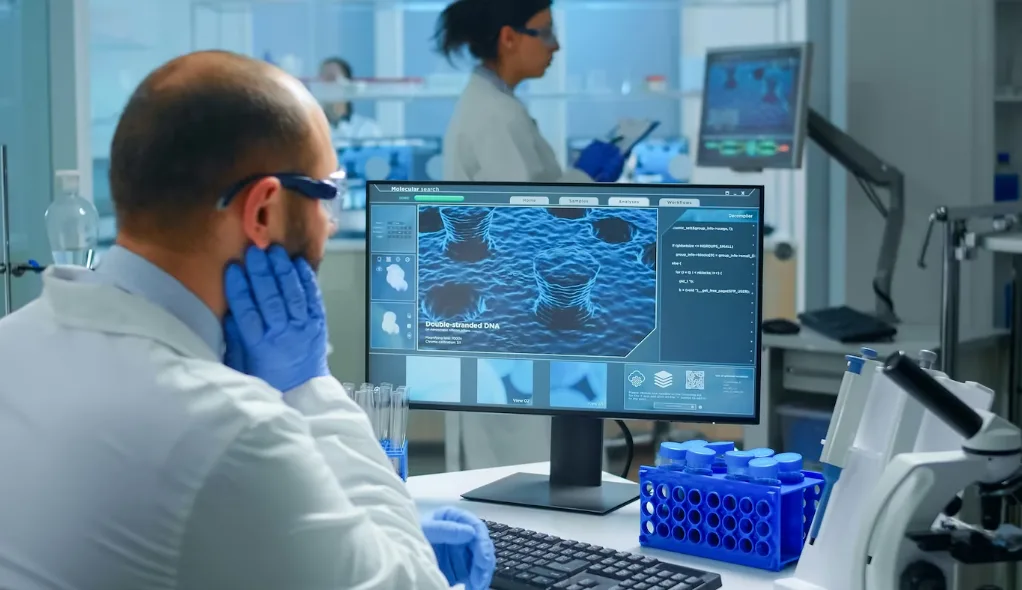
Modern molecular biology relies on accurate DNA analysis to help researchers understand genetic material, verify DNA constructs, and investigate specific regions of interest. Before researchers can confidently use experimental results, they often need to confirm that the amplified DNA matches the intended sequence. This is where Amplicon Sequencing becomes a valuable part of the research process.
By combining polymerase chain reaction (PCR) with DNA sequencing, researchers can examine selected DNA regions and obtain sequence information for further analysis. From checking cloned DNA to validating PCR products, this approach supports a wide range of laboratory applications. Understanding how the process works, how samples are prepared, and how sequencing results are interpreted can help researchers make informed decisions throughout their experiments.
Understanding the Connection Between PCR and Amplicon Sequencing
PCR is a widely used molecular biology technique that amplifies a specific DNA region. During this process, primers bind to complementary sequences in the target DNA, and a DNA polymerase produces additional copies of the selected region. The resulting DNA fragments are known as amplicons.
Although PCR helps researchers produce enough DNA for analysis, amplification alone does not necessarily confirm the exact nucleotide sequence of the resulting product. A sample may contain an unexpected mutation, an incorrect insert, or an unintended amplification product. These possibilities make sequence verification important in many research workflows.
Amplicon Sequencing allows researchers to examine the nucleotide order within the amplified region. By comparing the resulting sequence with the expected reference, researchers can investigate whether the target matches the intended design. The specific sequencing method depends on the project, the length of the target, and the information required.
How Amplicon Sequencing Works From Start to Finish
The process generally begins with selecting the DNA region that needs to be examined. Researchers design appropriate primers to amplify the target region and perform PCR under suitable laboratory conditions. Once amplification is complete, the resulting product is assessed to determine whether it is suitable for sequencing.
Sample quality is an important consideration at this stage. Impurities, leftover primers, excess nucleotides, or nonspecific amplification products can affect sequencing performance. Depending on the service and sample requirements, PCR products may need purification before submission.
The next step involves preparing the DNA template and selecting a suitable sequencing primer. In Sanger sequencing, the sequencing reaction generates DNA fragments that differ in length by individual nucleotides. These fragments are separated by a capillary-based instrument, allowing the sequence to be determined from the resulting signals.
Sequencing software converts the signals into sequence data and may display the results as a chromatogram. Researchers can review the base calls and compare the sequence with the expected DNA reference to identify differences or confirm the intended construct.
The final interpretation depends on the quality of the data, the region covered by the sequencing read, and the purpose of the experiment. A clear sequence that matches the expected reference can support verification, while unexpected differences may require further investigation.
Why Sequence Verification Matters in Research
DNA amplification is useful for producing target material, but researchers often need additional evidence before proceeding with an experiment. Sequencing helps provide that evidence by revealing the nucleotide order within the analyzed region.
For example, researchers working with plasmids may use sequencing to confirm that an inserted DNA fragment is present in the intended orientation and that the region examined matches the expected design. Similarly, sequencing PCR products can help verify whether the amplified target corresponds to the intended DNA region.
Sequence verification is also relevant to cloning workflows, genetic construct development, and studies involving selected gene regions. Identifying sequence differences early may help researchers investigate experimental problems before moving to subsequent stages.
However, sequencing results should always be interpreted in context. The absence of a detected difference within the readable region does not establish that every part of a larger DNA construct is correct. Researchers should select appropriate primers and sequencing coverage for the questions they need to answer.
Preparing Samples for Reliable Sequencing Results
Sample preparation can significantly influence the quality and usefulness of sequencing data. Researchers should follow the requirements of their selected sequencing service and confirm that the submitted material is compatible with the method.
Important considerations include DNA concentration, sample purity, primer suitability, and the presence of unwanted amplification products. Samples should also be clearly identified so that the resulting data can be matched to the correct experimental records.
For laboratories submitting multiple samples, plate-based sequencing can make sample organization and processing more convenient. A 96-well plate allows multiple DNA samples to be arranged in a standardized format, which can be useful for projects involving numerous PCR products or plasmid constructs.
Before submitting samples, researchers should check the provider's instructions for plate type, sealing, sample volume, primer information, and order documentation. Consistent preparation and accurate labeling help reduce avoidable processing issues and support an efficient laboratory workflow.
Choosing a Suitable Amplicon Sequencing Service
Selecting a sequencing service involves more than comparing prices. Researchers should consider the length of the target region, the number of samples, the type of DNA template, the required turnaround time, and the format in which results will be delivered.
Sanger sequencing is commonly used to verify individual DNA regions, PCR products, and cloned constructs. For projects involving many samples, plate-based Sanger sequencing can provide a practical way to organize submissions and obtain sequence data through a single workflow.
Eurofins Genomics offers Sanger sequencing services for samples submitted in 96-well plates, including options for plasmid DNA and PCR products. Its plate services include PlateSeq, Prepaid Plate Kits, ShortSeq Plates, and Ready2Load Plates. These options accommodate different sample preparation needs and project requirements.
Researchers can explore the Eurofins Genomics Sanger Sequencing in Plates service to review the available formats and sample submission guidance. Laboratories working with Eurofins Genomics in the USA, Kentucky, can use the company's sequencing resources to identify an appropriate workflow for their research needs.
The most suitable option will depend on the sample type, desired read length, preparation status, and project timeline. Reviewing these factors before placing an order helps researchers select a service that aligns with their experimental objectives.
Understanding and Using Sequencing Results
After sequencing is completed, researchers receive data that can be used to assess the target DNA region. Depending on the service, results may include chromatogram files and nucleotide sequences in formats such as FASTA.
A chromatogram displays the signals used to identify individual bases. Well-separated peaks generally make the sequence easier to interpret, while overlapping peaks or unclear signals may indicate that further review is needed. Researchers should pay particular attention to the quality of the relevant region and avoid drawing conclusions from ambiguous base calls.
Sequence alignment provides another important step. Comparing the obtained sequence with a reference can reveal substitutions, insertions, deletions, or other differences within the analyzed region. Any unexpected result should be evaluated alongside the experimental design, sample history, and quality of the sequencing data.
Maintaining organized records of sample identities, primers, reference sequences, and results can also improve traceability across research projects.
Conclusion
The journey from PCR amplification to reliable sequence information involves careful sample preparation, an appropriate sequencing method, and thoughtful interpretation of the results. Amplicon Sequencing helps researchers examine specific DNA regions, verify PCR products, and check selected portions of genetic constructs.
For laboratories handling multiple samples, plate-based Sanger sequencing offers a convenient approach to organizing DNA submissions and obtaining sequence data. By choosing a suitable service and following sample preparation guidelines, researchers can support more dependable DNA verification workflows.
Eurofins Genomics provides plate-based sequencing options designed to accommodate different research requirements. Exploring these services can help researchers identify a suitable approach for their DNA analysis projects and make better-informed decisions as they move from amplification to sequence results.