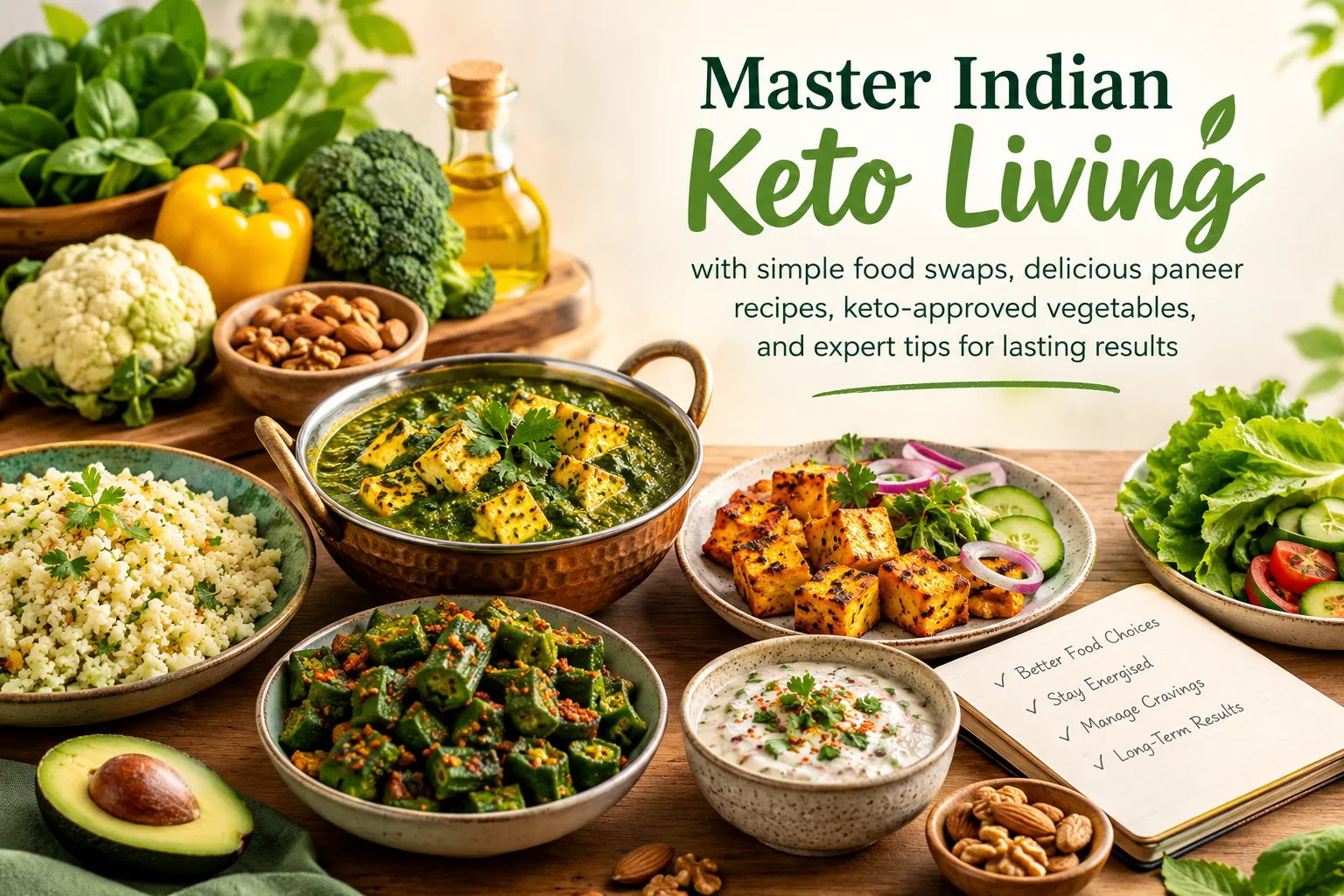
For many Indians, the word keto brings up an image of imported foods: bacon, expensive cheese, avocados, almond flour, protein shakes, and unfamiliar recipes. But a low-carb lifestyle does not have to abandon Indian flavours, home cooking, or vegetarian meals.
The Indian keto kitchen can include paneer, curd, coconut, ghee, low-carb vegetables, seeds, nuts, spices, and carefully planned portions of traditional foods. The real challenge is understanding which foods are naturally lower in carbohydrates, which keto claims are exaggerated, and how to make the diet nutritionally sensible rather than simply eating unlimited fat.
A ketogenic diet is a very-low-carbohydrate, high-fat dietary pattern intended to produce ketosis, a metabolic state in which the body relies more heavily on fat-derived ketones for energy. It may produce short-term weight loss for some people, but long-term health effects and suitability vary widely by individual.
Important: Keto is not appropriate for everyone. People who are pregnant or breastfeeding, have kidney, liver, pancreatic, or heart conditions, have a history of eating disorders, or use insulin, sulfonylureas, SGLT2 inhibitors, or other glucose-lowering medicines should consult a qualified doctor and dietitian before making major carbohydrate changes. Medication doses may need adjustment.
Can Indian Food Really Be Keto ?
Yes—but not every traditional Indian meal is keto-friendly.
Indian cuisine has an enormous range of ingredients. While rice, wheat, poha, idli, dosa, potatoes, sugar, lentils, chickpeas, rajma, and most fruits are relatively high in carbohydrates, many everyday Indian ingredients can form the base of a low-carb meal.
A practical Indian keto kitchen may include:
- Paneer, tofu, cheese, and full-fat curd.
- Eggs, chicken, fish, and meat for non-vegetarians.
- Spinach, cauliflower, cabbage, broccoli, mushrooms, zucchini, bottle gourd, ridge gourd, brinjal, okra ( lady - finger), capsicum, cucumber, and leafy greens.
- Coconut, coconut milk, coconut flour, and unsweetened coconut.
- Almonds, walnuts, peanuts, pumpkin seeds, sunflower seeds, chia seeds, flax seeds, and sesame seeds.
- Ghee, butter, coconut oil, mustard oil, olive oil, and other cooking fats used in measured quantities.
- Indian spices such as cumin, coriander, turmeric, mustard seeds, cinnamon, cloves, cardamom, black pepper, ginger, green chilli, and kasuri methi.
Keto does not mean eating Western food. It means reducing digestible carbohydrates enough to meet an individual’s chosen carbohydrate target.
Myth 1: Indian Food Is Too High in Carbs for Keto
This myth is partly true only if your idea of Indian food is built around large bowls of rice, several rotis, potatoes, sweets, and fried snacks.
A conventional Indian plate often gives the largest share to cereals such as wheat or rice. A keto plate reverses that pattern: vegetables, protein foods, and fats become the base, while grains and starchy vegetables are minimized or avoided.
For example:
Conventional mealKeto-style Indian alternativeRice with dal and potato sabziCauliflower rice with paneer and spinach sabziRoti with aloo gobhiPaneer bhurji with cabbage or gobhi stir-fryMasala dosa with potato fillingEgg dosa or paneer chilla with coconut chutneyPoha with peas and potatoesCauliflower poha with peanuts and curry leavesAloo paratha with butterCabbage-paneer stuffed low-carb parathaRajma chawalRajma-style masala with mushrooms or paneer over cauliflower riceSugar-laden lassiSalted chaas (Butter-milk) or unsweetened yogurt drinkSabudana khichdiCauliflower “khichdi” with coconut and peanuts
These swaps retain familiar spices, aromas, and cooking styles while lowering the carbohydrate load.
Myth 2: Keto Means Unlimited Ghee, Butter, and Cheese
One of the most common keto misunderstandings is that more fat automatically means better results.
Ghee, butter, cream, cheese, coconut, nuts, and oils can all fit within a keto diet. However, they are energy-dense. Adding large amounts of fat to every meal may make it easier to consume more calories than your body needs, even if carbohydrate intake stays low.
Instead of treating fat as unlimited, use it intentionally:
- Add enough ghee or oil to cook food well and improve satiety.
- Use paneer or eggs as a protein-rich centrepiece, not only as a vehicle for cream.
- Measure nuts, nut butters, coconut, and cheese because portions can grow quickly.
- Avoid combining butter-heavy curries, fried snacks, cheese, and keto desserts every day.
- Build meals around vegetables and protein, then add fat for flavour and fullness.
Research reviews note that ketogenic diets can affect blood lipid levels, including possible increases in LDL cholesterol for some people, particularly when the diet relies heavily on saturated fat.
Myth 3: Vegetarian Keto Is Impossible
Vegetarian keto is more challenging than a non-vegetarian version because many inexpensive vegetarian protein staples—dal, chana, rajma, lobia, and grains—also contain substantial carbohydrates.
But it is still possible with planning.
Vegetarian Indian keto protein foods
- Paneer.
- Tofu and tempeh.
- Greek yogurt or hung curd.
- Cheese in moderate amounts.
- Unsweetened soy milk.
- Seeds, including chia, hemp, flax, sesame, and pumpkin seeds.
- Nuts in controlled portions.
- Low-carb protein powders, if needed and tolerated.
A vegetarian keto plate should not consist only of cheese and nuts. Aim for a regular rotation of paneer, tofu, curd, low-carb vegetables, seeds, and nutrient-dense foods.
If you eat eggs, they can make keto meal planning significantly easier. Egg bhurji, masala omelettes, egg curry without potatoes, and boiled eggs with salad are quick Indian-style options.
Myth 4: Dal Is Always Keto-Friendly
Dal is nutritious, affordable, and culturally important—but it is not automatically keto-friendly.
Lentils, chickpeas, rajma, black-eyed peas, and most beans contain protein and fiber, but they also provide carbohydrates. Small portions may fit some people’s low-carb plans, but larger servings can make it difficult to stay within a strict ketogenic carbohydrate limit.
That does not make dal “bad.” It simply means it may fit better into a moderate low-carb diet rather than strict keto.
If your goal is general weight loss, blood-sugar management, or a sustainable whole-food diet, a moderate amount of dal with vegetables and controlled portions of grains may be more realistic than strict keto for many people. Indian dietary guidance continues to encourage dietary variety, legumes, vegetables, fruits, whole grains, and balanced meals rather than extreme exclusion of food groups.
Myth 5: You Must Buy Almond Flour and Imported Foods
Almond flour, erythritol, keto bread mixes, and specialty snacks can be convenient, but they are not essential to an Indian keto diet.
Many affordable Indian ingredients can be used:
- Cauliflower for rice, poha, upma, and paratha fillings.
- Cabbage for stir-fries, wraps, and noodles.
- Coconut for chutney, flour blends, curries, and desserts.
- Peanuts in modest portions for chutney or snacks.
- Flax and sesame seeds for low-carb binders.
- Paneer and tofu for everyday meals.
- Seasonal low-carb vegetables for volume and fibre.
- Spices, herbs, lemon, and mint for flavour without sugar.
The most sustainable keto plan is often based on local, seasonal, minimally processed food—not expensive imported products.
Myth 6: Fruit Is Completely Forbidden
Strict keto plans often limit fruit because natural sugars can add up quickly. But “fruit is unhealthy” is not an accurate conclusion.
For people following a strict ketogenic target, lower-sugar choices such as coconut, avocado, berries, and small portions of guava may sometimes fit. Higher-sugar fruits such as banana, mango, grapes, chikoo, and dates can use up a large share of the daily carbohydrate allowance.
The right approach depends on the reason for following keto. Someone managing weight without needing strict ketosis may be better served by a less restrictive, balanced dietary pattern that includes fruit in appropriate portions.
Avoid turning keto into a fear of ordinary whole foods. A dietary approach should be judged by its overall nutritional adequacy, sustainability, and effect on your health markers—not only by whether it produces ketones.
Myth 7: Keto Desserts Are “Free Foods”
Keto ladoos, almond-flour cakes, sugar-free chocolate, peanut-butter fudge, and cream-based desserts may contain little or no sugar, but they can still be very calorie-dense.
A keto dessert can contain large amounts of:
- Almond flour.
- Butter or ghee.
- Heavy cream.
- Coconut.
- Nuts and nut butter.
- Sugar substitutes.
- Dark chocolate.
These foods may be useful occasionally, but they should not replace regular meals or become an everyday habit. “Sugar-free” does not mean calorie-free, and “keto” does not guarantee that a packaged food is nutritious.
A Typical Indian Keto Day
Here is a simple example for a vegetarian Indian keto routine. Portions should be personalized according to hunger, medical needs, body size, activity, and your carbohydrate goal.
Breakfast: Paneer bhurji with vegetables
Cook paneer with spinach, capsicum, tomato, green chilli, cumin, turmeric, and a teaspoon of ghee. Serve with cucumber slices or a small bowl of unsweetened curd.
Lunch: Palak paneer with cauliflower rice
Prepare palak paneer using spinach, paneer, ginger, garlic if permitted, spices, and a moderate amount of fat. Serve it with cauliflower rice sautéed in ghee, cumin, and coriander.
Evening snack: Coconut and nuts
Have unsweetened tea or coffee with a small portion of almonds, walnuts, roasted seeds, or fresh coconut. Avoid grazing repeatedly through the evening.
Dinner: Tofu or paneer tikka bowl
Grill paneer or tofu with capsicum, mushrooms, curd, lemon, and spices. Serve with cabbage salad, cucumber, mint chutney, and a yogurt dip without sugar.
Optional non-vegetarian variation
Replace paneer or tofu with eggs, chicken, fish, or meat prepared without sugary sauces, flour coatings, potatoes, or large quantities of starchy vegetables.
Easy Low-Carb Desi Recipes
Cauliflower Poha
Grate cauliflower until it resembles poha. Heat a little ghee or oil with mustard seeds, curry leaves, green chilli, peanuts, turmeric, and chopped vegetables. Add cauliflower and cook briefly until tender. Finish with lemon and coriander.
It has the familiar flavour profile of poha while replacing flattened rice with a lower-carbohydrate vegetable base.
Cabbage Paneer Stir-Fry
Sauté cumin, ginger, green chilli, shredded cabbage, capsicum, and paneer in ghee. Season with turmeric, coriander powder, salt, and lemon.
This is affordable, quick, and easy to prepare with ingredients found in most Indian kitchens.
Keto Coconut Chutney
Blend fresh or unsweetened dried coconut, coriander, green chilli, ginger, lemon juice, salt, and water. Temper with mustard seeds and curry leaves in a small amount of oil if desired.
Serve with egg chilla, paneer chilla, grilled vegetables, or keto-friendly dosa alternatives.
Palak Paneer Without Heavy Cream
Blanch spinach and blend it with ginger, garlic, green chilli, and a little water. Cook the puree with cumin, paneer, and a measured quantity of ghee. Finish with curd or a small splash of cream if desired.
The spinach delivers volume and micronutrients, while paneer provides protein and fat.
Common Keto Mistakes in India
Cutting vegetables too aggressively
Some people assume keto means eating only paneer, chicken, eggs, and butter. Low-carb vegetables provide fiber, micronutrients, variety, and volume. Include leafy greens and other non-starchy vegetables regularly.
Ignoring electrolytes and hydration
Rapid carbohydrate reduction can change fluid and electrolyte balance. Some people report headache, tiredness, constipation, muscle cramps, dizziness, or weakness during the transition. These symptoms should not be ignored, especially if they are severe, persistent, or accompanied by vomiting, confusion, palpitations, or fainting.
Constipation, headaches, weakness, diarrhoea, halitosis, muscle cramps, and micronutrient deficiencies have been reported as possible concerns with ketogenic diets.
Eating too little protein
A keto diet should not become a starvation diet. Prioritize adequate protein from paneer, tofu, eggs, fish, chicken, meat, yogurt, or suitable plant-based options.
Relying on processed “keto” foods
Keto cookies, bread, noodles, bars, and ready-to-eat snacks may be expensive and can contain highly processed ingredients. Read labels for net carbohydrates, added sugars, serving size, and the type of fat used.
Ignoring long-term sustainability
Strict keto can be difficult to maintain in an Indian household where rice, roti, dal, fruit, festivals, and family meals are part of everyday life. If the diet makes you anxious around food, causes social isolation, or leads to repeated binge-restrict cycles, a moderate low-carb or balanced Indian diet may be more appropriate.
Is Keto the Best Choice for Weight Loss ?
Keto may help some people reduce appetite and lose weight in the short term, particularly when it replaces ultra-processed foods and sugary beverages with whole foods. But keto is not the only, or automatically the best, route to weight loss.
Weight loss generally requires a consistent calorie deficit while meeting protein, fibre, vitamin, mineral, and energy needs. A person can lose weight with keto, a moderate low-carb approach, a traditional calorie-controlled Indian diet, or another sustainable eating pattern.
Evidence reviews find possible short-term benefits of ketogenic diets in some settings, but they also highlight concerns about LDL cholesterol, reduced muscle mass, nutrient inadequacy, constipation, and limited evidence on long-term safety.
Who Should Seek Medical Advice First ?
Speak with a doctor or registered dietitian before trying keto if you:
- Have diabetes or take insulin, sulfonylureas, or SGLT2 inhibitors.
- Have kidney disease, liver disease, pancreatitis, gallbladder problems, or high cholesterol.
- Have heart disease or a strong family history of heart disease.
- Are pregnant, breastfeeding, or trying to conceive.
- Are under 18 years old.
- Have a history of an eating disorder.
- Take regular medication for a chronic condition.
Diabetes medication and a sharp reduction in carbohydrate intake can raise the risk of hypoglycaemia if treatment is not supervised.
Final Thoughts
The Indian keto kitchen is not about rejecting desi food. It is about using Indian ingredients differently: replacing rice with cauliflower rice, reducing wheat and sugar, increasing vegetables and protein, using fats with awareness, and relying on spices for flavour rather than packaged sauces.
Paneer, coconut, curd, cauliflower, cabbage, spinach, mushrooms, eggs, nuts, seeds, and traditional spices can make low-carb Indian meals enjoyable and practical. But keto should remain a considered dietary strategy—not a licence for unlimited butter, cheese, processed snacks, or extreme food restriction.
For many people, the most successful approach may be a flexible Indian low-carb plan that reduces refined grains and sugar while still leaving room for pulses, fruit, whole grains, and family meals when appropriate.
FAQ's
Can I eat paneer every day on keto?
Paneer can be included regularly, but variety is important. Rotate paneer with tofu, curd, eggs, fish, chicken, seeds, and different low-carb vegetables. Watch portions and cooking fat.
Can I eat roti on keto?
Regular wheat roti is generally too high in carbohydrates for a strict ketogenic diet. Some people use low-carb alternatives based on almond flour, coconut flour, flax, psyllium husk, or paneer, but portion size still matters.
Is rice allowed on keto?
Regular rice is usually avoided on strict keto because it is carbohydrate-dense. Cauliflower rice is a popular alternative for Indian-style keto meals.
Can I eat onion and tomato on keto?
Yes, but portion control matters. Onion and tomato contain more carbohydrates than leafy greens or cucumber, so use them primarily for flavour rather than as the main bulk of the meal.
Are peanuts keto-friendly?
Peanuts can fit in controlled portions. They contain some carbohydrates and are calorie-dense, so measure them rather than eating directly from a large packet or bowl.
Will keto cure diabetes?
No diet should be presented as a cure for diabetes. Reducing refined carbohydrates and achieving weight loss may improve blood-glucose management for some people, but diabetes medication changes must be handled by a healthcare professional.