Indian cuisine is often celebrated for its rich flavors, colorful spices, and comforting dishes. Yet when weight loss becomes the goal, many people assume they must abandon beloved foods such as parathas, rice, paneer, and dal.
The truth is more encouraging: you do not need to give up traditional Indian food to lose weight. You need to rethink portions, cooking methods, meal balance, and everyday habits. With a few practical changes, familiar Indian meals can become nourishing, satisfying, and weight-loss friendly.
Why Traditional Indian Meals Can Become Calorie-Dense
Traditional Indian food is not inherently unhealthy. In fact, many Indian meals include vegetables, lentils, fermented foods, spices, whole grains, and dairy. The challenge often comes from modern portion sizes and preparation methods.
A homemade meal can become calorie-dense when it includes:
- Large portions of rice, roti, or paratha.
- Excess oil, ghee, butter, or cream.
- Deep-fried snacks and accompaniments.
- Sugary beverages or desserts.
- Too little protein and fiber.
- Repeated servings driven by habit rather than hunger.
Weight loss depends largely on maintaining an appropriate calorie deficit while preserving adequate nutrition. That does not mean eating bland food. It means making meals more filling for the calories they provide.
Rethinking the Indian Plate
A simple way to redesign a traditional meal is to divide your plate into three broad parts:
- Half the plate: non-starchy vegetables or salad.
- One quarter: protein such as dal, chana, rajma, paneer, tofu, eggs, fish, chicken, or curd.
- One quarter: carbohydrates such as roti, rice, millet, or potatoes.
This structure helps control portions without requiring you to weigh every ingredient. It also encourages a better balance between carbohydrates, protein, and fiber.
For example, instead of eating three large rotis with a small serving of sabzi, try one or two rotis with a generous portion of vegetable curry, dal, and salad. The meal remains recognizably Indian, but it becomes more satisfying and nutritionally balanced.
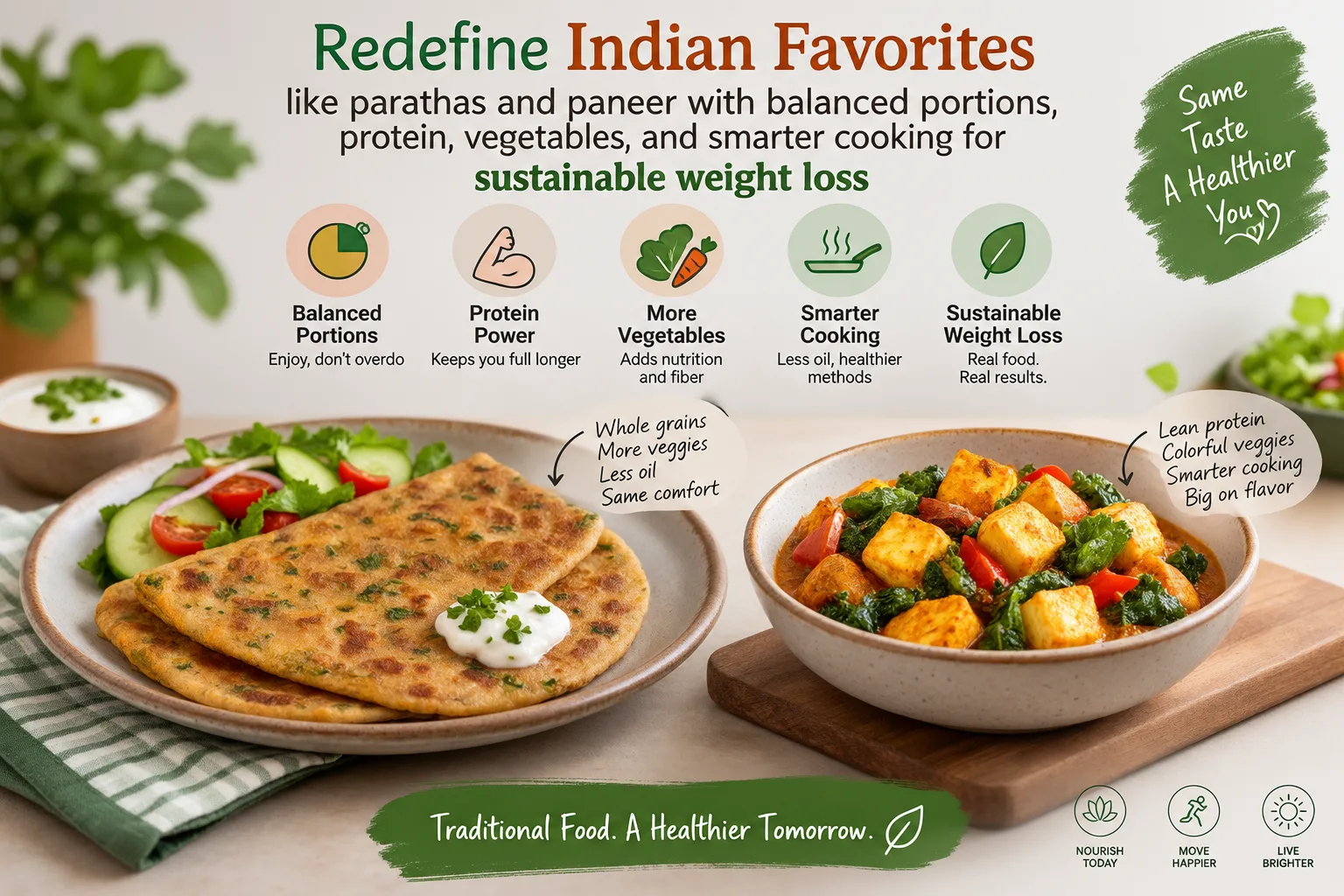
Can You Eat Parathas While Losing Weight?
Yes. Parathas can fit into a weight-loss plan, especially when they are prepared thoughtfully.
The main concern is usually not the flour itself but the amount of oil, ghee, butter, and filling used during cooking. A large restaurant-style paratha may contain significantly more fat than a smaller homemade version.
Try these changes:
- Use a moderate amount of oil instead of repeatedly brushing the paratha with ghee.
- Choose fillings such as cauliflower, radish, spinach, peas, or mixed vegetables.
- Add protein through a side of plain curd, paneer bhurji, eggs, or dal.
- Keep the portion moderate and avoid pairing it with butter, creamy curry, and sugary drinks.
- Use whole-wheat flour and include the filling generously.
A balanced meal might include one aloo or gobi paratha, plain curd, a bowl of vegetable raita, and a side salad. This is more practical—and often more sustainable—than banning parathas completely.
Making Paneer Work for Weight Loss
Paneer is a useful protein source for vegetarians, but it can also be high in calories because it contains fat. The goal is not to eliminate paneer but to use it strategically.
Better choices include:
- Homemade paneer prepared with lower-fat milk, if suitable for you.
- Grilled, sautéed, or air-fried paneer instead of deep-fried paneer.
- Paneer tikka with vegetables.
- Paneer bhurji cooked with less oil.
- Palak paneer made with limited cream and a larger quantity of spinach.
- Paneer paired with salad, vegetables, or a modest serving of roti.
Restaurant dishes such as shahi paneer, butter paneer, and paneer makhani can contain substantial amounts of cream, butter, and oil. Enjoying them occasionally is perfectly reasonable, but they may not be the best everyday choices when weight loss is the priority.
Protein: The Missing Piece
Many traditional Indian meals are rich in carbohydrates but may be low in protein. A low-protein meal can leave you hungry soon after eating, making snacking and overeating more likely.
Include a protein source in each major meal:
- Breakfast: besan chilla with curd, eggs with roti, or Greek yogurt with fruit.
- Lunch: dal, rajma, chole, paneer, tofu, chicken, or fish.
- Evening snack: roasted chana, sprouts, buttermilk, curd, or boiled eggs.
- Dinner: dal with vegetables, tofu stir-fry, paneer bhurji, or grilled fish or chicken.
Protein does not need to come from expensive supplements. Everyday foods can provide it when meals are planned thoughtfully.
Smarter Swaps for Familiar Foods
Small substitutions can reduce calories without removing flavor.
Instead ofTryDeep-fried pakorasAir-fried or pan-cooked pakorasCreamy paneer curryTomato-based paneer currySugary lassiUnsweetened chaas or plain lassiLarge rice portionsA smaller rice serving with dal and vegetablesFried papadRoasted papadSamosa as a daily snackRoasted chana, sprouts, or fruit with curdRefined-flour naanWhole-wheat rotiPotato-heavy curryPotato combined with peas, beans, cauliflower, or spinach
These swaps work because they preserve the cultural identity of the meal while improving its overall balance.
Breakfast Ideas for Indian Weight Loss
Breakfast is often where hidden calories accumulate, particularly when meals include several fried or refined-carbohydrate foods.
Consider options such as:
- Vegetable poha with peanuts used in moderation.
- Two small besan or moong dal chillas with curd.
- Idli with sambar and a vegetable side.
- Vegetable upma with added peas or sprouts.
- Eggs with whole-wheat roti and sautéed vegetables.
- Plain curd with fruit, seeds, and a small portion of oats.
- A smaller stuffed paratha with curd and a vegetable filling.
The best breakfast is one that keeps you satisfied and fits your routine. There is no requirement to eat only “diet foods.”
Snacks Without the Guilt Cycle
Snacking is not automatically harmful. The problem is usually mindless eating, oversized portions, or snacks that combine refined carbohydrates with added fat and sugar.
More filling snack options include:
- Roasted makhana.
- Roasted chana.
- Fruit with curd.
- Sprouts chaat.
- Buttermilk.
- Boiled eggs.
- Coconut water with a protein-rich side.
- A small portion of nuts.
- Homemade dhokla.
- Vegetable sticks with hung curd dip.
If you want a traditional snack such as namkeen, mathri, or biscuits, place a small portion in a bowl rather than eating directly from the packet. Portion awareness is often more effective than strict restriction.
The Role of Rice and Roti
Rice and roti are not the enemy. They provide carbohydrates, which are an important source of energy. The key is to match portions with your hunger, activity level, and total meal composition.
Helpful habits include:
- Avoiding multiple large carbohydrate servings in the same meal.
- Pairing rice or roti with protein and vegetables.
- Choosing brown rice, hand-pounded rice, or millets when you enjoy them—not because they are magic foods.
- Eating slowly and checking whether you are still hungry before taking more.
- Measuring cooked rice occasionally to understand your usual portion.
A bowl of rice with dal, vegetables, and curd can be a balanced meal. A very large bowl of rice with little protein or vegetables may be less filling despite containing more calories.
Flavor Without Excess Oil
Indian cooking gets much of its character from spices, aromatics, herbs, and cooking techniques—not only from oil.
Build flavor with:
- Ginger, garlic, green chilies, and onions.
- Cumin, coriander, turmeric, mustard seeds, and curry leaves.
- Fresh coriander, mint, and lemon.
- Roasted spices and homemade masalas.
- Tomato, tamarind, kokum, or yogurt-based gravies.
- Pressure cooking, grilling, roasting, steaming, and sautéing.
You can also use a nonstick or heavy-bottomed pan, add water or stock while cooking, and measure oil with a spoon rather than pouring directly from the bottle.
Sustainable Weight Loss Is Flexible
A sustainable eating plan must accommodate festivals, family meals, travel, and cravings. Completely banning favorite foods can lead to an all-or-nothing cycle: strict restriction followed by overeating.
A flexible approach might look like this:
- Eat balanced meals most of the week.
- Enjoy special foods mindfully.
- Choose one or two indulgent items rather than turning an entire day into unrestricted eating.
- Return to your normal routine at the next meal.
- Avoid compensating with extreme fasting or excessive exercise.
One festive meal does not determine your progress. Your repeated habits matter far more.
A Sample Indian Weight-Loss Day
Breakfast: Two moong dal chillas with mint chutney and plain curd.
Lunch: One or two rotis, dal, mixed vegetable sabzi, salad, and buttermilk.
Snack: Fruit with roasted chana or a small bowl of sprouts chaat.
Dinner: Paneer or tofu bhurji with sautéed vegetables and one roti.
Dessert or treat: A small portion enjoyed occasionally and eaten mindfully.
This is only an example. Individual calorie and protein needs vary according to age, body size, activity, health conditions, and goals.
The Bigger Picture
Redefining the Indian diet for weight loss is not about replacing traditional food with tasteless “diet meals.” It is about making familiar meals more balanced.
Keep the spices. Keep the dal. Keep the roti, rice, paratha, curd, and paneer. Focus on reasonable portions, enough protein, more vegetables, less added fat, and consistent eating habits.
The most effective Indian weight-loss diet is not the one that removes your culture from the plate. It is the one that helps you enjoy your food while supporting your health—one balanced meal at a time.