
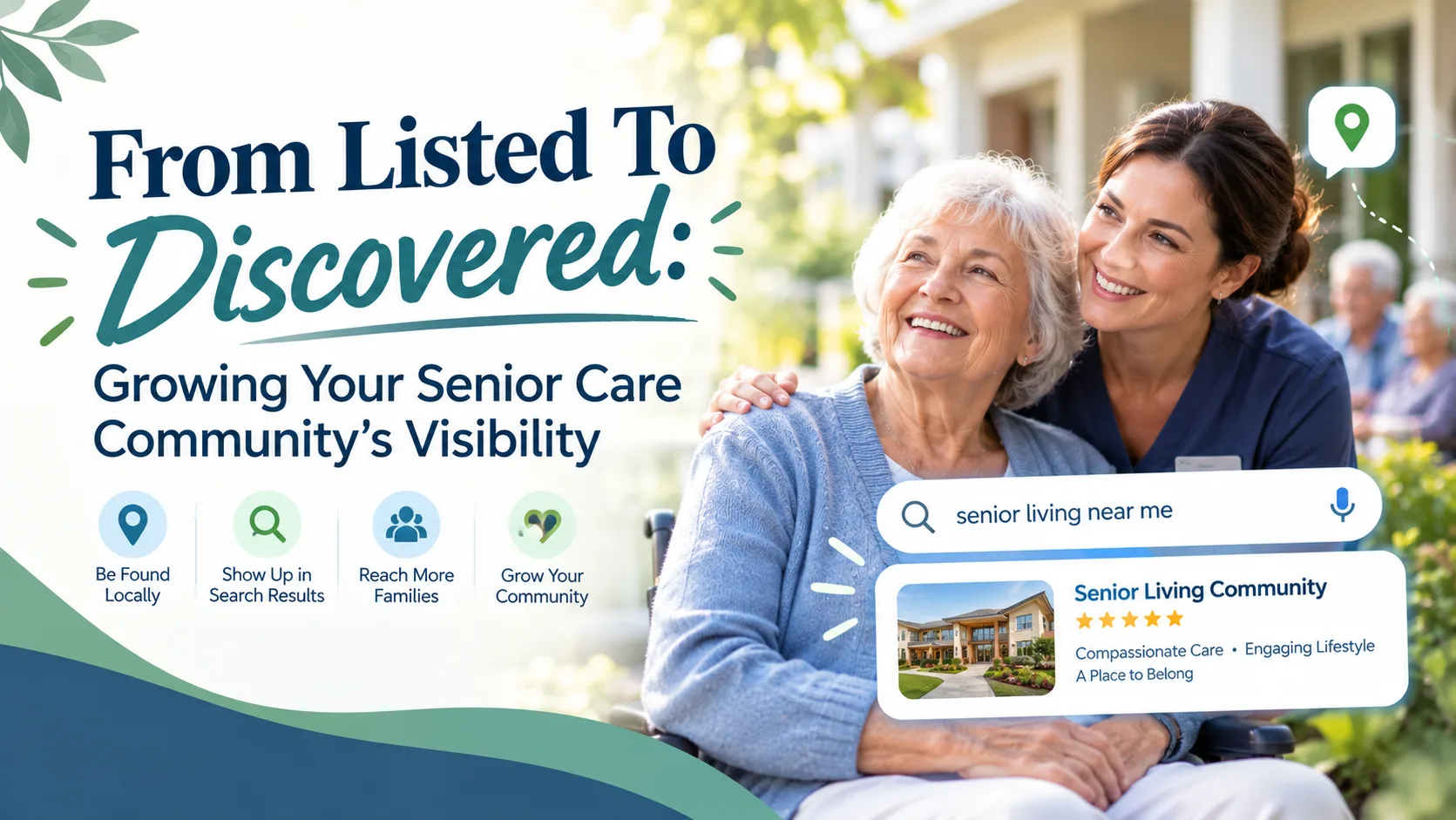
There is that exasperating time most senior care facility proprietors have become familiar with. You've created a warm, friendly atmosphere, trained your staff to be compassionate, and even delivered care packages families truly value. Still, someone looking up care for a parent online might never see your community even near the top of the list. An online listing isn't the same as someone stumbling upon you. A directory entry might say that you are available, but does it really tell a worried family that they are welcome to come check you out?
When someone seeks care for another family member, trustworthiness is essential to the decision-making process. The silver lining? You don't have to raise your voice online louder than others to be heard. You can make yourself indispensable in ways other than volume. These seven handy suggestions will help your community be recognized and well remembered.
1. Start With What Families Are Actually Searching For
At the heart of your expertise lies an intimate knowledge about your local communities, while families who rely on online platforms may have much less awareness. For instance, they might not know about caregiving alternatives, what questions to ask, or even whether their parents or grandparents need more assistance.
Look Beyond Your Community Name
A family's search might look "when does A Parent Need Assisted Living?", not "where can I find Assisted Living services?" Another person searching "what are the questions one should ask before choosing a Nursing Home?" is looking for an entirely different kind of information. Another may simply want to learn what exactly a term like Senior Living refers to.
Those searches are an excellent opportunity to help people find care information and make informed decisions.
2. Turn Your Website Into A Helpful Guide
Imagine your website as the physical representation of your organization. The last thing you'd want potential patients (or users of a service your organization offers) to see is what's essentially a very old brochure that nobody has updated yet. Your website might be the place that people come to for guidance, information, support, and community.
The key is: how can you make the website be a very pleasant experience, a warm place that invites people in? Can visitors find what they want without getting lost in hidden corners of the site? And does the information presented seem to be written by a real, live person?
Your website doesn't just need the basic elements; it should also make it easy for visitors to understand what services your organization offers, who these services are for, the lifestyle people will lead when they join you, and so on. If you offer assisted living services, it may also help readers not only to find that fact but to understand what kind of support your residents receive during daily routines from staff.
3. Show The Human Side Of Your Community
It's hard to grasp the essence of a senior care home just by reading. A big part of it is subtle: a staff member recalling a resident's favorite pastime, neighbors enjoying lunch together, or a family finally leaving with peace of mind after a reunion.
Use Authentic Stories and Pictures
If the resident signs an agreement to use the photo, you can use photos, short videos, or image albums to give the family a picture of what a senior living facility is like without even visiting.
Pictures of shared leisure time, the food areas, different hobbies, flower gardens, and regular meetings can also be very touching. A short video showing how the facility works and answering some everyday questions can be very helpful as well.
Do you have to hire a movie director to produce a video that will attract and convince viewers? No, you don't. A natural, unexaggerated video is often very convincing.
If you choose to share some senior stories, remember to respect their dignity and present them individually. They are not just products to be sold. They are genuine.
4. Create Content That Helps Before It Sells
Ask and answer real questions!
Provide helpful materials like: ways to Recognize If a Parent Could Use more help, questions to Ask When Visiting Elder Care Communities.
Assisted Living and Other Senior Care Types: What Every Family Ought to Know Tips for Conversations with Dad/Mom About Care Needs Routines of the Residents - What to Expect in a Nursing Home
If the content is informative and useful, you will satisfy the clients without pushing them around. These resources save customers time while providing the information and guidance they need on what comes next when the older generation needs care. They are also a way to highlight your unique strengths and what makes you the best choice for a senior.
5. Measure What’s Actually Working
More website visitors sound great, but visitors alone don't tell you whether you're reaching the right households.
Pay attention to the website performance, or better yet, the "useful signals."
See which pages are the most visited, what the visitors search in Google that leads to your landing page, whether the published articles are still generating readers, and whether the users get in touch or ask a question.
For example, a post about Senior housing or senior apartments consistently gets a lot of visitors; that indicates the topic has broad interest among families. So prepare or create content that answers their anticipated questions at the next step.
Look for recurring behavior patterns instead of being a number freak.
From Being Listed To Being Remembered
Listing your community online is just the start. Being a go-to place for families is the real value proposition.
Consider the individual who is up for the night time search. They could be anxious for their elderly parent. It may be a sibling comparing options for the services they want. It could also be someone who's not yet clear on exactly what they want.
If your website can provide a straightforward answer, a step-by-step checklist, a sincere discussion, or just a small comfort, you've not only increased visibility; you've made a lasting impact.
Your reputation as a reliable resource is the starting point.
And here is where the issue is. Families don't really want a listing. They are really looking for a residence where loved ones feel safe, respected, happy, and still a bit at home.