A laboratory result does not exist in isolation. In pharmaceutical manufacturing, it can influence a batch decision, trigger an investigation, contribute to a product quality review, or become part of a wider compliance record. Yet in many organizations, the information needed for these decisions is spread across different systems and departments.
This creates an important challenge: how can pharmaceutical companies make laboratory information more useful across their entire quality operation?
The answer involves more than digitizing individual tasks. It requires connecting people, processes, and information through a carefully planned digital strategy.
The Cost of Disconnected Laboratory Information
Consider a typical pharmaceutical workflow. A sample is collected, registered, assigned for testing, analyzed, and reviewed. The resulting data may then be needed by quality assurance, manufacturing, or regulatory teams.
If these activities rely on separate spreadsheets, paper records, and disconnected applications, employees may need to repeatedly locate, verify, and transfer information. This can slow down reviews and make it harder to maintain a consistent view of operations.
Disconnected information does not automatically mean poor quality. However, it creates additional coordination work and makes effective information management more difficult.
LIMS: Establishing a Structured Laboratory Data Foundation
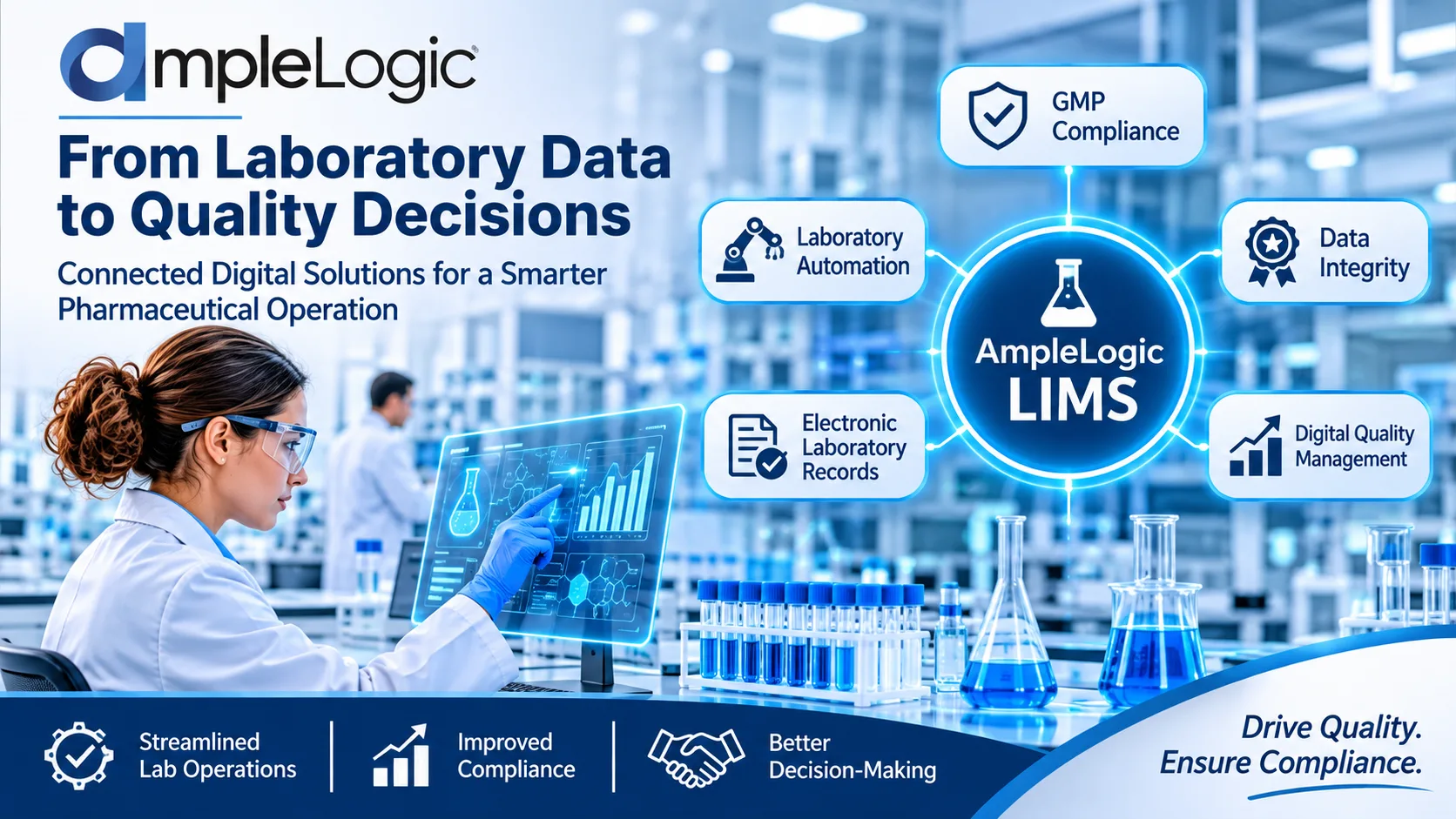
A Laboratory Information Management System (LIMS) provides a structured environment for managing laboratory activities.
Depending on its configuration, LIMS can support:
- Sample registration and identification
- Test assignment and scheduling
- Laboratory result recording and review
- Sample status monitoring
- Electronic laboratory records
- Reporting and operational visibility
The value of LIMS extends beyond replacing paper records. It helps establish a more organized way to manage laboratory information throughout the testing lifecycle.
For pharmaceutical organizations evaluating this approach, AmpleLogic LIMS software offers a starting point for exploring digital laboratory management.
Why Laboratory Data Matters to the Wider Quality System
Laboratory information frequently supports decisions outside the laboratory.
For example, an unexpected test result may require investigation. Repeated testing delays may indicate a process bottleneck. Trends in analytical results may become relevant during product quality reviews.
This is where integration between laboratory and quality processes becomes valuable.
A connected digital environment can help relevant teams access information more efficiently and coordinate activities such as deviations, investigations, corrective and preventive actions (CAPA), and change control.
The objective is not to make every department use the same application. It is to ensure that the right information can move between appropriate systems with suitable controls.
APQR: Bringing Information Together for Meaningful Reviews
Annual Product Quality Reviews (APQR) demonstrate why connected information matters.
An APQR may require information about laboratory results, manufacturing performance, deviations, complaints, changes, and other quality-related activities.
LIMS can contribute laboratory testing information, but it does not necessarily contain every record required for a complete review. Other quality and manufacturing systems may also be needed.
When information is organized and accessible, teams can spend less time collecting records and more time evaluating trends, identifying recurring issues, and understanding opportunities for improvement.
Data Integrity Requires More Than Software
Digital records can improve traceability, but technology alone does not establish data integrity.
Pharmaceutical organizations must consider user access, audit trails, record controls, system validation, standard operating procedures, and employee training.
Systems should be configured according to their intended use and applicable regulatory requirements. Review and oversight remain important even when routine activities are automated.
A successful digital implementation therefore combines suitable technology with well-defined processes and responsible governance.
Start with the Workflow, Not the Software
A practical digital transformation initiative begins by understanding how work currently happens.
Organizations can identify repetitive activities, information gaps, reporting delays, and areas where departments depend on manual coordination. These findings can guide software selection and implementation priorities.
It is also useful to define measurable objectives, such as improving sample visibility, reducing manual data handling, or making quality records easier to retrieve.
Starting with clear operational needs helps prevent technology investments from becoming disconnected from everyday business requirements.
Conclusion
The future of pharmaceutical laboratory management is not simply about collecting more digital data. It is about making laboratory information reliable, accessible, and useful across the quality lifecycle.
LIMS can provide a structured foundation for laboratory operations, while connected quality and manufacturing systems can help organizations use information more effectively.
With thoughtful implementation, appropriate controls, and collaboration across departments, pharmaceutical companies can move toward more transparent and better-coordinated operations.