
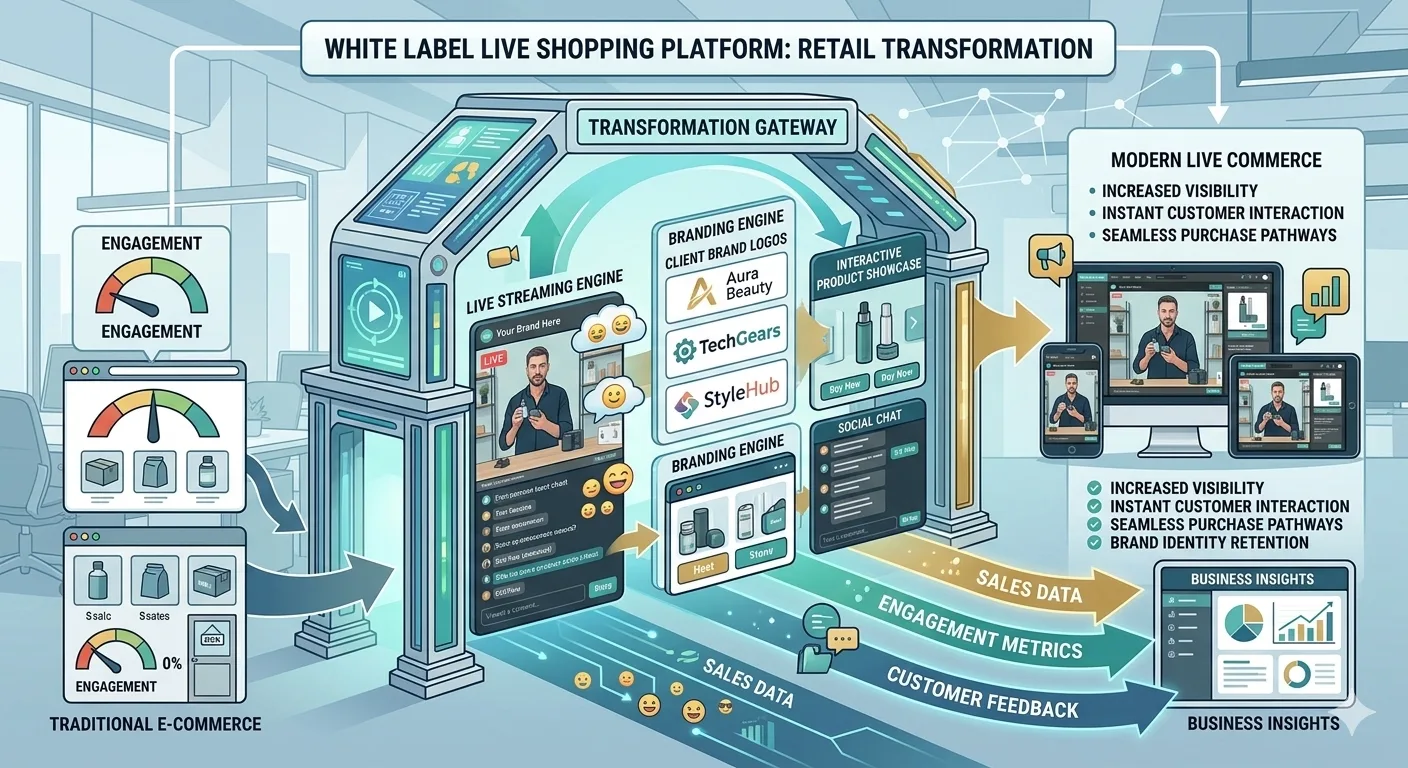
The way people shop online is changing. For years, ecommerce focused mainly on convenience, allowing customers to browse products, compare options, and complete purchases from anywhere. While this model continues to be successful, many customers now expect more interactive experiences that help them understand products before buying.
Live shopping has emerged as one of the biggest shifts in digital commerce because it combines entertainment, product discovery, and online purchasing into a single experience. Instead of simply viewing product images or reading descriptions, customers can watch products being demonstrated, communicate with sellers, ask questions, and make purchasing decisions in real time.
This change has created a new business opportunity for entrepreneurs, retailers, marketplaces, and brands that want to build their own live commerce platforms. A company can create a dedicated environment where customers interact with hosts, discover products, and complete purchases while enjoying a more engaging shopping experience.
However, launching a live shopping business requires more than just creating a video platform. Businesses need to think about customer experience, product management, payment processing, audience engagement, analytics, and platform scalability. Developing all these components from scratch can require significant investment, technical expertise, and time.
White label technology provides a practical approach for businesses that want to enter the live commerce market faster. Instead of building every feature from the beginning, companies can start with an existing technology foundation and customize it according to their business model, branding, and customer requirements.
For businesses exploring new digital commerce opportunities, Triple Minds helps create customized technology solutions that allow companies to build scalable platforms designed around their specific goals and customer experiences.
A successful live shopping business is not only about having a platform. It requires a clear strategy, the right technology approach, and an understanding of how customers interact with brands in a live environment. From defining the business idea to launching the final platform, every stage plays an important role in creating a successful live commerce venture.
This article explores how businesses can move from an initial idea to a fully launched live shopping business using white label technology and what important factors they should consider throughout the journey.
Why Live Shopping Is Becoming a New Business Opportunity
Live shopping is becoming a major business opportunity because it combines the strengths of ecommerce, social interaction, and digital content. Traditional online shopping is efficient, but it often lacks the personal connection customers experience when shopping in physical stores. Live commerce helps solve this problem by allowing businesses to interact with customers directly during the buying process.
One of the biggest reasons businesses are exploring live shopping is changing customer behaviour. Modern shoppers want more information before making purchasing decisions, especially for products where demonstrations, explanations, or expert opinions are valuable. A live shopping session allows customers to see products in action and receive immediate answers to their questions.
For example, a fashion business can host a live event where models showcase a new collection, explain different styles, and help customers understand fitting options. A beauty company can organize product demonstrations where experts explain how to use skincare products and answer customer questions. An electronics brand can conduct live demonstrations that highlight product features and compare different models.
These experiences create stronger customer engagement compared with traditional product pages because customers feel connected to the brand and the people presenting the products. A well-designed live streaming shopping platform allows businesses to create these interactive experiences while maintaining control over their branding, customer journey, and shopping environment.
Live shopping also creates new revenue opportunities for businesses. Companies can generate income through direct product sales, seller partnerships, subscription models, affiliate collaborations, and sponsored events. A marketplace business, for example, can allow different sellers to host live sessions while earning commissions from successful transactions.
Another opportunity comes from building communities around products and brands. Instead of focusing only on one-time purchases, businesses can create regular live events where customers return for product launches, expert sessions, exclusive offers, and interactive experiences. This helps brands develop stronger relationships with their audiences and encourages repeat engagement.
For creators and influencers, live shopping provides another way to connect with audiences and monetize their influence. Many businesses are partnering with creators who already have strong communities because these individuals can bring trust and engagement to live commerce events. Marketplaces can also benefit significantly from this model. Instead of competing only through product listings and pricing, marketplaces can help sellers create stronger relationships with buyers through interactive experiences.
The growing popularity of live shopping shows that ecommerce is moving toward a more human-centered approach. Customers are not only looking for products; they are looking for experiences, guidance, and connections with brands.
For businesses, this creates an opportunity to build a new digital commerce channel that combines selling with engagement. However, success depends on having the right technology foundation, business strategy, and customer-focused approach.
Planning Your Live Shopping Business Before Development
Before investing in technology, businesses need to clearly define their live shopping business model and understand what they want to achieve. A strong foundation helps ensure that the platform development process focuses on the right features and customer experience.
The first step is identifying the target audience. Different audiences have different expectations, and the platform experience should be designed around customer needs. A luxury brand may focus on exclusive product launches and personalized interactions, while a marketplace may prioritize seller management and large-scale customer engagement.
Businesses also need to decide what type of live shopping model they want to create. Some companies may build a brand-focused platform where they sell their own products through live events. Others may create a marketplace where multiple sellers can host sessions and interact with customers.
Another model is a creator-focused platform where influencers and content creators use live shopping tools to recommend and sell products to their communities. Each approach requires different features, workflows, and business strategies. Defining the product category is also important. Some industries naturally benefit from live shopping because customers want demonstrations or guidance before purchasing. Fashion, beauty, electronics, home products, fitness, and lifestyle categories are examples where interactive experiences can strongly influence buying decisions.
Businesses should also plan the features they need before development begins. This includes deciding whether they require live streaming, customer chat, product integration, payment processing, seller management, analytics, or personalized recommendations.
A clear business plan helps companies avoid unnecessary development costs and ensures that the final platform supports their long-term goals.
By understanding the target audience, business model, and required capabilities early, businesses can create a stronger roadmap for building a successful live shopping business with white label technology.
How White Label Technology Helps Launch a Live Shopping Business Faster
Building a live shopping business requires multiple technologies working together. A successful platform needs reliable video streaming, ecommerce capabilities, customer engagement features, payment systems, analytics, and integrations with existing business tools. Developing each of these components from the beginning can be challenging, especially for businesses that want to enter the market quickly.
White label technology helps reduce this complexity by providing a ready-to-customize foundation. Instead of spending significant time creating basic infrastructure, businesses can focus on improving their brand experience, developing their business model, and attracting customers.
One of the biggest advantages of using white label technology is faster market entry. Traditional platform development can take months or even years because businesses need to plan, design, build, test, and maintain every component. A white label approach allows companies to start with an existing framework and customize it according to their specific requirements.
Another important benefit is flexibility. White label solutions are not limited to one specific business model. A fashion brand can create a platform focused on product launches and influencer collaborations, while a marketplace can build an environment where multiple sellers host live shopping sessions.
Customization allows businesses to create experiences that match their audience and industry requirements. Companies can modify the platform design, add required features, integrate existing systems, and create workflows that support their operations.
White label technology also reduces technical complexity. Businesses do not need to manage every development challenge internally, allowing their teams to focus on marketing, customer acquisition, content strategy, and business growth.
Scalability is another important advantage. As a live shopping business grows, the platform needs to support more customers, products, sellers, and transactions. A properly designed white label solution provides the foundation needed for future expansion without requiring businesses to rebuild their entire platform.
For entrepreneurs and established companies, this approach creates a balance between speed and customization. Businesses can launch faster while still creating a unique live shopping experience that represents their brand.
Key Features Required for a Successful Live Shopping Business
A successful live shopping business depends on more than just hosting live videos. Customers expect smooth interactions, easy purchasing options, and engaging experiences that make them want to return. Businesses need to include the right combination of features to create a platform that supports both customer satisfaction and business growth.
The features required may vary depending on the business model, but certain capabilities are essential for creating a reliable and scalable live commerce experience.
1. Reliable Live Streaming Experience
Live streaming is the foundation of any live shopping business. The quality of the streaming experience directly impacts customer engagement because viewers expect clear video, smooth performance, and minimal delays during live events.
A strong platform should support high-quality video streaming that works reliably across different devices. Customers may join events using smartphones, tablets, or desktops, and the experience should remain consistent regardless of the device they use.
For example, a fashion brand hosting a seasonal collection launch may attract thousands of viewers at the same time. The platform needs to handle this audience while maintaining video quality and allowing customers to interact with hosts without technical issues.
Low latency is also important because live shopping depends on real-time interaction. Customers should be able to ask questions, receive responses, and participate in discussions without noticeable delays.
Businesses should also consider additional streaming capabilities such as event scheduling, recorded sessions, multiple hosts, and different content formats. These features allow companies to create various types of live experiences based on their marketing goals.
A reliable streaming infrastructure helps businesses create professional live events that keep customers engaged and encourage longer viewing sessions.
2. Product Discovery and Instant Shopping
The main goal of a live shopping business is to connect product discovery with purchasing. Customers should be able to learn about products during a live event and complete purchases without unnecessary steps.
A well-designed platform should allow businesses to display product information directly during live sessions. Customers should be able to view product details, pricing, availability, and offers while watching the presentation.
For example, a beauty brand hosting a skincare demonstration can showcase featured products alongside the live video. Customers can understand how products work, ask questions, and add items to their cart immediately.
Integration with ecommerce systems is essential because businesses need accurate information about products, inventory, and orders. When customers purchase items during a live event, the platform should automatically update stock levels and order information.
A smooth checkout experience also plays an important role in conversion rates. If customers need to leave the live session, search for products separately, or complete complicated checkout steps, they may lose interest and abandon their purchase.
The best live shopping experiences reduce the gap between interest and purchase by making the buying process simple and convenient.
3. Customer Engagement Tools
Customer interaction is what makes live shopping different from traditional ecommerce. The ability to communicate directly with customers creates stronger relationships and improves trust.
A successful live shopping platform should include engagement features such as live chat, customer questions, reactions, polls, and interactive discussions. These tools allow customers to participate instead of only watching.
For example, during a live electronics demonstration, customers may ask questions about product specifications, features, or comparisons. The host can respond immediately, helping customers make better purchasing decisions.
Interactive features can also make events more enjoyable. A fashion brand can ask viewers to vote on their favourite style, while a beauty company can collect questions before a product tutorial begins.
These interactions create a sense of community around the brand. Customers feel more connected because they are not simply purchasing from a website; they are participating in an experience.
Engagement data can also provide valuable insights for businesses. Companies can understand which topics attract attention, what customers ask most frequently, and which products create the highest interest.
By including strong engagement tools, businesses can transform live shopping from a simple sales activity into an interactive customer experience.
4. Seller and Creator Management
For businesses planning to build a marketplace-style live shopping platform or a creator-driven commerce model, seller and creator management features become extremely important. Live shopping is not always limited to a single brand presenting its own products. Many successful platforms allow multiple sellers, influencers, experts, and creators to participate and connect with customers.
A strong white label live shopping platform should provide tools that make it easier to manage different sellers and content creators. Businesses should be able to create seller profiles, manage permissions, monitor performance, and organize live events efficiently.
For example, a marketplace can allow different sellers to host their own live shopping sessions while maintaining control over the overall platform experience. Each seller can showcase products, interact with customers, and generate sales while the marketplace manages the technology and business operations.
Creator partnerships are also becoming an important part of live commerce. Many customers trust recommendations from influencers and industry experts because these individuals already have strong relationships with their audiences. A platform that supports creator participation allows businesses to expand their reach and attract new customer groups.
Businesses may also need features for managing creator collaborations, tracking sales generated through specific hosts, and measuring engagement performance. These insights help companies identify which creators generate the most value and improve future partnerships.
Seller and creator management features are especially valuable for businesses that want to build a scalable live shopping ecosystem. Instead of depending on a single host or brand team, companies can create a network of contributors who bring different audiences and product expertise.
5. Analytics and Business Insights
Analytics are essential for understanding whether a live shopping business is achieving its goals. While engagement and sales are important outcomes, businesses need deeper insights into customer behaviour, event performance, and purchasing patterns.
A successful platform should provide analytics that help businesses understand how customers interact with live sessions. This includes information such as viewer numbers, watch duration, product clicks, engagement levels, conversion rates, and sales performance.
For example, a fashion company may analyze a live event and discover that customers spend more time watching styling demonstrations compared with standard product presentations. Based on this information, the business can adjust future events to create more engaging experiences.
Analytics also help businesses measure the performance of sellers, creators, and hosts. A marketplace can identify which sellers generate higher engagement, while a brand can understand which presenters create stronger customer connections.
Customer insights can also improve marketing strategies. Businesses can identify popular products, understand customer interests, and create more targeted campaigns based on real behaviour rather than assumptions.
Advanced analytics become even more valuable as the platform grows. When businesses manage multiple live events, product categories, or seller accounts, data helps them make informed decisions and improve operations.
A live shopping business that uses analytics effectively can continuously optimize its strategy, improve customer experiences, and increase revenue opportunities.
Steps to Launch a Live Shopping Business With White Label Technology
Launching a live shopping business requires more than selecting a technology platform. Businesses need a structured approach that combines market research, business planning, technology development, and customer growth strategies.
The first step is understanding the market opportunity. Businesses should research their target audience, competitors, customer preferences, and industry trends. This helps identify what type of live shopping experience can provide real value.
For example, a beauty-focused platform may focus on tutorials, expert advice, and product demonstrations, while a marketplace platform may focus on seller discovery and community interaction. Understanding the audience helps shape the platform direction.
After defining the business idea, the next step is creating a clear business model. Companies need to decide how the platform will generate revenue and what type of customers they want to serve. Some businesses may sell their own products, while others may create platforms for sellers, creators, or brands.
The technology planning stage comes next. Businesses need to define required features, integrations, customization options, and scalability requirements. Choosing the right white label technology approach helps reduce development complexity while allowing businesses to create a unique platform.
Once requirements are clear, the platform can move into design and development. This stage includes creating the user interface, integrating ecommerce systems, building live shopping features, and configuring business-specific workflows.
Testing is an important step before launch. Businesses need to evaluate streaming quality, purchasing processes, platform performance, security, and user experience. Testing ensures customers receive a smooth experience when the platform becomes available. After launch, businesses need to focus on customer acquisition and growth. Marketing campaigns, creator partnerships, promotional events, and regular live sessions help attract audiences and encourage repeat engagement.
A successful live shopping business continues evolving after launch. Businesses should analyze performance data, collect customer feedback, and improve the platform based on changing market needs.
Monetization Models for a Live Shopping Business
A live shopping business can generate revenue through different models depending on its target market and platform structure. Choosing the right monetization strategy is important because it determines how the business creates long-term value.
One common model is direct product sales. Brands can use live shopping events to showcase their own products and generate revenue through customer purchases. This approach works well for retailers, manufacturers, and businesses that already have product catalogs. Marketplaces can create revenue through seller commissions. In this model, multiple sellers use the platform to host live shopping events, and the business earns a percentage from successful transactions.
Another opportunity is subscription-based revenue. Businesses can offer premium features, advanced tools, or exclusive access to sellers, creators, or customers through paid subscription plans. Brand partnerships and sponsored events can also create additional income. Companies can collaborate with brands, influencers, or creators to organize special live shopping campaigns and promotional events.
Affiliate commerce is another growing opportunity. Creators can promote products during live sessions and earn commissions from purchases generated through their recommendations.
As the live commerce industry continues growing, businesses can explore multiple revenue streams instead of depending on a single source of income. A flexible white label platform allows companies to adapt their monetization strategy as their audience and market position develop.
Common Challenges When Starting a Live Shopping Business
Starting a live shopping business creates exciting opportunities, but businesses also need to prepare for several challenges that can affect long-term success. Having the right technology is important, but success also depends on building customer trust, creating engaging content, and developing a strong business strategy.
One of the biggest challenges is building an audience. Unlike traditional ecommerce, where customers can discover products through search or advertisements, live shopping depends heavily on engagement. Businesses need to attract viewers and give them reasons to return for future events.
For example, a new live shopping platform may have excellent technology, but without consistent content, interesting hosts, and effective marketing, it can struggle to gain attention. Businesses need to invest in content planning, promotions, and community building to create regular customer participation.
Finding the right hosts, sellers, or creators can also be challenging. The success of a live shopping event often depends on the person presenting the products. A good host should understand the products, communicate clearly, and connect naturally with the audience.
Technical scalability is another important challenge. As a business grows, the platform must support more viewers, more products, and more transactions. A solution that works well for a small audience may face performance issues when traffic increases significantly.
Customer trust is also critical. Online shoppers want confidence before making purchases, especially during live events where decisions are often made quickly. Businesses need secure payments, accurate product information, transparent policies, and reliable customer support to create trust.
Competition is another factor businesses need to consider. As more companies enter live commerce, brands need to create unique experiences rather than simply copying existing models. The businesses that succeed will be those that combine technology with strong customer relationships and valuable content.
By understanding these challenges early, businesses can create better strategies and avoid common mistakes when launching their live shopping venture.
How to Choose the Right White Label Technology Partner
Choosing the right technology partner is one of the most important decisions when building a live shopping business. The partner selected during development can directly impact the platform’s performance, scalability, customization options, and ability to support future growth.
Businesses should first evaluate the technical experience of potential partners. A live shopping platform involves multiple technologies, including real-time streaming, ecommerce systems, payment integrations, analytics, security, and cloud infrastructure. A partner should have experience managing these different areas together.
Customization capability is another important factor. Every live shopping business has different goals, audiences, and operational requirements. A reliable technology partner should provide flexibility to customize the platform according to the business model instead of forcing companies to use a fixed solution.
Scalability should also be considered from the beginning. Businesses may start with a smaller audience but eventually expand to thousands or millions of users. The platform architecture should be prepared to handle future growth without requiring major rebuilding.
Integration expertise is equally valuable. Many businesses already use ecommerce platforms, inventory systems, customer relationship tools, and marketing software. The technology partner should be able to connect these systems smoothly to create an efficient business operation.
Support after launch is another important consideration. A live shopping business requires continuous monitoring, improvements, updates, and technical assistance. A partner that provides long-term support helps businesses maintain platform reliability and adapt to changing market needs.
For businesses looking for a technology partner with experience in building customized digital platforms, Triple Minds helps companies develop flexible white label live shopping solutions designed around business goals, customer experiences, and future scalability.
The right partner does not only provide software development. They help businesses transform an idea into a reliable digital commerce platform that can grow over time.
Future Growth Opportunities for Live Shopping Businesses
The future of live shopping will continue to expand as customers become more comfortable with interactive digital experiences. Businesses that invest in flexible technology and strong customer engagement strategies will have opportunities to create new revenue channels and build stronger relationships with audiences.
Artificial intelligence will become an important part of future live shopping experiences. AI-powered recommendations can help customers discover products based on their interests, while intelligent assistants can provide quick answers during live events.
Personalization will also become more important. Instead of showing the same experience to every customer, businesses will focus on creating shopping journeys based on individual preferences, previous interactions, and purchasing behaviour.
Virtual shopping experiences may also create new opportunities. Businesses can combine live commerce with advanced technologies to create more immersive experiences that make online shopping feel closer to visiting a physical store.
Social commerce will continue influencing the growth of live shopping. Customers increasingly discover products through communities, creators, and digital conversations. Businesses that combine social engagement with ecommerce will be better positioned to attract modern shoppers.
Global expansion is another opportunity. A scalable white label platform allows businesses to adapt their live shopping model for different regions, languages, and customer segments.
As technology continues improving, live shopping will become more than a sales channel. It will become a complete customer engagement strategy where businesses build communities, provide value, and create long-term relationships.
Conclusion
Building a live shopping business requires a combination of the right strategy, technology foundation, and customer-focused approach. While the idea of launching a live commerce platform may seem complex, white label technology helps businesses reduce development challenges and move from concept to launch more efficiently.
From understanding the target audience and selecting the right business model to developing essential features and creating monetization strategies, every stage plays an important role in building a successful platform.
The future of online commerce is moving toward more interactive and personalized experiences. Businesses that create engaging live shopping environments can differentiate themselves, improve customer relationships, and discover new growth opportunities.
With experience in developing customized technology solutions, Triple Minds helps businesses build scalable live shopping platforms that support modern ecommerce requirements and long-term business expansion.
Frequently Asked Questions (FAQs)
1. What is a white label live shopping business?
A white label live shopping business uses a customizable technology platform that allows companies to create their own branded live commerce experience. Businesses can modify the platform design, features, and workflows according to their requirements without building everything from scratch.
2. How can businesses start a live shopping platform?
Businesses can start by defining their target audience, selecting a business model, identifying required features, choosing a technology partner, customizing the platform, testing the solution, and launching their live shopping experience.
3. Is white label technology better than building a live shopping platform from scratch?
White label technology is often preferred by businesses that want faster deployment, reduced technical complexity, and customization flexibility. Building from scratch may be suitable for companies with highly specific requirements and large development resources.
4. How do live shopping businesses make money?
Live shopping businesses can generate revenue through product sales, seller commissions, subscriptions, sponsored events, brand partnerships, and affiliate marketing models.
5. How much does it cost to launch a live shopping business?
The cost depends on factors such as platform features, customization requirements, integrations, scalability needs, and development complexity. Businesses should evaluate their goals and required functionality before estimating investment.