
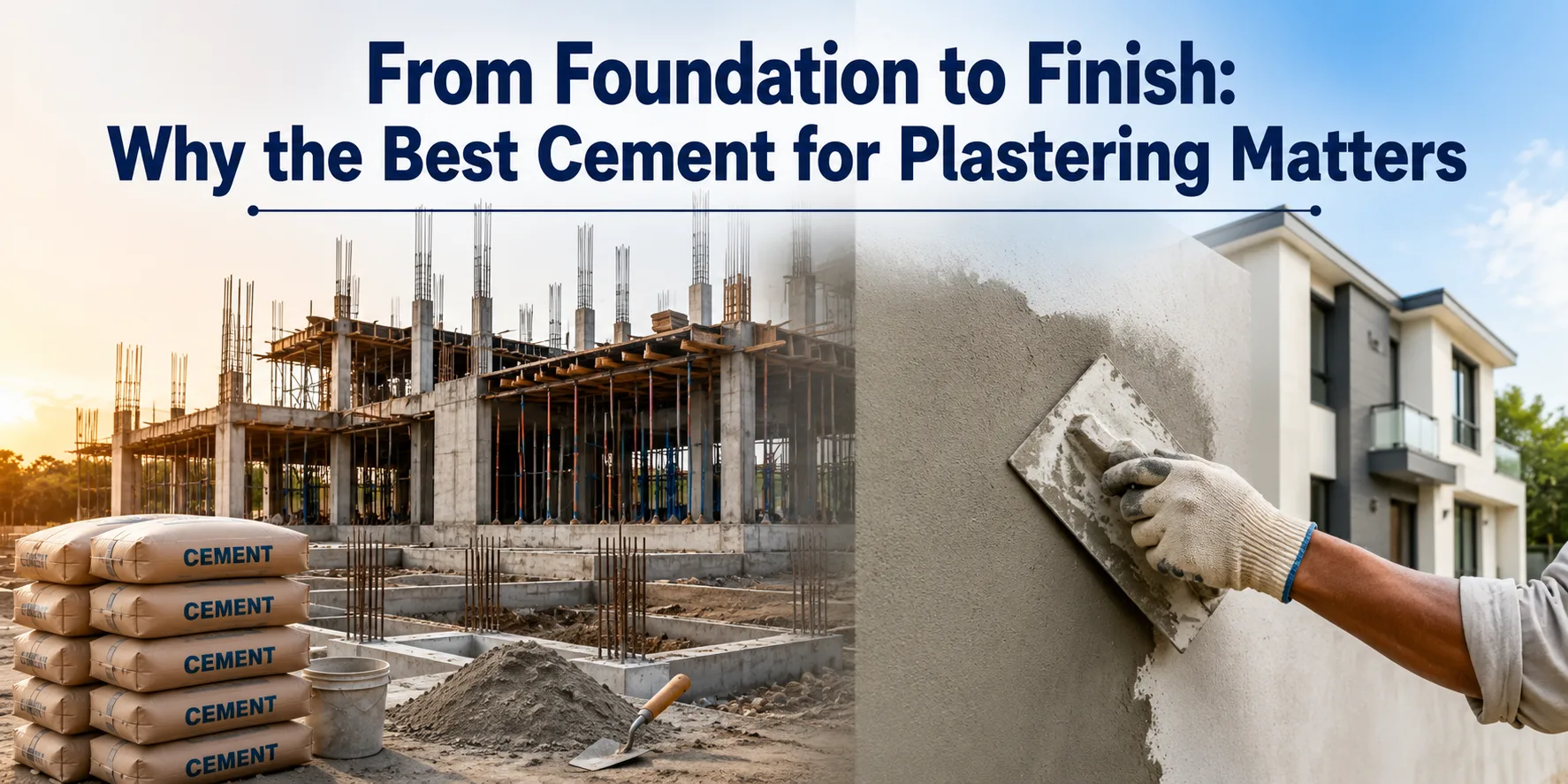
Every successful construction project is built in stages. The journey begins with a strong foundation, progresses through structural work, and concludes with the finishing touches that define the building's appearance and durability. While foundations and concrete frameworks often receive the most attention, the quality of plastering plays an equally important role in determining how well a structure performs over time.
Plastering is much more than a cosmetic layer applied to walls. It protects masonry from moisture, creates a smooth surface for painting, improves durability, and contributes to the overall strength of the finished structure. However, these benefits largely depend on selecting the best cement for plastering.
Many homeowners, builders, and contractors focus primarily on labour skills during plastering, but even the most experienced workmanship cannot compensate for poor-quality construction materials. Choosing the right cement from the beginning helps ensure better adhesion, improved workability, and long-lasting wall finishes that continue performing for years.
Understanding why cement selection matters enables buyers to make better construction decisions instead of choosing products based solely on price or availability.
Why Cement Selection Matters Throughout the Construction Process
Every stage of construction depends on materials that perform consistently under different site conditions. While cement is essential for structural concrete, it also plays a significant role in achieving durable plaster finishes.
The best cement for plastering provides the right balance of strength, workability, and finishing quality. It allows masons to apply plaster evenly while helping the finished surface resist cracking, shrinkage, and weather-related deterioration.
Rather than viewing plastering as the final decorative step, it should be considered an important part of the building's long-term protection.
Factors That Explain Why the Best Cement for Plastering Matters
Not every cement performs the same way during plastering work. Several factors influence the final quality of wall finishes, making cement selection an important part of the construction process.
1. Better Workability Creates Smooth Wall Finishes
One of the first qualities professionals look for during plastering is workability.
Plaster must spread evenly across brick or block surfaces without becoming too stiff or too loose. Cement with good workability allows masons to achieve a uniform finish with greater ease, reducing unnecessary adjustments during application.
The best cement for plastering produces a mix that remains workable for an appropriate duration, allowing workers to complete finishing without compromising quality.
Smooth application not only improves appearance but also reduces material wastage and labour effort.
2. Strong Adhesion Improves Surface Durability
Plaster acts as a protective layer between the wall and the surrounding environment.
For that protection to remain effective, the plaster must bond properly with the masonry surface. Poor adhesion may eventually lead to peeling, hollow patches, or surface failures.
The best cement for plastering supports strong bonding between the plaster layer and the substrate, creating a stable finish that remains intact over time.
Proper adhesion becomes particularly valuable in areas exposed to changing weather conditions or frequent moisture.
3. Reduced Risk of Surface Cracks
Hairline cracks are among the most common concerns observed in plastered walls.
Although cracking can result from several factors—including curing practices, structural movement, and workmanship—the quality of cement also contributes significantly to plaster performance.
Using the best cement for plastering helps produce a more uniform plaster mix that supports controlled hydration and improved consistency during curing.
When combined with proper application techniques, quality cement contributes to stronger and more crack-resistant wall finishes.
4. Consistent Quality Leads to Better Results
Construction projects often require multiple batches of plaster over several weeks.
If cement quality varies between batches, maintaining a consistent wall finish becomes more difficult. Differences in colour, texture, or workability may become noticeable throughout the project.
Manufacturers that maintain strict quality control help ensure that every bag delivers similar performance.
Choosing the best cement for plastering allows builders to achieve greater consistency from one application area to another, improving the overall appearance of the completed project.
5. Moisture Resistance Supports Long-Term Protection
Walls are continuously exposed to environmental conditions.
Rainfall, humidity, and seasonal weather changes can gradually affect plaster surfaces if suitable materials are not used during construction.
The best cement for plastering contributes to denser plaster that helps protect masonry against moisture penetration. While proper waterproofing measures remain important, quality plaster serves as an additional layer of defence that helps preserve structural integrity.
This becomes especially valuable in regions experiencing prolonged monsoon seasons and high humidity.
6. Better Surface Finish Enhances Painting Performance
Painting quality depends heavily on the condition of the plaster underneath.
Uneven plaster surfaces often require additional preparation before painting can begin. This increases labour costs and extends project timelines.
The best cement for plastering helps create smoother surfaces that require less correction before decorative finishes are applied.
As a result, paints adhere more effectively and deliver a cleaner, more attractive appearance.
7. Durability Reduces Future Maintenance
Construction should always be viewed as a long-term investment.
While initial material costs are important, maintenance expenses throughout the building's lifespan often have a greater financial impact.
Using the best cement for plastering contributes to durable wall finishes that require fewer repairs caused by cracking, debonding, or premature deterioration.
Lower maintenance requirements provide greater value over the life of the building.
8. Quality Manufacturing Influences Plaster Performance
The performance of cement depends largely on how it is manufactured.
Manufacturers investing in modern production facilities, advanced laboratory testing, and strict quality assurance procedures generally produce cement with greater consistency.
This consistency directly benefits plastering applications by providing predictable setting characteristics and reliable performance.
When selecting the best cement for plastering, buyers should consider not only the product itself but also the manufacturing standards behind it.
9. Choosing Quality Over Initial Price
Construction budgets naturally influence purchasing decisions.
However, selecting cement solely because it offers the lowest price may overlook factors that affect long-term construction quality.
Lower-priced products may appear economical initially but could result in increased repairs, higher maintenance costs, or additional finishing work later.
The best cement for plastering should be evaluated based on overall performance, consistency, manufacturer reputation, and suitability for the intended application rather than price alone.
10. Long-Term Building Performance Begins With Better Materials
Every visible wall inside a home or commercial building reflects decisions made during construction.
Smooth finishes, durable surfaces, and long-lasting appearance depend on materials that perform consistently from the first day onward.
Selecting the best cement for plastering supports better workmanship, improved durability, and enhanced protection throughout the building's service life.
It is a decision that continues delivering value long after construction has been completed.
Looking Beyond the Cement Bag
Many buyers compare cement brands based only on packaging or local availability.
However, professional builders understand that product performance depends on several additional factors, including:
- Manufacturing quality
- Product consistency
- Proper storage conditions
- Freshness of cement
- Recommended applications
- Reliable supply throughout construction
- Manufacturer reputation
- Quality control standards
Evaluating these aspects provides greater confidence that the selected cement will perform as expected during plastering work.
Why Builders Continue to Prioritize Quality
Modern construction places increasing emphasis on lifecycle performance rather than immediate savings.
Homeowners expect walls to remain attractive for many years without frequent repairs. Contractors seek materials that improve productivity while delivering consistent results. Developers focus on reducing maintenance costs after project completion.
These objectives all point toward one common requirement: choosing quality construction materials from the very beginning.
The best cement for plastering supports these expectations by helping create durable, reliable, and visually appealing wall finishes that continue performing long after construction is complete.
Final Thoughts
Every construction project progresses from foundation work to structural development and finally to the finishing stage. Although plastering is often viewed as one of the last steps, its influence extends far beyond appearance.
Quality plaster protects walls, enhances durability, improves paint performance, and contributes to the overall lifespan of the building. Achieving these benefits begins with selecting the best cement for plastering rather than treating cement as a routine purchase.
By evaluating factors such as manufacturing quality, consistency, workability, durability, and long-term performance, homeowners and builders can make more informed decisions that support successful construction. In the end, lasting wall finishes are not created by finishing techniques alone—they begin with choosing the right cement from the very start.