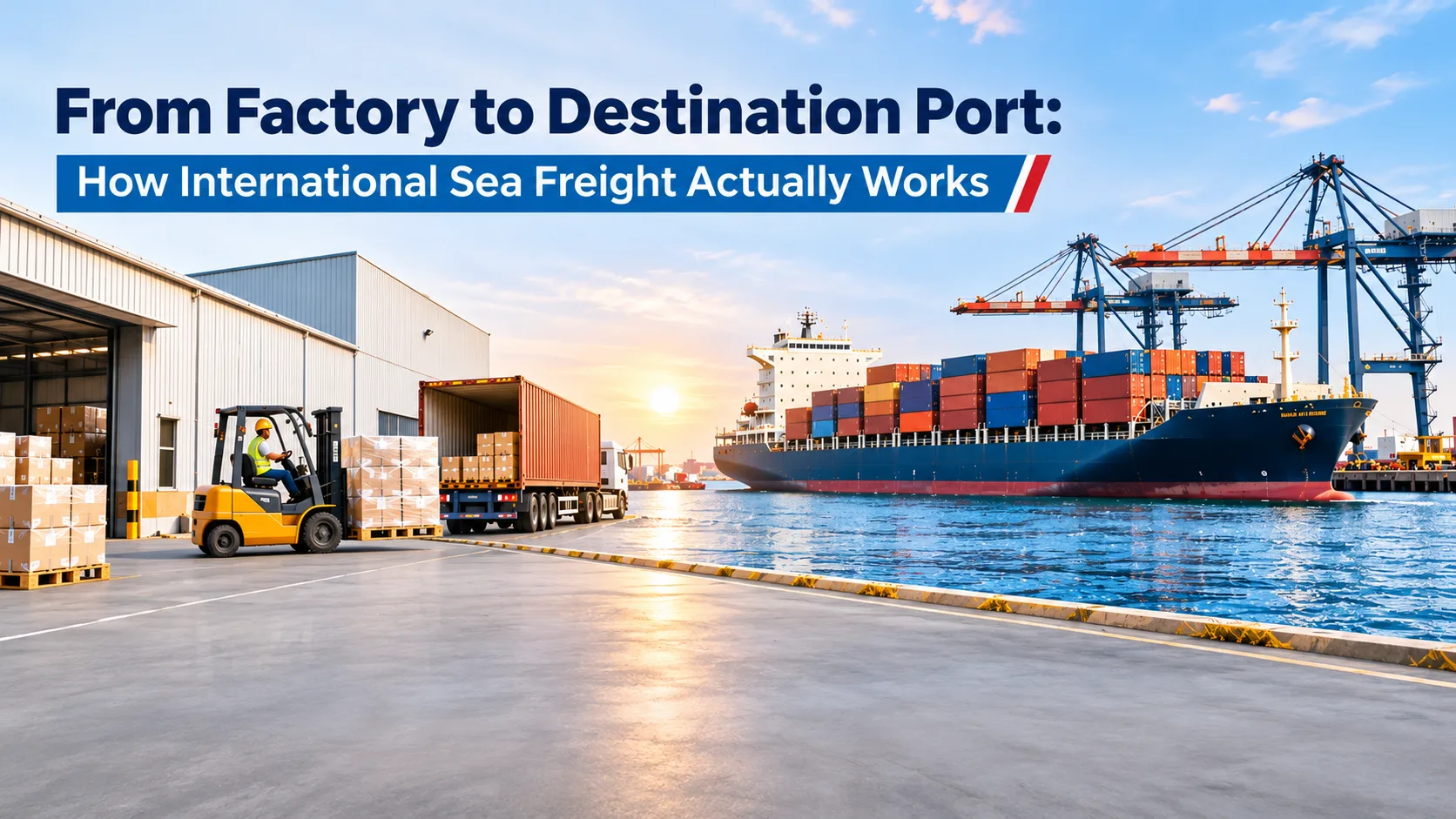
Moving goods between countries involves much more than booking space on a cargo ship. Every shipment goes through several stages, from preparing goods at the factory to customs clearance and final delivery. Understanding this process helps businesses plan their shipments, manage costs, and avoid unnecessary delays.
International sea freight services provide a practical way to transport large quantities of goods across countries. They are particularly useful for businesses shipping machinery, furniture, raw materials, manufactured products, and other bulky cargo. Compared with air freight, sea shipping generally offers a more economical option for larger consignments when delivery time is flexible.
However, a successful sea shipment depends on proper planning. The cargo must be packed, documented, booked, cleared, and handled correctly at both ends of the journey. Knowing what happens at each stage makes international shipping easier to manage.
1. Preparing Goods at the Factory
The shipping process starts well before the cargo reaches a port. Businesses first need to prepare their goods for international transportation.
This includes checking the quantity, dimensions, weight, and condition of the products. The packaging must also be suitable for a long journey involving loading, unloading, handling, and changes in weather conditions.
For example, machinery may require protective wrapping and secure wooden crates. Furniture needs proper cushioning, while smaller products may be packed into cartons and placed on pallets.
Businesses should also check whether their products have specific packaging, labelling, or handling requirements in the destination country.
Good preparation reduces the risk of damage and makes the next stages easier.
2. Choosing the Right Shipping Method
Once the cargo is ready, the next decision is how to transport it. The two common container shipping options are Full Container Load (FCL) and Less than Container Load (LCL).
Full Container Load (FCL)
FCL means a business books an entire shipping container for its cargo. The container is allocated to one shipment, even if the goods do not completely fill it.
This option is generally suitable for businesses moving large quantities of products. It also gives the shipper greater control over how the cargo is loaded and secured.
Less than Container Load (LCL)
LCL is suitable when a shipment does not require an entire container. Goods from different shippers are consolidated into one container and transported together.
Businesses with smaller cargo volumes can use this option instead of paying for a full container.
The right choice depends on shipment volume, cargo type, budget, and delivery requirements.
3. Booking the Shipment and Arranging Collection
After selecting the shipping method, the business or exporter arranges the booking with a freight forwarder or shipping provider.
At this stage, several details need to be confirmed:
- Pickup location and destination port
- Cargo weight and dimensions
- Type and quantity of goods
- Preferred shipping method
- Expected shipping schedule
- Special handling requirements
For factory-to-port shipments, collection may be arranged using a truck or another suitable transport vehicle. The cargo is then moved to a warehouse, container freight station, or port facility, depending on the shipping arrangement.
Booking early is helpful, particularly during busy shipping periods when container availability and vessel schedules can change.
4. Preparing Shipping Documents
Documentation is one of the most important parts of international shipping. Missing or incorrect information can delay customs clearance and affect the shipment schedule.
The documents required depend on the goods, destination country, and nature of the transaction.
Common shipping documents include:
- Commercial Invoice: Shows the goods being sold, their quantities, values, and seller and buyer details.
- Packing List: Provides information about the number of packages, weight, dimensions, and contents.
- Bill of Lading: Acts as a transport document issued by the shipping carrier.
- Certificate of Origin: Identifies the country where the goods were produced or manufactured, when required.
- Export Declaration: Contains shipment details submitted to the relevant customs authority.
Some products may also require inspection certificates, licences, or additional permits.
Businesses should check the documentation requirements before dispatch. Requirements can differ between countries and product categories.
APEDA+1
5. Moving Cargo to the Export Port
Once the goods are packed and the required paperwork is prepared, the cargo moves towards the export port.
For FCL shipments, goods are loaded into the allocated container. The container is secured and sealed before transportation to the port.
For LCL shipments, the cargo is usually delivered to a consolidation facility. There, it is combined with other shipments going to the same destination or route.
At the port, the shipment goes through the required checks before loading. Customs authorities may examine the cargo or request additional documents.
Once the necessary formalities are completed, the container is cleared for loading onto the vessel.
6. Ocean Transportation and Shipment Tracking
After port handling and loading are completed, the vessel begins its international journey.
The shipping duration depends on the origin and destination ports, vessel schedules, transshipment requirements, and weather conditions. Some shipments travel directly, while others pass through intermediate ports before reaching their destination.
Tracking is important during this stage. It helps businesses monitor shipment progress and plan their inventory, warehouse space, and delivery schedules.
Unlike regular parcel tracking India services, sea freight tracking may involve container numbers, booking references, or bill of lading details.
Businesses should also account for possible schedule changes. Port congestion, adverse weather, and vessel delays can affect estimated arrival dates.
7. Arrival at the Destination Port and Customs Clearance
When the vessel reaches the destination port, the cargo enters the import clearance process.
The destination country's customs authority reviews the shipment details, declared value, product classification, and supporting documents.
Depending on the shipment, customs may request additional information, inspect the goods, or assess applicable import duties and taxes.
The importer or their appointed representative must complete the required formalities before the cargo can be released.
It is important to remember that shipping charges and import duties are separate costs. Businesses should understand their responsibilities for customs payments before arranging international transportation.
Proper documentation at the export stage can make this process easier. However, it does not guarantee that customs will release every shipment without inspection.
8. From Destination Port to the Final Delivery Address
Customs clearance is not the final stage of the journey.
Once the cargo is released, it can be collected from the port or transported to the consignee's warehouse, office, or other delivery location.
The final arrangement depends on the selected service.
Port-to-port shipping covers transportation between the origin and destination ports. The customer usually arranges transportation before collection and after arrival.
Door-to-door shipping includes transportation from the pickup location to the final delivery address, subject to the agreed service coverage.
For businesses handling regular imports, coordinating the final delivery is important. Delays in collection can lead to additional storage, handling, or other charges.
This is why delivery arrangements should be planned before the vessel reaches its destination.
What Can Affect International Sea Freight Costs?
Sea freight costs are not based on distance alone. Several factors influence the final shipping quotation.
The main considerations include:
- Cargo volume and weight: The shipment's dimensions and weight affect container selection and pricing.
- Shipping method: FCL and LCL have different pricing structures.
- Origin and destination: Port charges and transport costs vary between locations.
- Cargo type: Special handling or restricted goods may involve additional requirements.
- Customs and documentation: Certain shipments require extra paperwork, inspections, or approvals.
- Additional services: Packaging, collection, insurance, and final delivery can affect the overall cost.
Businesses should request a detailed quotation and understand which services and charges are included.
Sea Freight or Air Freight: Which Should Businesses Choose?
Both shipping methods serve different business requirements. The right option depends on how much cargo needs to move, how quickly it must arrive, and the available budget.
FactorSea FreightAir FreightBest suited forLarge and bulky cargoUrgent and smaller shipmentsShipping costGenerally economical for bulk cargoGenerally higherTransit timeLongerShorterCargo capacitySuitable for large volumesSubject to aircraft capacityCommon shipmentsMachinery, furniture, raw materialsDocuments, samples, urgent goodsBusinesses with flexible delivery schedules often consider sea freight for bulk transportation. When speed is the priority, international air cargo services may be more suitable.
Some businesses also use both methods. They send urgent stock by air while moving larger quantities by sea to manage transportation costs.
How to Prepare for a Smooth Sea Freight Shipment
A little preparation can prevent several common shipping problems.
Before booking, businesses should:
- Confirm the cargo weight, dimensions, and total quantity.
- Check import restrictions in the destination country.
- Prepare accurate invoices and packing lists.
- Select the appropriate FCL or LCL option.
- Confirm the vessel schedule and estimated transit time.
- Arrange cargo insurance where required.
- Plan customs clearance and final delivery.
It is also useful to maintain regular communication with the freight provider. Any changes in cargo details, shipping schedules, or delivery requirements should be communicated early.
Making International Sea Freight More Manageable
International sea freight involves several stages, from cargo preparation and port handling to customs clearance and final delivery. Understanding these steps helps businesses plan shipments, manage costs, and avoid delays.
Through its international logistics experience, Fastway India highlights the importance of choosing suitable shipping methods, preparing accurate documents, and allowing sufficient transit time for overseas cargo.