
Introduction
The technology industry is experiencing a significant transformation as organisations increasingly adopt data-driven systems, machine learning, and artificial intelligence. Businesses are no longer relying only on traditional software applications to manage operations. They are integrating intelligent systems that can analyse information, automate workflows, and support complex decision-making.
This transformation has created opportunities across several technical specialisations. Data engineers build the infrastructure required to collect and process information, generative AI developers create intelligent applications, and forward deployed engineers help businesses implement these technologies in real-world environments.
Although these roles are connected, each involves different responsibilities and technical capabilities. Understanding their individual requirements can help students, developers, and working professionals identify suitable career paths and build relevant skills.
Why Data Engineering Remains Important in the AI Era
Artificial intelligence applications depend heavily on reliable and well-organised information. Before an AI model can generate useful results, the underlying data must be collected, processed, validated, and made accessible.
Data engineers develop the systems responsible for these activities. They create automated pipelines, manage databases, integrate different information sources, and maintain data warehouses that support analytics and machine learning applications.
For example, a financial institution may collect information from customer accounts, loan applications, repayment records, and transaction systems. A data engineering solution can combine these sources, remove duplicate records, standardise information, and prepare datasets for analytical use.
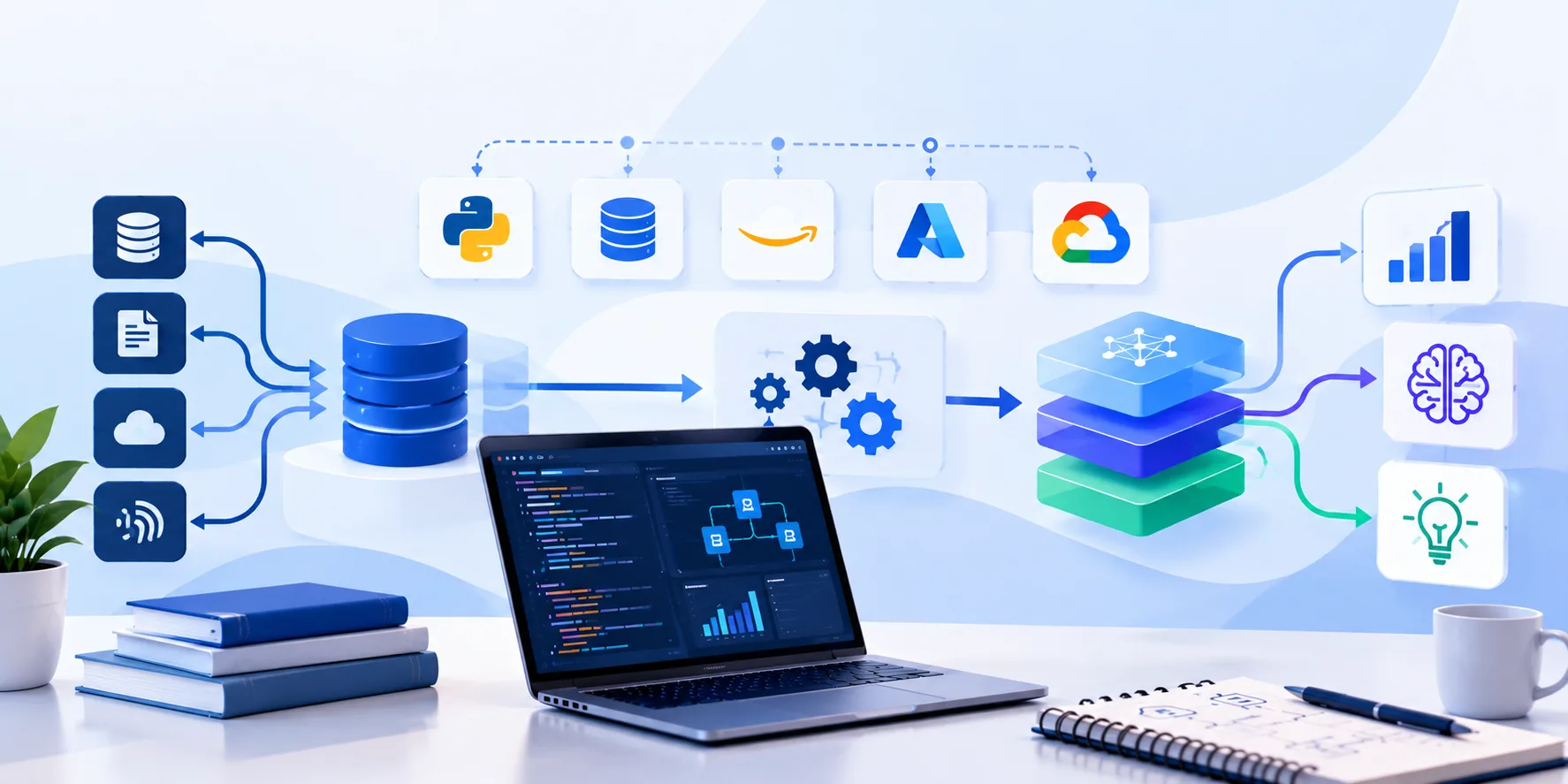
Technologies such as Python, SQL, Apache Spark, Kafka, and cloud storage services are commonly used in modern data environments. Understanding ETL and ELT processes is equally important because these workflows determine how information moves between different systems.
Professionals who want to develop these capabilities can consider structured data engineer training. Building knowledge of programming, databases, data modelling, and pipeline development provides a foundation for working with modern data infrastructure.
How Generative AI Is Changing Software Development
Traditional software applications generally follow predefined instructions and programmed workflows. Generative AI introduces a different approach by enabling applications to generate content, understand natural language, summarise information, and respond to user queries.
Large Language Models (LLMs) are central to many of these applications. They can process text, generate responses, interpret instructions, and assist with tasks that previously required extensive manual effort.
However, developing practical generative AI applications requires more than basic prompt writing. Professionals need to understand machine learning fundamentals, model architecture, prompt engineering, embeddings, vector databases, and Retrieval-Augmented Generation (RAG).
For example, a business can develop an AI-powered knowledge assistant that answers employee questions using internal documents. The system retrieves relevant information from a knowledge base and provides it as context to a language model before generating a response.
Other applications include automated document processing, conversational assistants, content generation, intelligent search, and customer support automation.
Developers interested in building these capabilities can pursue a generative ai course. Structured learning in generative AI and machine learning can help professionals understand how intelligent applications are developed and integrated into business workflows.
Understanding the Role of a Forward Deployed Engineer
Developing an AI application is only one part of successful technology implementation. Organisations must also integrate the application with existing systems, manage technical limitations, and ensure that the solution performs reliably in production.
This is where Forward Deployed Engineers (FDEs) play an important role.
A forward deployed engineer works closely with customers and internal engineering teams to understand business requirements and develop practical technical solutions. Unlike roles focused exclusively on software development or technical consulting, this position combines hands-on engineering with customer collaboration.
Responsibilities may include developing APIs, integrating enterprise applications, building data pipelines, deploying AI systems, debugging production issues, and adapting software to specific customer environments.
Consider a financial services company that wants to automate document verification using AI. A forward deployed engineer may first understand the existing verification process, identify integration requirements, connect the AI application with internal systems, and test the solution before deployment.
The role also requires strong communication skills. Engineers must translate business requirements into technical specifications, explain implementation decisions, and work with different stakeholders to resolve challenges.
The growing importance of this role is also reflected in industry hiring. A recent report highlighted that 88% of surveyed Indian enterprises expect demand for forward deployed engineers to increase by 2030.
Professionals interested in this specialised career path can explore a forward deployed engineer course to understand the engineering and implementation concepts involved in deploying AI solutions for real business requirements.
Technical Skills That Connect Data and AI Engineering
Although data engineering, generative AI development, and forward deployed engineering have different objectives, they share several technical foundations.
Python is widely used across all three areas for automation, data processing, application development, and AI integration. SQL supports database operations and information retrieval, while APIs allow different applications and services to communicate.
Cloud computing is another important area. Platforms such as AWS, Microsoft Azure, and Google Cloud provide infrastructure for deploying applications, managing datasets, and processing workloads.
Professionals working with AI applications should also understand vector databases, embeddings, model evaluation, and application monitoring. These technologies help developers build systems that retrieve relevant information and generate more useful responses.
Forward deployed engineers additionally need experience with software integration, debugging, authentication, deployment, and customer-facing problem-solving. Their responsibilities often extend beyond developing an application to ensuring that it works within an organisation's existing technical environment.
Practical Projects That Can Strengthen Your Technical Profile
Practical implementation helps learners understand how technologies work together and prepares them to solve real-world problems.
A data engineering project could involve creating an automated pipeline that collects sales information from multiple sources, cleans the records, and stores processed datasets in a database.
For generative AI practice, learners can develop a document-based question-answering application using an LLM, embeddings, and a vector database. This introduces concepts such as document processing, retrieval, prompt design, and response evaluation.
An implementation-focused project could involve integrating an AI-powered support assistant into an existing application through APIs. The project can include authentication, data retrieval, error handling, deployment, and performance monitoring.
These projects should be documented with details about the business problem, technologies used, development process, and final results. A practical portfolio can demonstrate technical capabilities more effectively than a list of programming languages alone.
How to Prepare for Emerging Technology Careers
Preparing for these technology roles requires a clear understanding of your interests and professional objectives.
Individuals interested in databases, programming, data pipelines, and information processing can begin with data engineering fundamentals. Those interested in intelligent applications, language models, and machine learning can focus on generative AI development.
Professionals who enjoy software development, customer interaction, enterprise integration, and solving practical implementation challenges may find forward deployed engineering an interesting career direction.
Regardless of the specialisation, practical learning should remain a priority. Develop a strong understanding of programming, work with relevant technologies, and build projects that demonstrate your ability to solve business problems.
Conclusion
Data engineering and artificial intelligence are changing how organisations build and operate technology solutions. Reliable data infrastructure supports analytics and intelligent applications, generative AI introduces new ways to interact with information, and forward deployed engineers help translate these capabilities into practical business outcomes.
Each specialisation requires a different combination of technical knowledge and practical experience. Understanding these differences can help aspiring professionals select an appropriate learning path and prepare for opportunities in the evolving technology industry.
Consistent learning, hands-on projects, and the ability to apply technical concepts to real business challenges remain essential for building a successful technology career.
Frequently Asked Questions
1. What is the difference between data engineering and generative AI?
Data engineering focuses on collecting, processing, transforming, and managing information. Generative AI focuses on developing applications that use trained models to generate content, understand instructions, and respond to queries.
2. What skills are required to become a Forward Deployed Engineer?
Forward deployed engineers need programming knowledge, API integration skills, cloud computing experience, software development capabilities, and an understanding of AI applications. Communication and problem-solving skills are equally important.
3. Is Python necessary for learning generative AI?
Python is highly useful because it supports machine learning, data processing, model integration, and application development. It is widely used with AI frameworks, APIs, and libraries.
4. What is Retrieval-Augmented Generation (RAG)?
RAG is a technique that connects a language model with external information sources. It retrieves relevant information from documents or databases and provides that context to the model before generating a response.
5. Can data engineers transition into AI engineering roles?
Yes. Data engineers already have experience with Python, SQL, data pipelines, and cloud infrastructure. Developing additional knowledge of machine learning, LLMs, embeddings, and AI application development can help them move towards AI-focused responsibilities.
6. What projects should beginners build to learn AI engineering?
Beginners can develop document-based chatbots, automated data pipelines, AI-powered search applications, and API-integrated assistants. These projects help demonstrate practical understanding of data processing and intelligent application development.
7. Is a certification enough to start a career in AI engineering?
A certification can demonstrate familiarity with specific technologies, but practical experience is equally important. Building projects, understanding application architecture, and learning to troubleshoot technical problems can strengthen professional readiness.