
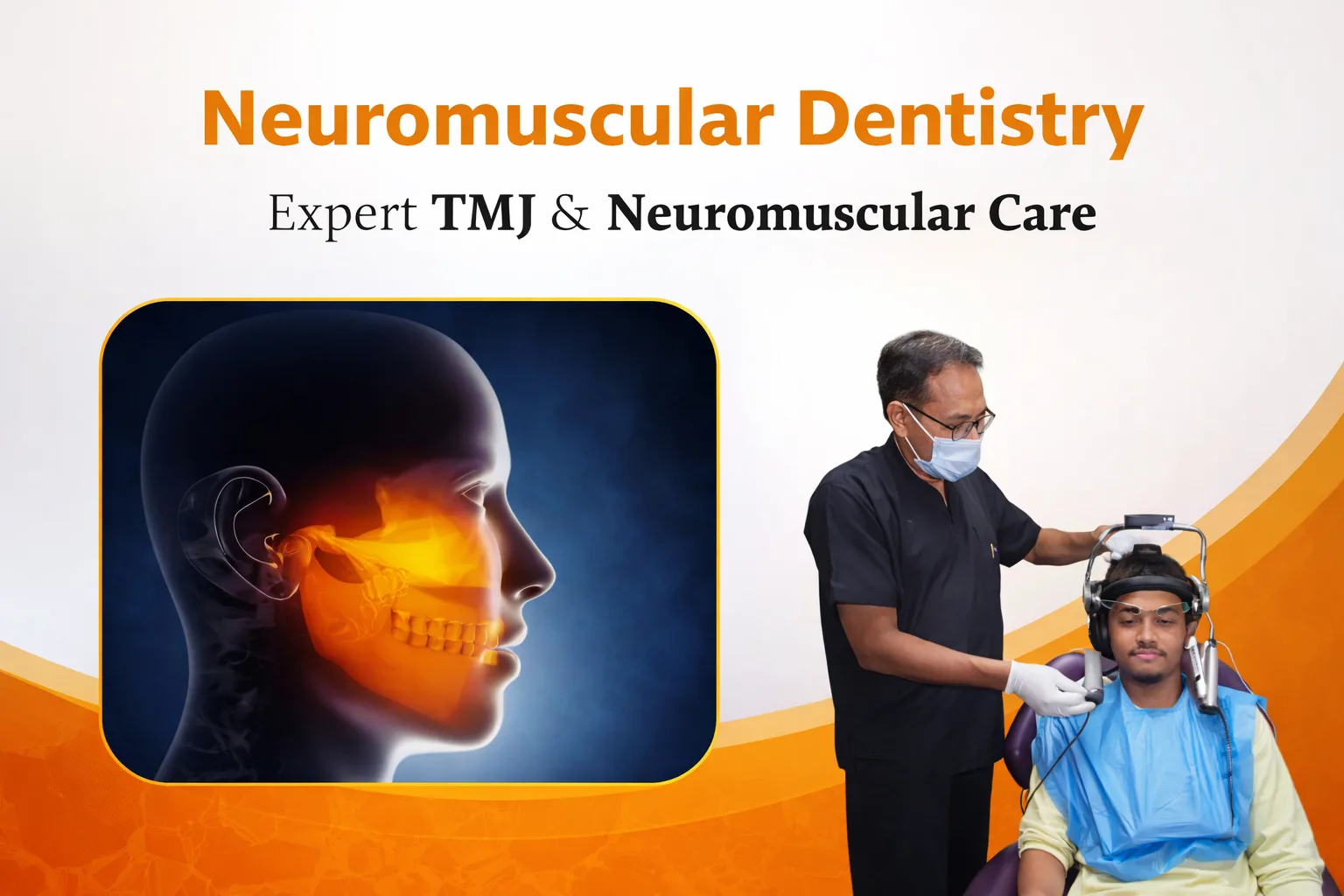
Jaw discomfort can affect much more than the jaw itself. For people experiencing TMJ (temporomandibular joint) problems, everyday activities such as chewing, speaking, yawning, and even opening the mouth can become uncomfortable.
What may begin as occasional jaw soreness or a clicking sound can sometimes develop into persistent discomfort that affects daily life. Understanding TMJ problems and seeking appropriate care can be an important step toward restoring comfortable jaw function.
What Is TMJ?
The temporomandibular joints (TMJ) are located on both sides of the face, connecting the lower jaw to the skull. These joints work with the surrounding muscles and tissues to allow the jaw to move smoothly when we chew, speak, swallow, and yawn.
When the joint or surrounding muscles are not functioning properly, a person may develop a group of conditions commonly referred to as temporomandibular disorders (TMD).
Recognizing the Signs of TMJ Problems
TMJ-related symptoms can vary from person to person. Common signs may include:
- Jaw pain or tenderness
- Discomfort while chewing
- Clicking, popping, or grinding sounds
- Difficulty opening the mouth fully
- Jaw stiffness or fatigue
- Facial pain or tenderness
- Headaches associated with jaw tension
- Ear-area discomfort
- Difficulty speaking for extended periods
- A feeling that the bite has changed
Occasional jaw clicking without pain is not necessarily a sign of a serious problem. However, persistent pain, restricted movement, or difficulty with normal activities should be evaluated by a qualified professional.
Why Can TMJ Discomfort Affect Everyday Life?
The jaw is constantly in use throughout the day. We use it to eat, talk, yawn, swallow, and express ourselves.
When jaw movement becomes painful or restricted, even simple activities can become frustrating. A person may avoid certain foods, chew only on one side, limit conversations, or become conscious of their jaw movements.
Over time, this can affect comfort and confidence in everyday situations.
What Can Contribute to TMJ Problems?
TMJ disorders can have several contributing factors. These may include:
- Teeth clenching or grinding
- Jaw-muscle tension
- Stress and certain habits
- Previous injury to the jaw
- Changes within the joint
- Certain dental or bite-related factors
- Repetitive strain on the jaw
Because there is no single cause for every TMJ problem, an individualized assessment is important.
How Is TMJ Evaluated?
A dental or healthcare professional may evaluate your symptoms, jaw movement, muscles, and bite. Depending on the findings, additional diagnostic tests or imaging may be recommended.
The purpose of an evaluation is to understand what may be contributing to the discomfort and determine whether conservative care or another treatment approach is appropriate.
Treatment Focused on Comfort and Function
Treatment for TMJ disorders depends on the underlying problem and the severity of symptoms. In many cases, conservative approaches may be considered first.
These can include:
- Making temporary dietary adjustments
- Avoiding excessive jaw movements
- Addressing clenching or grinding habits
- Jaw exercises or physical therapy when appropriate
- Stress-management techniques
- Oral appliances in selected cases
- Medication when recommended by a healthcare professional
Some patients may require more specialized treatment depending on the condition affecting the joint or surrounding structures.
The goal is not simply to manage discomfort but to help restore comfortable and functional jaw movement.
From Daily Discomfort to Confident Speaking
Imagine being able to enjoy a meal without worrying about jaw pain. Imagine speaking comfortably without constantly thinking about jaw stiffness or discomfort.
For someone living with TMJ symptoms, these everyday experiences can feel like meaningful improvements.
With an accurate diagnosis and an individualized treatment plan, the focus can shift from simply coping with jaw discomfort to improving comfort, movement, and everyday function.
When Should You Seek Professional Advice?
If you experience persistent jaw pain, difficulty chewing, limited mouth opening, or symptoms that interfere with speaking or daily activities, consider seeking professional evaluation.
Early assessment can help identify potential contributing factors and guide you toward appropriate care.
Conclusion
TMJ discomfort doesn't have to be something you simply learn to live with. Understanding your symptoms and getting an appropriate evaluation can be the first step toward better jaw function.
The journey can move from daily TMJ jaw discomfort to comfortable chewing and confident speaking—with the right diagnosis, personalized care, and attention to long-term jaw health.
Easy Appointment Booking
Booking a consultation is straightforward and convenient. Patients can schedule appointments online and receive assistance with directions to the clinic. Whether you are based in Kerala, elsewhere in India, or traveling from overseas, accessing dental care at FMS International Dental Center for TMJ, under the care of Dr. Faissal Zardi, is easy, convenient, and patient-friendly.
FMS International Dental Center - Advanced Dental Implant Clinic
Address: Door No. 8-2-293/82/A/725 Road No. 37, Hitech City Rd, near Daspalla Hotel, CBI Colony, Jubilee Hills, Hyderabad, Telangana 500033
| Map: https://maps.app.goo.gl/oz8o8cxuVwnTeivL7