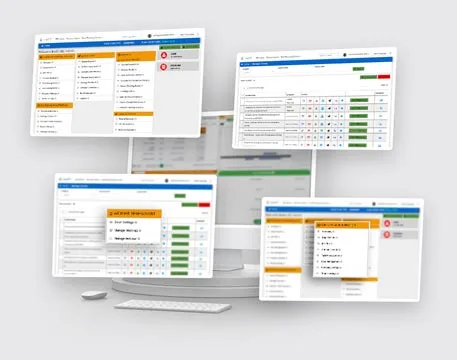
The way learners access education has changed dramatically. Students now expect learning to be accessible across devices, available when they need it, and supported by engaging digital resources. A learning management system in education can help institutions bring these expectations together by connecting learning content, assessments, communication, learner records, and progress tracking within a single environment.
Why Are Educational Institutions Moving Beyond Traditional Learning Models?
Traditional classroom teaching remains valuable, but it can become challenging when learners have different schedules, locations, abilities, and learning requirements.
Digital learning platforms provide another layer of flexibility. Students can revisit resources, complete activities at their own pace, and access learning materials beyond scheduled classroom hours. Educators can also organise resources more efficiently and maintain greater visibility over learner participation.
This does not mean that every aspect of education needs to become digital. Instead, technology can extend what educators already do effectively.
For schools, universities, training providers, and professional education organisations, this can create a more adaptable approach to learning delivery.
What Does a Modern Education LMS Actually Do?
An LMS is more than an online storage space for course files. When properly designed and implemented, it can support multiple stages of the learning journey.
Depending on the institution's requirements, an LMS may provide:
- Structured learning pathways
- Interactive digital courseware
- Online assignments and assessments
- Automated completion tracking
- Learner dashboards
- Course enrolment management
- Progress and performance reports
- Digital certification
- Instructor communication
- Mobile learning access
The important factor is not how many features a platform offers. The real question is whether those features solve genuine educational challenges.
A university may prioritise assessment and academic progress. A vocational provider may need structured compliance records. A professional training organisation may place greater emphasis on flexible learning and reporting.
The best technology strategy starts with these requirements.
Can Personalised Learning Really Work at Scale?
One of the biggest challenges in education is supporting learners who do not progress at exactly the same pace.
Digital learning can provide greater flexibility by allowing students to revisit difficult concepts, complete additional activities, or progress through content according to an established learning pathway.
Adaptive approaches can also help organisations create different learning experiences based on learner needs.
For example, an introductory assessment could identify knowledge gaps before a learner begins a module. Additional resources could then be provided where appropriate, while learners who demonstrate existing knowledge may move more efficiently through familiar topics.
This creates opportunities for personalised learning experiences without requiring educators to manually manage every learner pathway.
What Role Does Data Play in Better Learning Decisions?
Educational technology becomes considerably more useful when institutions can turn learning activity into meaningful insight.
LMS reporting can help educators understand questions such as:
- Which modules have the lowest completion rates?
- Where are learners struggling with assessments?
- Which resources receive the most engagement?
- How quickly are learners progressing?
- Which groups may require additional support?
These insights should not be viewed simply as numbers on a dashboard. They can provide evidence for improving course structure, instructional design, learner support, and assessment strategies.
This is an important part of evidence-informed education. Instead of relying entirely on assumptions, institutions can use learner activity and performance information alongside educator expertise to make informed improvements.
How Can Online Learning Remain Human-Centred?
Technology alone cannot create meaningful education.
A poorly designed online course can leave learners feeling isolated, overwhelmed, or disconnected. Human interaction therefore remains an important part of digital education.
Educators can use live sessions, discussion activities, feedback, mentoring, collaborative projects, and practical exercises to maintain interaction.
Digital resources can support these activities by giving learners preparation materials before a session or reinforcement resources afterwards.
This creates a more complete online learning experience, where technology supports teaching rather than attempting to replace it.
Is Mobile Learning Changing What Students Expect?
Learners increasingly use smartphones and tablets alongside computers. This means educational content needs to consider different screen sizes and learning environments.
Mobile-friendly learning can allow students to review short modules while travelling, revisit key concepts between classes, or complete knowledge checks outside traditional study hours.
However, mobile learning should not simply mean shrinking desktop content onto a smaller screen. Effective mobile course design considers navigation, interaction size, content length, readability, and learner attention.
Short, focused learning activities can be particularly useful when learners have limited time available.
What Should Educators Look for in Digital Learning Content?
The quality of the content is just as important as the platform delivering it.
Good educational content should have clear learning objectives and should guide learners towards measurable outcomes. Information should be organised logically, supported by appropriate examples, and reinforced through meaningful activities.
Instead of filling courses with unnecessary animations or lengthy text, instructional designers can focus on relevance and learner application.
Useful elements may include:
Scenario-based activities: Help learners connect concepts with realistic situations.
Knowledge checks: Give learners opportunities to test understanding.
Interactive exercises: Encourage active participation rather than passive reading.
Microlearning: Break complex subjects into focused learning units.
Feedback: Helps learners understand mistakes and reinforce correct thinking.
This learner-centred approach can make digital courses more purposeful and easier to navigate.
Where Does Blended Learning Fit Into the Future of Education?
The future is unlikely to be exclusively online or exclusively classroom-based. Different subjects, learners, and institutions require different delivery methods.
A well-designed blended learning solution can combine self-paced digital learning with instructor-led teaching, workshops, virtual sessions, practical activities, and collaborative learning.
For example, learners might complete an online foundation module before attending a classroom workshop. The face-to-face session can then focus on discussion, problem-solving, demonstrations, or practical application.
This model makes each learning format serve a specific purpose rather than simply duplicating the same content across different channels.
How Can Brilliant Teams Help Organisations Build Better Learning Experiences?
For organisations developing or improving their digital learning strategy, Brilliant Teams provides expertise across eLearning development, learning platforms, and blended learning approaches.
Its work can help organisations think beyond simply purchasing technology and instead consider how content, learners, educators, technology, and measurable outcomes should connect.
Final Thought
The strongest digital education strategies are not built around technology alone. They begin with learners and ask what support, content, interaction, assessment, and flexibility will help them achieve meaningful outcomes.
As institutions continue adapting to changing learner expectations, a blended learning solution can provide a practical bridge between digital convenience and human-led education. With thoughtful design and the right technology, learning can become more flexible without losing the engagement, guidance, and connection that make education effective.