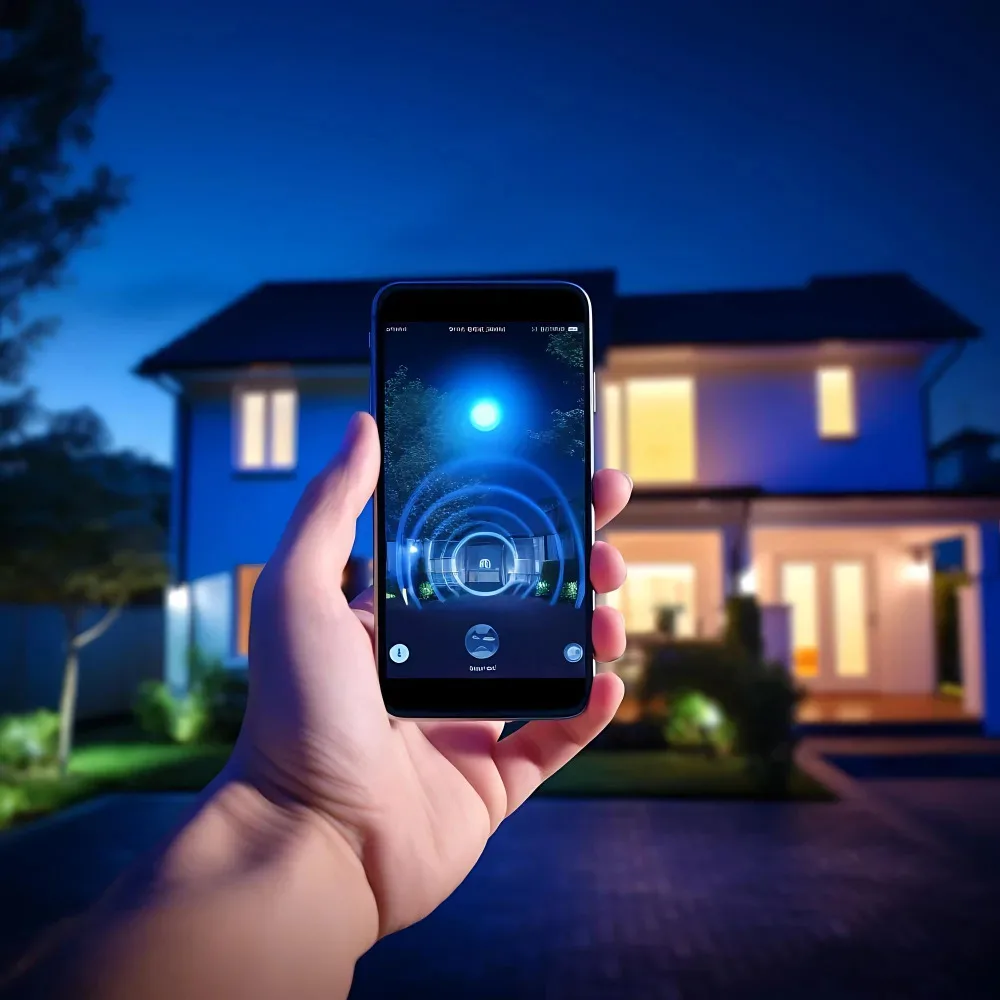
There used to be a security camera bolted above nearly every shop door, recording grainy footage onto a tape that nobody looked at until something had already gone wrong. That was security for a long time: reactive, manual, usually too slow to help when it counted.
Things look different now. Cameras don't just sit there recording anymore, they analyze what's happening and flag it before things get worse. It's a fairly big shift, going from passive recording to something closer to real intelligence, and it's changed how the industry thinks about protection. Below is a look at how we got here, why it matters for regular businesses and homeowners, and what's worth paying attention to if you're shopping for something modern.
The Early Days: Cameras That Only Watched
Security tech wasn't smart back in the beginning, not even a little. The setups common through the 70s and into the 80s did exactly one job: record footage so someone could go back and watch it later, assuming they had the patience.
And there were plenty of problems with that. Footage came out blurry more often than not. Tapes had to be swapped constantly, and somebody had to store all of them somewhere. There was no way to catch anything as it happened, only after. Going back through hours of tape took forever, and storage ran out no matter how carefully anyone rationed it.
Still, for all their flaws, these systems mattered. They showed that watching a space had real value, even if all you could do was look back at what already happened. Everything since has built on that basic idea.
The Shift to Digital: Clearer Pictures, Bigger Networks
Eventually security moved off analog tape and onto digital, IP-based systems, and this wasn't some small tweak. It changed what was even possible.
Picture quality got noticeably better almost overnight. But the real shift was in scale. Cameras could now share a single network instead of each one running its own isolated recorder in a back room. Suddenly, watching a huge property, several branches, or a full campus from one screen wasn't some distant idea, it was just how things worked.
That digital foundation opened the door to the next step: teaching these systems to actually think for themselves instead of just recording.
The Rise of Smart Surveillance
This is the interesting part. Once cameras were running on digital networks, folding in artificial intelligence and machine learning became realistic. Cameras stopped being passive. They started interpreting what was in front of them.
A smart system today notices when movement looks unusual, not just when something moves at all. It can check a face against a known list, or read a license plate on its own. If somebody's hanging around an entrance a little too long, it catches that and sends an alert right away.
That's the real difference. Security stopped being something you look back on and became something that can step in while it's still happening. Instead of finding out about a break-in the next morning through last night's tape, you find out the moment it starts.
Why This Evolution Matters for Businesses and Homeowners
It's tempting to assume all of this is only relevant for big corporations with security budgets to match. It isn't. Regular homes and small businesses feel this shift just as much.
Take a decent cctv security camera system today. It does a lot more than point at a doorway. Modern setups can tell the difference between an actual threat and a shadow, bad weather, or somebody's cat wandering through the yard, something older motion sensors were never good at. Fewer false alarms means people actually trust the notification when one shows up.
Response time changes too. Rather than discovering trouble the next day, a property owner gets pinged right away and can act immediately, whether that's checking a live feed, calling the police, or confirming it was nothing.
What to Look for in a Modern Security Setup
Not everything labeled "smart" actually earns the label, so it's worth asking some questions before buying. Does it push real-time alerts, or just record and leave you to check later? Can it tell a person apart from a car, or from a tree branch swaying in the wind? Is remote viewing available through a phone app? Where does the footage get backed up? And if you need to add more cameras or another location later, can the system handle that without starting over?
A cctv security system worth investing in pairs solid hardware with software that actually earns the word "smart," not just a spec sheet full of buzzwords. Where the real value shows up is in how well those two sides actually work together, day to day, not in how good the packaging sounds.
The Road Ahead
None of this is slowing down. Features that felt cutting-edge not long ago, facial recognition, automatic threat detection, are becoming standard instead of expensive extras. As the AI behind these systems keeps improving, expect fewer false alarms and a better sense of what's actually worth flagging.
Cloud storage is showing up more too, giving property owners a backup even if something local breaks. Combined with mobile alerts, nobody really needs to sit near a screen all day waiting for something to happen.
Put together, this means less wasted effort for businesses and homeowners, and stronger protection where it counts. Security tech is finally starting to work closer to how people always wished it would.
Final Thoughts
Going from simple recording cameras to systems that actually think has been one of the more meaningful shifts in this whole industry. What used to be a passive tool for looking back at what already happened has turned into something closer to an active partner, one that can help stop a problem instead of just documenting it afterward.
If you're thinking about upgrading, here's the short version. Modern security isn't really about pointing a camera at a door anymore. It's about picking a system that actually understands what it's looking at, and reacts fast enough for that understanding to mean something.