In today’s fast-paced business environment, efficiency and speed are essential. Organizations are constantly seeking ways to streamline operations, reduce human error, and maximize productivity. This is where Flow AI workflow automation comes into play. By combining artificial intelligence with automation, Flow AI is transforming the way businesses handle tasks, processes, and decision-making, creating smarter and more adaptive workflows.
At its core, Flow AI workflow automation is about designing systems that can manage tasks intelligently without continuous human intervention. Unlike traditional automation tools that follow fixed rules, Flow AI learns from data and adapts to changing conditions. This means that workflows are no longer static; they can respond to real-time information, anticipate outcomes, and optimize processes automatically. For example, a flow ai-powered system can analyze customer inquiries, prioritize them based on urgency, and assign them to the right team members, all without manual oversight.
One of the key strengths of Flow AI workflow automation is its ability to integrate with multiple platforms and tools. Businesses often operate in complex digital ecosystems where data is scattered across CRMs, marketing platforms, databases, and communication tools. Flow AI acts as a central hub, connecting these systems and automating the flow of information between them. This integration ensures that tasks move seamlessly from one stage to another, eliminating delays and reducing the risk of errors caused by manual data handling.
Natural language processing (NLP) is another crucial aspect of Flow AI workflow automation. By understanding human language, Flow AI can interpret emails, messages, and documents to trigger appropriate actions. For instance, if a customer sends a request via email, Flow AI can read and categorize the message, update relevant records, and even generate an automated response. This not only saves time but also improves accuracy and ensures that employees can focus on more strategic or creative tasks instead of repetitive work.
The adaptability of Flow AI is particularly valuable in complex or unpredictable workflows. Traditional automation systems require manual reprogramming whenever a process changes or new scenarios arise. Flow AI, however, uses machine learning to detect patterns, learn from outcomes, and adjust workflows accordingly. This allows businesses to respond quickly to evolving conditions, whether it’s a sudden change in customer behavior, supply chain disruptions, or new compliance requirements. Workflows become dynamic, intelligent, and self-optimizing, reducing the need for constant human intervention.
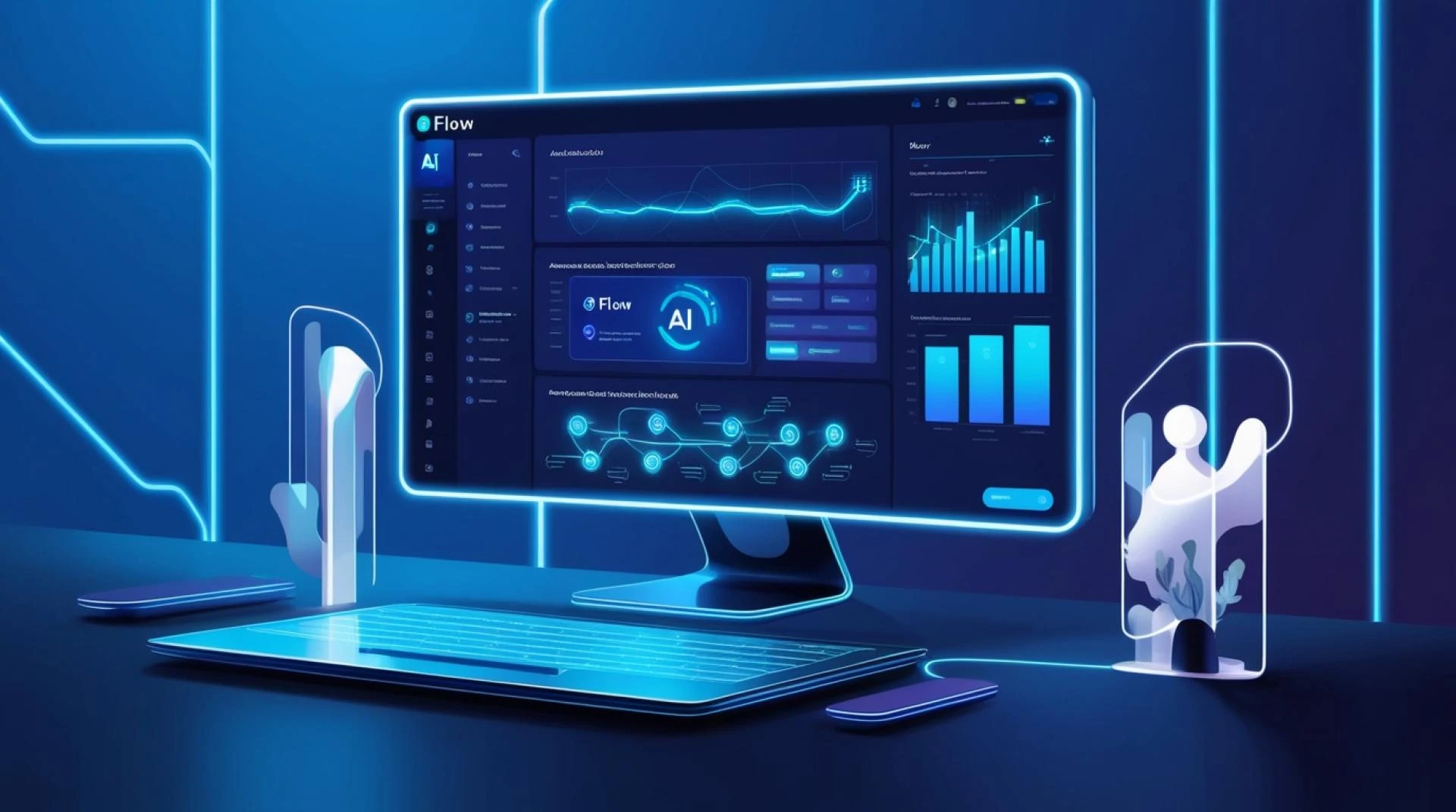
Monitoring and analytics are integral to Flow AI workflow automation. Every step of the automated process can be tracked, measured, and analyzed in real-time. This visibility allows managers to identify bottlenecks, optimize performance, and make data-driven decisions to enhance efficiency further. For example, analytics might reveal that a particular stage in a workflow is slowing down the process, prompting adjustments to improve overall throughput. This level of insight is difficult to achieve with traditional automation and adds a strategic advantage for organizations leveraging Flow AI.
Security and reliability are also central to Flow AI workflow automation. Automated workflows often handle sensitive data or critical operations, making accuracy and compliance essential. Flow AI incorporates monitoring, error detection, and secure data protocols to ensure that processes run smoothly while maintaining regulatory standards. This provides businesses with confidence that their automation is not only efficient but also safe and trustworthy.
The benefits of Flow AI workflow automation extend beyond efficiency. By automating routine tasks, businesses can allocate human resources to higher-value activities that require creativity, strategic thinking, and problem-solving. Employees are freed from mundane work, while the organization benefits from faster processing, improved accuracy, and increased scalability. This creates a more productive and satisfying work environment, where technology and human talent complement each other.
Flow AI workflow automation is also industry-agnostic. From e-commerce and healthcare to finance and manufacturing, any organization that deals with repetitive or complex processes can leverage Flow AI to improve operations. Companies are already seeing measurable improvements in response times, process accuracy, customer satisfaction, and overall productivity after implementing Flow AI solutions.
In conclusion, Flow AI workflow automation represents a new era of intelligent business processes. By combining machine learning, natural language understanding, and seamless integration, Flow AI enables organizations to create workflows that are adaptive, efficient, and secure. Businesses that embrace this technology can transform how they operate, freeing human talent for strategic work while ensuring processes run smoothly and intelligently. Flow AI is not just automating tasks—it is redefining the future of work, making operations smarter, faster, and more resilient than ever before.