
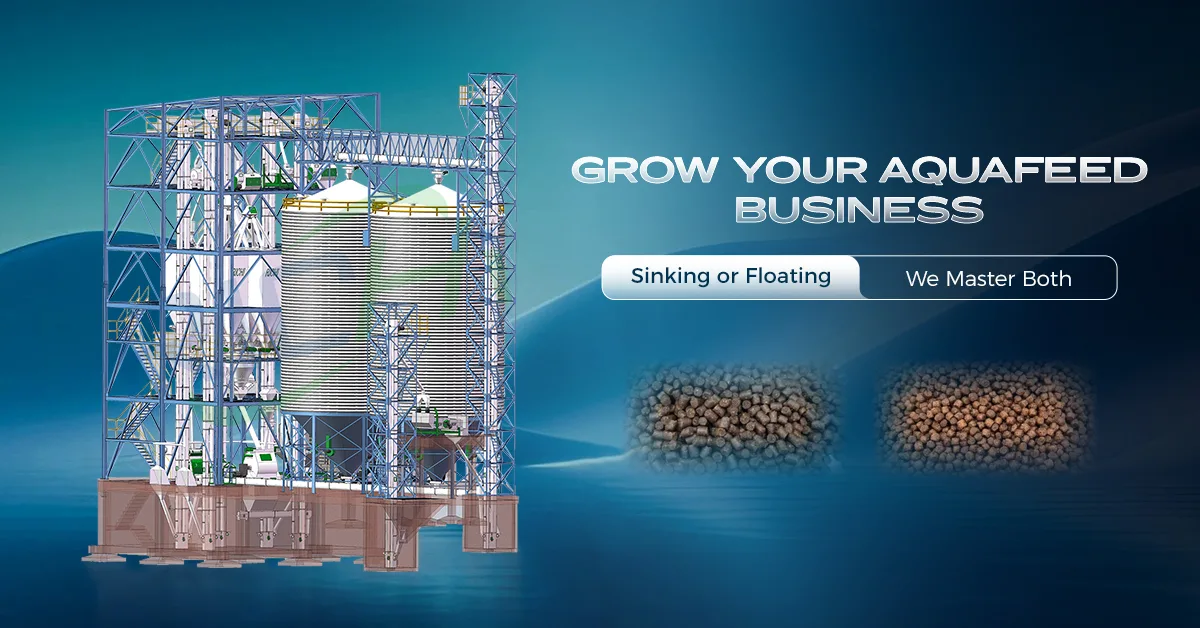
With the rapid development of global aquaculture, the demand for high-quality floating feed continues to increase. Fish farmers are no longer satisfied with traditional sinking feed because it often leads to waste, water pollution, and inefficient feeding. A modern floating fish feed plant provides an advanced and efficient solution for producing nutritious floating pellets that support sustainable fish farming and improve overall production performance.
A floating fish feed plant is a complete processing system designed to convert raw agricultural materials into floating aquatic feed pellets through extrusion technology. These pellets can remain on the water surface for a long time, allowing fish to consume them easily and enabling farmers to monitor feeding conditions in real time. This improves feed utilization and reduces unnecessary loss.
Production Process of a Floating Fish Feed Plant
The production process of a floating fish feed plant includes several important stages, each contributing to the quality of the final product.
First, raw materials such as corn, soybean meal, fish meal, wheat bran, and rice bran are prepared and crushed into fine powder. This step ensures uniform particle size, which is essential for stable mixing and efficient extrusion.
Next, the powdered materials are transferred into a mixing system. Vitamins, minerals, oils, and other nutritional additives are added according to specific feed formulas. A high-efficiency mixer ensures that all ingredients are evenly distributed, guaranteeing consistent nutrition in every pellet.
The most important stage is extrusion. In this process, the mixed feed is fed into an extruder, where it is subjected to high temperature, pressure, and mechanical force. The material expands as it exits the die, forming floating pellets. This process not only shapes the feed but also improves digestibility and sterilizes harmful microorganisms.
After extrusion, the pellets contain moisture and must be dried. A drying system removes excess water to improve storage stability and prevent mold growth. Then, a cooling system reduces the temperature of the pellets before packaging to maintain quality and prevent deformation.
Finally, the finished feed is packed using automatic weighing and sealing machines, ensuring efficient storage and transportation.
https://pelletisingmachine.com/floating-fish-feed-plant/
Advantages of a Floating Fish Feed Plant
A floating fish feed plant offers many advantages for feed manufacturers and aquaculture operators.
One of the most important benefits is improved feed efficiency. Since floating pellets remain on the water surface, fish can consume them completely, reducing feed waste and lowering production costs. This also helps improve the feed conversion ratio, which is critical for profitable fish farming.
Another advantage is better water quality management. Floating feed does not dissolve quickly in water, which helps reduce pollution in fish ponds and maintains a healthier aquatic environment.
In addition, a floating fish feed plant provides flexibility in production. It can produce pellets of different sizes to meet the nutritional needs of various fish species, from small fry to adult fish.
Floating Fish Feed Mill Plant for Industrial Production
A floating fish feed mill plant is designed for large-scale and continuous production. It integrates grinding, mixing, extrusion, drying, cooling, and packaging into one automated system.
This type of production line is widely used in commercial feed factories because it ensures stable output, consistent pellet quality, and high production efficiency. Depending on configuration, a floating fish feed mill plant can produce from hundreds of kilograms to several tons of feed per hour.
Floating Fish Pellets Factory Business Opportunity
Establishing a floating fish pellets factory is becoming a profitable investment in many countries due to the growing demand for aquaculture products. As fish farming expands, more farmers prefer commercially produced floating pellets instead of homemade feed.
A floating fish pellets factory can supply feed to local fish farms, distributors, and even export markets. With proper management and quality control, it can build strong market competitiveness and long-term profitability.
Floating Fish Feed Machine Price Factors
Many investors are concerned about the automated floating fish feed machine price before starting a project. The price depends on several key factors, including production capacity, machine configuration, automation level, and material quality.
Fully automated production lines with PLC control systems usually cost more but offer higher efficiency and lower labor requirements. In contrast, smaller machines are more affordable but have limited output capacity.
Conclusion
A floating fish feed plant is an essential investment for modern aquaculture feed production. It provides an efficient, reliable, and cost-effective way to produce high-quality floating pellets that improve fish growth and reduce environmental impact.
Whether building a small production unit or a large floating fish pellets factory, choosing the right floating fish feed mill plant is crucial for long-term success. Although the floating fish feed pellet machine price varies depending on specifications, investing in high-quality equipment ensures stable production and strong returns.
As global demand for seafood continues to rise, floating fish feed production will remain a key and profitable industry in the aquaculture sector.