Last month, a mother sat across from me at Adapt For Life - AFL Autism Services and quietly said, “I barely slept last night. I don’t know what to expect.” Her son was starting therapy the next morning. She had read articles, watched videos, and spoken to her pediatrician. Still, the unknown felt heavy.
If you’re here, you may be feeling the same way. Have you wondered what actually happens when your child begins therapy for the first time?
The first session is not a test. It is not about labeling or pressuring your child. It is a carefully structured introduction built around understanding your child’s strengths, needs, and comfort level. For families exploring autism home services, this first visit sets the tone for collaboration, trust, and measurable progress. In this guide, I will walk you through what typically happens, how to prepare, and what you can expect in the weeks ahead.
Preparing for Your Child's First ABA Session with Autism Home Services
Preparation does not require elaborate steps. It requires clarity and calm.
When families begin autism home services, the therapist usually contacts you beforehand to confirm logistics and gather preliminary information. You may be asked about your child’s communication style, preferred activities, sensory sensitivities, and daily routines.
Here are practical ways to prepare:
- Choose a quiet, familiar area of your home for sessions
- Keep preferred toys or reinforcers nearby
- Maintain your child’s normal routine as much as possible
- Briefly explain, in simple language, that someone is coming to play and help
One father I worked with told his daughter, “A new friend is coming to learn how you like to play.” That small framing reduced anxiety significantly.
Have you thought about what motivates your child most? A favorite snack, a specific toy, music, movement? Sharing that information helps the therapist connect quickly.
Parents often worry about behavior during the first visit. Understand this: the therapist expects variability. Crying, avoidance, or high energy are common. The goal is rapport, not compliance.
You do not need to perform as a parent. You simply need to be present and honest. That transparency is foundational in effective therapy.
Step-by-Step: What Happens During the First Autism Home Services Session
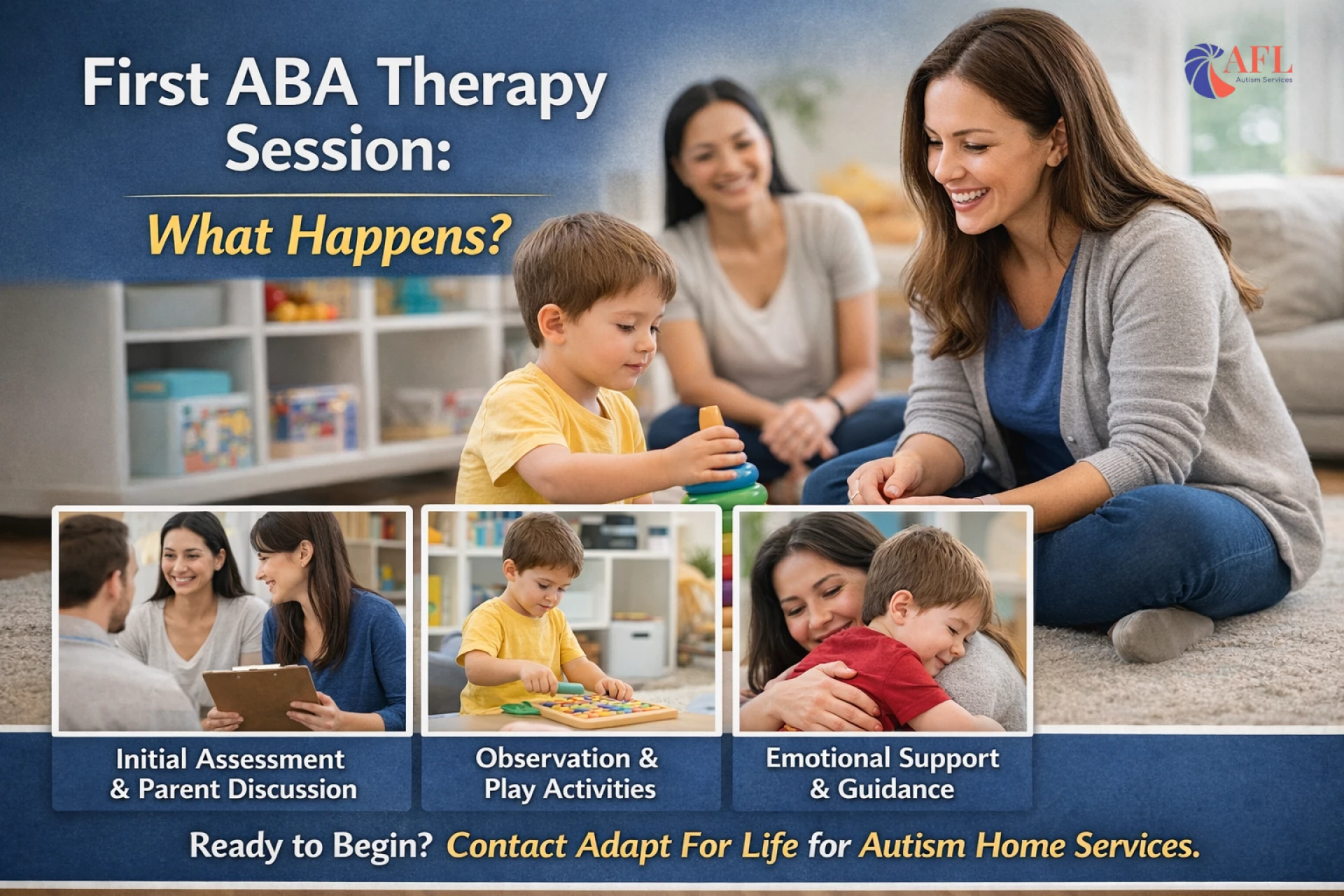
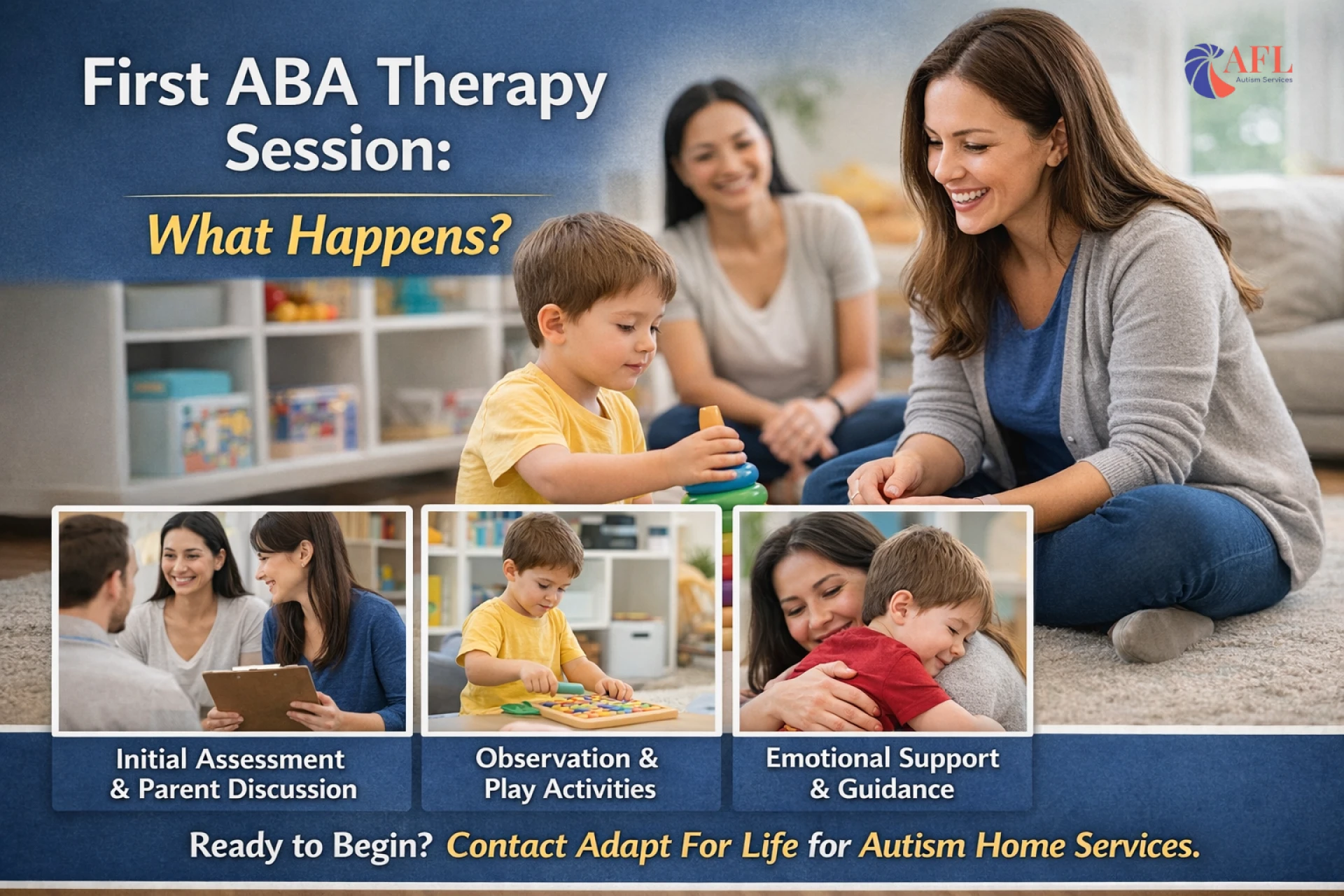
The first autism home services visit follows a structured yet flexible framework. While each child is unique, most sessions include the following stages.
1. Greeting and Rapport Building
The therapist introduces themselves calmly, often at the child’s level. No immediate demands are placed. Instead, the focus is observing how your child responds to new people and environments.
Simple play is introduced. This might include puzzles, bubbles, blocks, or sensory toys. The therapist is studying engagement patterns, not performance.
2. Parent Discussion and Initial Assessment
While your child plays, the therapist gathers information. Developmental milestones, communication abilities, social behaviors, and daily challenges are discussed. This may include conversations about Speech Therapy for Autism if communication delays are present.
Parents often ask, “Are you testing my child?” The answer is nuanced. Yes, there is structured observation. No, it is not a high-pressure evaluation.
Have you noticed specific triggers or calming strategies that consistently work? Sharing those details accelerates personalization.
3. Structured Observation
The therapist introduces simple tasks aligned with your child’s level. These could include:
Responding to their name
Following one-step instructions
Identifying objects
Engaging in turn-taking
This stage reveals baseline skills. Data is discreetly recorded.
I once worked with a four-year-old who refused eye contact at first. Within fifteen minutes of bubble play, he spontaneously looked up and smiled. That small moment told us a great deal about how reinforcement would work moving forward.
4. Communication Screening
If communication is limited, preliminary collaboration may be discussed with specialists in Speech Therapy for Autism. ABA and speech services often complement one another, especially when goals overlap in expressive language and social initiation.
5. Parent Debrief
At the end of the session, the therapist reviews observations. You will hear about strengths first. Then you will discuss areas of growth. Clear next steps are outlined, including frequency recommendations and goal planning.
At this stage, families frequently ask: “Is this the right path?” The answer lies in measurable progress and comfort. The first session is about gathering the data needed to build that roadmap.
Common Emotions and How to Handle Them
It is normal for both parents and children to experience mixed emotions.
Children may feel uncertain. Some cling. Others withdraw. A few become overstimulated. These reactions are not indicators of failure. They are signals of adjustment.
Parents often feel guilt. “Did I wait too long?” “Am I doing enough?” These questions are common, but rarely grounded in evidence.
Have you caught yourself replaying past decisions and wondering if you missed signs? That mental loop is understandable, but it does not move your child forward.
One mother shared that she cried in her car after the first session. Not from disappointment, but from relief. For the first time, she felt supported by a professional team.
This is where broader community autism services matter. Therapy does not exist in isolation. Parent training, school collaboration, and peer programs create consistency across environments. Many families benefit from integrating community autism services to reinforce skills practiced at home.
You are not expected to navigate this alone. Emotional adjustment is part of the therapeutic process.
Next Steps After Your First Session with Adapt For Life
Following your child’s initial visit at Adapt For Life - AFL Autism Services, a formal treatment plan is developed. Goals are individualized, measurable, and practical.
Ongoing autism home services focus on:
- Communication development
- Social interaction
- Daily living skills
- Behavior regulation
- Parent coaching
Consistency drives results. Regular sessions allow therapists to track data, adjust strategies, and gradually increase complexity.
Families often report improvement in small but meaningful ways. A child independently requesting water. Sitting longer at the dinner table. Responding to their name more consistently..
If you are considering services, the most important step is beginning. Evaluation leads to clarity. Clarity leads to action.
Conclusion
The first ABA session is structured, supportive, and designed around understanding your child’s unique profile. It is not about judgment. It is about partnership.
You now know what happens before, during, and after that first visit. You understand the emotional landscape. You have insight into how therapy integrates with communication support and broader systems of care.
Progress starts with informed decisions.
Ready to start? Contact Adapt For Life today for personalized autism home services.
FAQs
What should I expect from ABA therapy?
Expect structured sessions focused on measurable goals, skill development, and behavior support. Data is collected regularly to track progress.
How long does the first session last?
Most initial sessions range from 60 to 120 minutes, depending on assessment needs and your child’s tolerance.
Can ABA work alongside Speech Therapy for Autism?
Yes. Many children benefit from combining ABA with Speech Therapy for Autism to address communication comprehensively.
Is in-home therapy better than clinic-based care?
It depends on the child. Many families prefer autism home services because skills are practiced in natural environments.
How do community autism services support progress?
Community autism services reinforce learned behaviors in schools and social settings, promoting generalization.