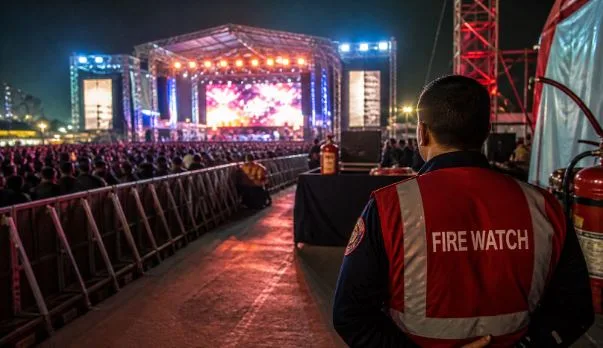
Large-scale events are designed to create memorable experiences concerts, festivals, exhibitions, corporate gatherings, and public celebrations that bring together thousands of people in a shared space. Behind the scenes, however, these events are complex operational environments where safety planning must account for dynamic risks. Temporary structures, high electrical loads, cooking equipment, stage effects, and dense crowds all contribute to an elevated fire risk profile. Unlike permanent facilities, event spaces are often built, modified, and dismantled within short timeframes, leaving little margin for error. Property owners frequently search for Fire Watch Services Near Me when they need immediate and reliable safety coverage for their premises. In this setting, fire watch services play a critical role in managing fire risks, ensuring that safety remains active, responsive, and compliant throughout the event lifecycle.

The Hidden Complexity of Fire Risk at Events
At first glance, an event venue may appear controlled and well-organized. But from a fire safety perspective, it presents unique challenges that differ significantly from traditional buildings.
Key risk factors include:
- Temporary electrical installations powering lighting, sound, and equipment
- High-density crowds that complicate evacuation procedures
- Food preparation areas with open flames or heating elements
- Stage effects such as pyrotechnics, smoke machines, or special lighting
- Temporary structures like tents, booths, and staging platforms
These elements create an environment where fire hazards can develop quickly and spread rapidly if not managed effectively.
A Scenario That Illustrates the Stakes
During a large outdoor music festival, multiple food vendors operated near the main stage, each using portable cooking equipment. Midway through the event, a small grease fire began at one of the stalls. The fire suppression system in that temporary setup was limited, and the crowd density made immediate response challenging.
A fire watch guard stationed nearby identified the issue within seconds. The guard alerted the vendor, initiated initial containment using a fire extinguisher, and coordinated with on-site emergency personnel. The situation was controlled before it could escalate or impact the surrounding crowd.
Without fire watch services, this minor incident could have disrupted the event, caused injuries, or triggered a large-scale evacuation.
What Fire Watch Means in Event Environments
Fire watch is a structured safety practice involving trained personnel assigned to monitor an area for fire hazards during periods of increased risk or when standard fire protection systems are insufficient.
In large-scale events, fire watch services provide:
- Continuous fire risk monitoring across dynamic environments
- Immediate identification of hazards in crowded or temporary setups
- Rapid response to prevent escalation
- Support for maintaining fire safety compliance
Unlike fixed systems, fire watch guards adapt to changing conditions, which is essential in event settings where layouts and risks evolve throughout the day.
When Fire Watch Requirements Apply at Events
Fire watch requirements are often triggered in event environments due to the temporary and high-risk nature of operations.
Common situations include:
- Setup and dismantling phases involving electrical work or construction
- Use of temporary structures lacking permanent fire protection systems
- Hot work activities during stage or equipment installation
- High-risk attractions such as pyrotechnics or special effects
- System limitations in temporary venues without full fire detection coverage
Local fire marshals frequently require fire watch services as part of event approval processes, particularly for large gatherings.
Responsibilities of Fire Watch Guards During Events
Fire watch guards in event settings must operate with heightened awareness and adaptability, as conditions can change rapidly.
Strategic Positioning
Guards are placed in key locations, including:
- Stage areas
- Food and beverage zones
- Electrical control points
- Entry and exit routes
Active Hazard Detection
They monitor for:
- Overloaded electrical connections
- Heat buildup in equipment
- Improper use of cooking devices
- Obstructed emergency pathways
Crowd-Aware Response
In case of a hazard, guards must act quickly while considering crowd dynamics, ensuring that response actions do not create panic or confusion.
Coordination With Event Teams
Fire watch personnel work closely with event organizers, security teams, and emergency responders to maintain a unified safety approach.
Compliance Considerations for Event Organizers
Fire safety compliance is a critical aspect of event planning, and fire watch services often play a central role in meeting regulatory requirements.
- OSHA guidelines apply to worker safety during event setup and operations
- NFPA standards provide guidance on fire safety in temporary structures and public gatherings
- Fire marshal approvals often require fire watch services for permits
Non-compliance can lead to:
- Event delays or cancellations
- Fines and legal penalties
- Increased liability in case of incidents
Integrating fire watch services ensures that safety standards are maintained without disrupting the event.
Emergency Fire Watch: Preparing for the Unexpected
Events are inherently unpredictable. Despite careful planning, unexpected situations can arise that require immediate action.
Emergency fire watch services are essential in scenarios such as:
- Sudden failure of electrical systems
- Equipment malfunctions causing overheating
- Weather-related impacts on temporary structures
- Unplanned hazards during live operations
Rapid deployment of fire watch personnel ensures that fire risk monitoring continues without interruption.
Choosing Fire Watch Services Near Me is particularly important for event organizers, as local providers can respond quickly and understand regional safety regulations.
The Financial and Operational Impact of Fire Incidents at Events
Fire incidents at large-scale events can have far-reaching consequences beyond immediate safety concerns.
Potential impacts include:
- Event disruption or cancellation
- Damage to equipment and infrastructure
- Liability claims from attendees or vendors
- Reputational damage affecting future events
- Loss of revenue and sponsorship opportunities
Fire watch services act as a preventive measure, reducing the likelihood of incidents that could lead to these outcomes.
Choosing the Right Fire Watch Provider for Events
Selecting a fire watch provider for large-scale events requires careful evaluation, as the environment demands flexibility and expertise.
Key factors to consider:
- Experience in managing event-specific fire risks
- Ability to adapt to dynamic and crowded environments
- Strong communication and coordination skills
- Availability for emergency fire watch deployment
- Knowledge of local compliance requirements
A qualified provider integrates seamlessly into the event’s safety plan, enhancing overall risk management.
Integrating Fire Watch Into Event Safety Planning
Fire watch services should be incorporated into the event planning process from the beginning, rather than added as a last-minute measure.
Effective integration includes:
- Conducting risk assessments for all event areas
- Identifying zones requiring continuous monitoring
- Coordinating with vendors and contractors
- Aligning fire watch protocols with emergency response plans
This proactive approach ensures that fire risks are managed consistently throughout the event.
Why Human Monitoring Is Essential in Dynamic Environments
Automated systems are valuable, but they are not always sufficient in temporary or rapidly changing environments. Events often rely on a mix of permanent and temporary safety measures, which may not provide complete coverage.
Fire watch services offer:
- Real-time adaptability to changing conditions
- Human judgment in identifying complex risks
- Immediate response without reliance on system triggers
This flexibility is critical in maintaining safety during large-scale gatherings.
Conclusion
Large-scale events bring together people, technology, and temporary infrastructure in ways that create both excitement and complexity. While much attention is given to logistics and experience, fire safety remains a foundational responsibility that cannot be overlooked. The dynamic nature of event environments introduces risks that require continuous monitoring and rapid response, particularly when standard fire protection systems are limited or supplemented by temporary setups. Fire watch services provide a vital human layer of protection, ensuring that hazards are identified early and managed effectively. By integrating fire watch into event safety planning, organizers can maintain compliance, protect attendees and assets, and ensure that the event remains safe from start to finish.