
Cloud bills rarely become difficult to manage overnight. Costs creep upward as teams add resources for projects, testing, backups, analytics, or traffic increases. A temporary virtual machine stays active. Old snapshots are never removed. A development environment runs through the weekend. Alone, these decisions seem harmless; together, they create cloud sprawl.
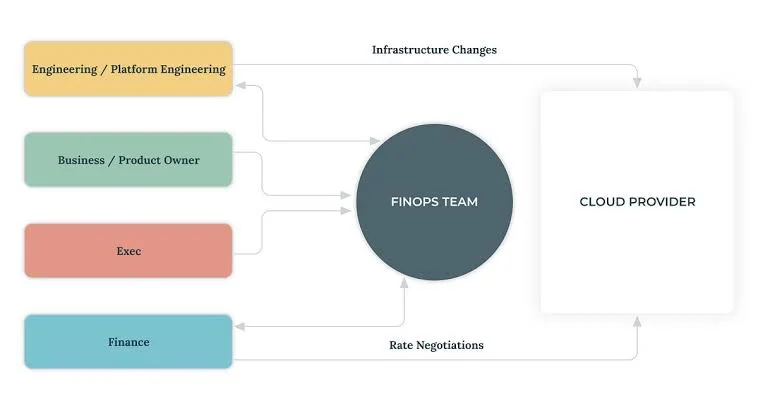
Cost reduction becomes difficult when it is separated from infrastructure operations. FinOps can show where spending is rising, while infrastructure teams know whether those resources support important workloads. Bringing the two disciplines together helps reduce waste without putting performance or reliability at risk.
Cloud Sprawl Is More Than Unused Servers
Unused resources are an obvious source of waste, but sprawl also appears through duplicate environments, oversized instances, unmanaged subscriptions, growing storage, excess backups, and network traffic between regions or platforms.
Ownership is often the missing piece. A useful cloud inventory should identify:
- The application and business function connected to the resource
- The technical and business owner
- The environment and lifecycle status
- The monthly cost and performance requirement
That information gives FinOps and operations teams a common starting point. It also makes cloud infrastructure management services more useful because decisions can be tied to workloads instead of billing data alone.
FinOps Works Better With Infrastructure Context
A higher cloud bill does not automatically mean overspending. Compute usage might rise because traffic increased, or storage because a retention policy changed.
Before reducing capacity, teams need to understand what the infrastructure is doing. Suppose an application uses more servers during peak periods. Reducing instance sizes because average utilization looks low could create memory pressure, slower response times, or scaling delays.
The better question is: what capacity does the workload need to meet its targets?
This is where cloud infrastructure management services connect financial analysis with operational metrics. Cost data tells teams where to look. Performance data helps determine what should change.
Use Rightsizing With Real Performance Data
Rightsizing can reduce waste, but it should not be based on CPU usage alone. A server may have modest CPU utilization while memory, disk throughput, or network capacity is near its limit.
Teams should review:
- CPU and memory utilization
- Application latency and error rates
- Network and disk activity
- Request volume and scaling behavior
- Service-level objectives
The goal is to remove capacity that is genuinely unnecessary, not capacity that merely looks quiet.
Control Costs Through Ownership, Tags, and Governance
Tagging becomes valuable when teams actually use it. Application names, owners, cost centers, environments, and expiration dates can help identify resources that need review or retirement.
Governance should reinforce those rules from the start. New accounts or subscriptions should have clear ownership. Tagging policies can be applied automatically. Temporary environments can carry expiry dates.
The aim is to set boundaries without turning every request into a lengthy approval process.
Automation Can Keep Sprawl From Returning
Manual cleanup may solve an immediate problem, but cloud environments change constantly. Automation is needed to catch the next wave of waste.
Policies can identify idle instances, unattached storage, missing tags, and resources that have exceeded their approved lifetime. Development and testing systems can also be scheduled to shut down outside working hours where business requirements allow it.
Automation should be selective. A production database should not be stopped simply because it has low activity at midnight. Rules need exceptions for systems requiring continuous operation or high availability.
Monitoring helps teams spot cost increases, changing utilization, or resources drifting outside approved standards.
Make Cloud Cost a Shared Decision
FinOps should not carry the entire responsibility for cloud economics. Infrastructure teams understand capacity and reliability. Engineers explain application behavior. Security teams consider control requirements. Business leaders decide which workloads deserve priority and where service risks are acceptable.
A rise in database spending might result from inefficient queries, higher transaction volume, longer retention, or a deliberate decision to keep more data available. The response depends on the cause.
Organizations assessing cloud infrastructure management services should consider how well the approach connects finance, engineering, infrastructure, security, and business teams.
Optimize Without Chasing the Lowest Bill
Aggressive cost cutting can create problems that cost more than the original waste. Removing capacity too quickly can increase latency, reduce availability, hurt user experience, limit scalability, or weaken reliability during traffic spikes.
A stronger approach is continuous optimization. Review ownership, utilization, capacity, performance, storage, network costs, and lifecycle policies regularly. Test changes before applying them broadly, then measure the results.
Cloud infrastructure management services are most useful when they support that ongoing discipline. A well-managed cloud is not simply a cheaper cloud. It is an environment where resources have clear owners, costs are visible, performance is measured, and optimization decisions reflect what the workload and business actually need.