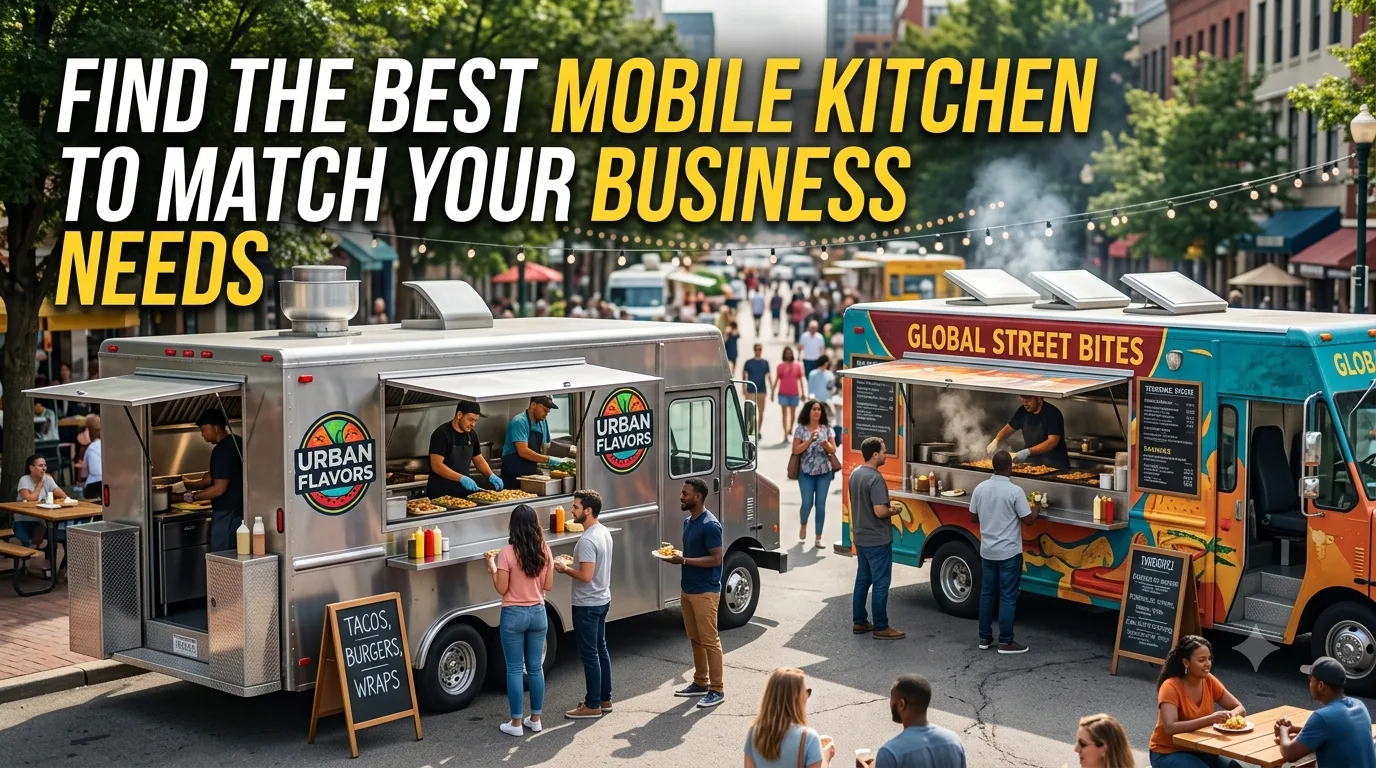
Starting a food business is exciting. It can also feel a little overwhelming. You spend weeks thinking about menus, equipment, permits, and locations, then suddenly you realize one decision affects almost everything else. Choosing the right mobile kitchen isn't just another item on the checklist. It shapes how you cook, serve, and grow your business from day one.
I've seen people buy a trailer because it looked nice online, only to realize a few months later that there wasn't enough prep space or storage. That's a frustrating lesson... and an expensive one too.
If you're planning to serve coffee at morning events, tacos at festivals, or full meals at private parties, picking the right setup early saves plenty of headaches later.
Start With Your Food Concept
Every food business works differently.
A coffee trailer doesn't need the same equipment as a barbecue operation. A pizza business has completely different space requirements than a dessert trailer. Sounds obvious, yet many first-time buyers overlook it.
Write down your menu before looking at trailers.
Ask yourself a few simple questions.
- Will you prepare food inside the trailer?
- Do you need refrigeration for fresh ingredients?
- How much cooking equipment will you use?
- Will more than one person be working inside?
The answers quickly point you toward the right mobile kitchen trailer instead of something that only looks appealing.
Think About Your Daily Workflow
Picture a busy Saturday afternoon.
Customers are lined up outside. Someone is taking orders while another person is cooking. A third employee is assembling meals.
Now imagine all three trying to move around inside a cramped trailer.
Not fun.
A practical layout makes daily work easier. Look for enough counter space, comfortable walking room, organized storage, and equipment placed where it actually makes sense. Even small details, like where the refrigerator door opens, can matter during a rush.
Sometimes people focus on exterior appearance and forget they'll spend eight or ten hours working inside.
Pick the Right Trailer Size
Bigger isn't always better.
A compact food trailer may work perfectly for coffee, smoothies, popcorn, or ice cream. Larger kitchens usually fit businesses serving grilled foods, fried meals, seafood, or catering menus.
Think about future growth too.
Maybe today you're working alone. Six months later you could have two employees and a larger menu. Having a little extra room can make expansion much easier.
Still, buying the biggest trailer available isn't always the smartest move. Larger units usually cost more, weigh more, and require larger tow vehicles.
Finding the middle ground often works out nicely.
Check Equipment Before You Buy
The equipment inside the trailer matters just as much as the trailer itself.
Depending on your menu, you may need:
- Commercial griddle
- Deep fryer
- Oven
- Flat-top grill
- Refrigerators
- Freezers
- Stainless steel prep tables
- Three-compartment sink
- Handwashing sink
- Ventilation hood
- Fresh and waste water tanks
Some businesses only need basic equipment.
Others need nearly a full commercial kitchen on wheels.
Buying a trailer that already includes much of your required equipment can save both time and money.
Don't Ignore Storage
Storage rarely gets people excited.
Funny enough, it's one of the first things owners complain about later.
You'll need room for ingredients, serving containers, cleaning supplies, utensils, beverages, paper products, spices, extra propane tanks, and small appliances.
Without proper cabinets or shelving, everything starts piling onto work surfaces.
That's stressful during busy service.
A well-planned commercial mobile kitchen keeps supplies organized and easy to reach.
Think About Health Department Requirements
Every city and county has its own food service regulations.
Some require larger sinks.
Others have rules about water capacity, ventilation, lighting, flooring, or electrical systems.
Checking local health department guidelines before purchasing your trailer can prevent costly modifications later.
Nobody wants to buy a trailer only to discover major changes are needed before getting approved.
It's one of those things that's easy to overlook... until it isn't.
Mobility Matters Too
Your trailer will probably travel quite a bit.
Food festivals.
Farmers markets.
Corporate lunches.
Sporting events.
Private catering jobs.
The trailer should tow comfortably and safely behind your vehicle.
Look at axle quality, trailer weight, brakes, tires, suspension, and overall construction. Strong materials generally last longer, especially if you're traveling every week.
Road conditions aren't always kind.
Consider Power and Utilities
Many owners focus entirely on cooking equipment while forgetting about electricity.
Every appliance has power requirements.
You may need:
- Generator compatibility
- Shore power connection
- Additional outlets
- Interior lighting
- Exterior serving lights
- Water pump
- Breaker panel
- Propane connections
Planning these details early keeps daily operations much smoother once you're serving customers.
Budget Beyond the Purchase Price
The trailer itself isn't the only expense.
There are permits.
Insurance.
Wrapping and graphics.
Cooking equipment upgrades.
Generator costs.
Maintenance.
Cleaning supplies.
Small repairs happen too. Nothing dramatic most of the time, just normal wear from running a busy food business.
Setting aside extra funds makes surprises much easier to handle.
Think About Long-Term Business Goals
Maybe you're starting with weekend markets.
A year later you might book weddings, company events, music festivals, and private catering.
Your mobile kitchen for sale should support those goals instead of limiting them.
Extra refrigeration, larger prep space, stronger electrical capacity, or additional serving windows could become valuable much sooner than expected.
Growth often happens gradually. Then suddenly... things get busy.
Buy From a Trusted Trailer Builder
Experience matters.
A company that builds food trailers regularly usually understands health codes, equipment placement, plumbing systems, electrical layouts, and cooking ventilation much better than a general trailer manufacturer.
Read customer reviews.
Ask questions.
Request photos of completed projects.
Don't rush this part.
A conversation today can save weeks of frustration later.
Final Thoughts
Finding the right mobile kitchen isn't really about buying the biggest trailer or the fanciest equipment. It's about choosing something that fits your menu, your budget, and the way you actually work every day.
Take your time. Walk through different layouts if you can. Open cabinets. Stand where you'll cook. Pretend you're serving twenty hungry customers during lunch. Little details suddenly become obvious.
A well-planned mobile kitchen trailer gives you room to cook comfortably, serve customers with confidence, and keep your business moving wherever the next opportunity shows up. That's a pretty good feeling.