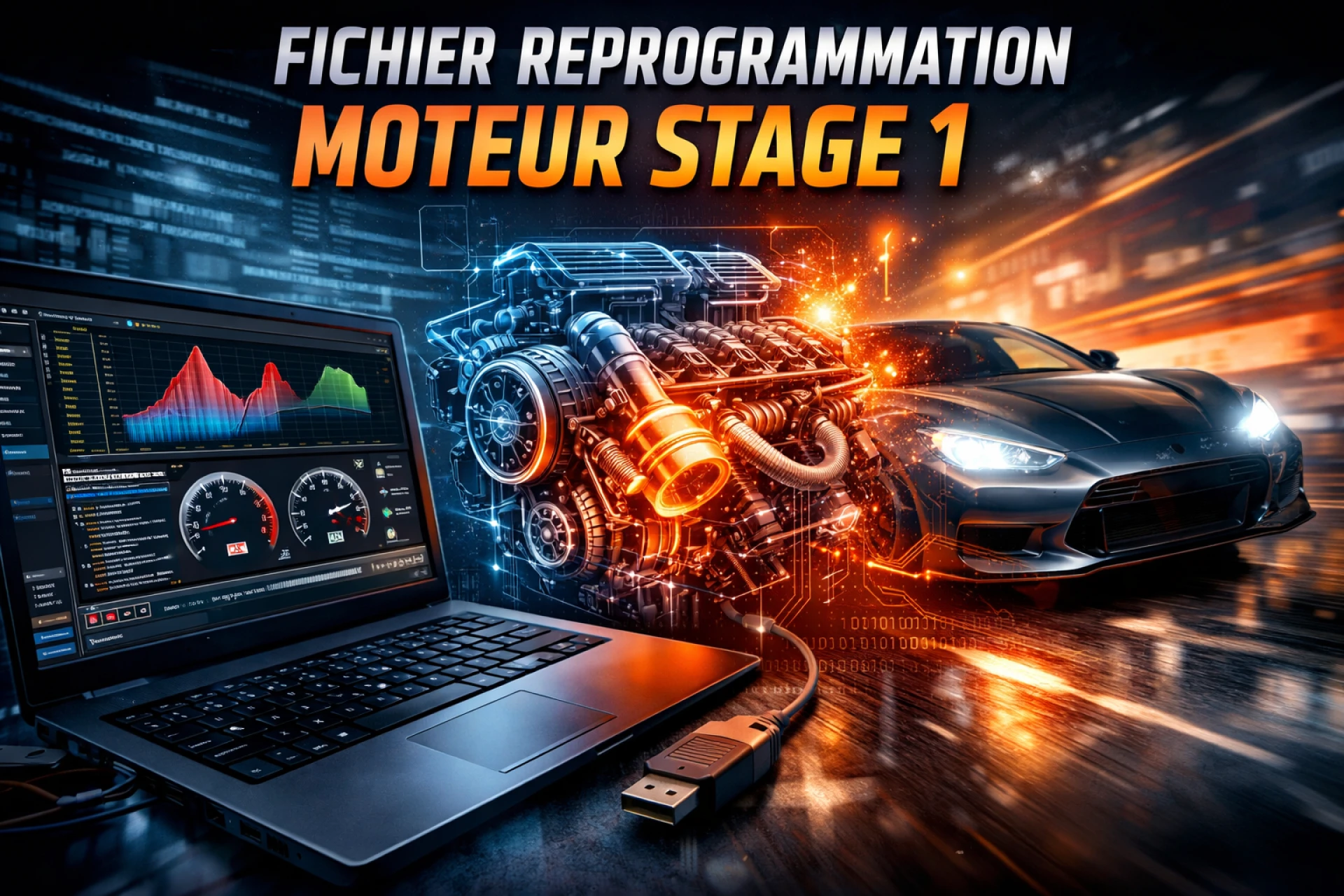
The contemporary automotive engine is a convergence of mechanical precision and digital governance. While pistons, injectors, and turbochargers form the physical foundation, it is software that ultimately dictates how these components interact. Within this digital architecture, fichier reprogrammation moteur stage 1 represents the first and most fundamental step toward intelligent engine optimization.
Subtle in execution yet significant in impact, this approach refines performance without altering hardware, relying instead on disciplined recalibration of the engine control unit.
Understanding the Concept of Stage 1 Reprogramming
Stage 1 engine reprogramming is designed for vehicles that retain all factory-installed mechanical components. No physical modifications are required. The transformation occurs entirely within the ECU, where predefined operating parameters are recalibrated to better reflect the engine’s true mechanical capabilities.
A fichier reprogrammation moteur stage 1 adjusts fuel injection timing, ignition curves, torque limiters, and boost management where applicable. These changes are not radical. They are calculated, restrained, and focused on efficiency and drivability rather than extremes.
Why Factory Settings Leave Performance Untapped
Vehicle manufacturers design engines to operate reliably across diverse markets. Climate variation, fuel inconsistency, altitude differences, and emissions regulations all influence factory calibration decisions. To accommodate these variables, software settings are intentionally conservative.
While this approach ensures durability, it also suppresses potential. Engines are capable of operating more efficiently and responsively than factory programming allows. Stage 1 reprogramming exists to reclaim this unused margin—without compromising reliability.
The Architecture Behind the Calibration File
An ECU is governed by an intricate network of interdependent maps. Each map influences a specific function, yet none operate independently. Airflow affects combustion efficiency. Combustion influences thermal output. Thermal output dictates protective strategies.
A fichier reprogrammation moteur stage 1 respects these relationships. Adjustments are distributed logically across multiple control layers, ensuring balance is preserved. Safety protocols remain active. Thermal thresholds are not removed. The engine is guided, not forced.
This is engineering refinement, not experimentation.
Performance Gains Defined by Usability
Stage 1 optimization does not pursue dramatic output figures. Instead, it improves how power is delivered. Throttle response becomes more immediate. Torque builds more smoothly across the rev range. Acceleration feels controlled and predictable.
Drivers often notice:
- Reduced hesitation during low-speed acceleration
- Stronger mid-range torque for everyday driving
- Smoother transitions between load conditions
- Improved engine responsiveness under partial throttle
These changes enhance confidence rather than aggression.
Efficiency as a Practical Outcome
One of the most understated advantages of Stage 1 reprogramming is efficiency. Factory calibrations are developed under standardized testing conditions that rarely reflect real-world driving. Urban traffic, frequent speed changes, and partial throttle operation dominate daily use.
With recalibrated fuel and ignition strategies, the engine operates closer to its optimal efficiency window during common driving scenarios. This often results in reduced fuel consumption when driven consistently.
Efficiency achieved through calibration is sustainable, not situational.
Thermal Management and Mechanical Preservation
Thermal discipline is central to professional reprogramming. Excessive exhaust gas temperatures and uncontrolled load requests are common causes of long-term engine stress. Stage 1 calibration avoids these pitfalls by respecting mechanical and thermal boundaries.
A properly engineered fichier reprogrammation moteur stage 1 maintains conservative safety margins while optimizing performance parameters. Boost pressure remains controlled. Combustion temperatures stay within designed tolerances. Component longevity remains a priority.
Reliability is preserved through restraint.
Adaptability Across Engine Types
Stage 1 reprogramming is applicable across a wide range of vehicles and engine configurations. Petrol and diesel engines benefit differently, yet both respond positively to intelligent calibration.
Calibration strategies adapt to:
- Engine displacement and aspiration
- Transmission behavior and torque handling
- Typical driving patterns
- Environmental operating conditions
Uniform solutions lack the nuance required for consistent results.
The Role of Experience in Calibration Quality
Calibration is not purely mathematical. Data provides structure, but experience provides judgment. Engines behave differently over time, across temperature cycles, and under varying load conditions. Understanding these behaviors requires observation and refinement.
Minor numerical changes can have disproportionate long-term effects. Recognizing this relationship is essential for responsible reprogramming.
Filestechnic applies an experience-driven methodology, ensuring each calibration reflects both technical accuracy and real-world performance behavior.
Software as the First Step in Optimization
Before hardware upgrades are considered, software refinement offers the most efficient path to improvement. Stage 1 reprogramming establishes a stable foundation, allowing the engine to operate more naturally within its design parameters.
It enhances performance without altering mechanical complexity. It improves efficiency without sacrificing durability. It refines behavior without introducing instability.
A Balanced Perspective on Stage 1 Reprogramming
Effective optimization is not defined by extremity. It is defined by balance. A well-executed fichier reprogrammation moteur stage 1 improves how a vehicle feels, responds, and performs in daily use while maintaining factory-level reliability.
The result is a driving experience that feels more composed, more responsive, and more engaging without appearing modified or strained.
Conclusion
Modern engines are governed as much by logic as by mechanics. Stage 1 reprogramming represents the disciplined art of recalibration, where software intelligence is aligned with mechanical capability.
When developed responsibly, fichier reprogrammation moteur stage 1 unlocks latent performance while preserving longevity. It is not a shortcut to power, but a refinement of how the engine thinks and reacts.