Keeping products neatly grouped during production, storage, and shipping is an important part of an efficient packaging operation. Whether a company handles printed materials, paper products, labels, or lightweight retail goods, loose items can become difficult to organise when they move between production stations. A reliable banding machine offers a practical way to bring these items together without necessarily wrapping every product in a large amount of packaging material.
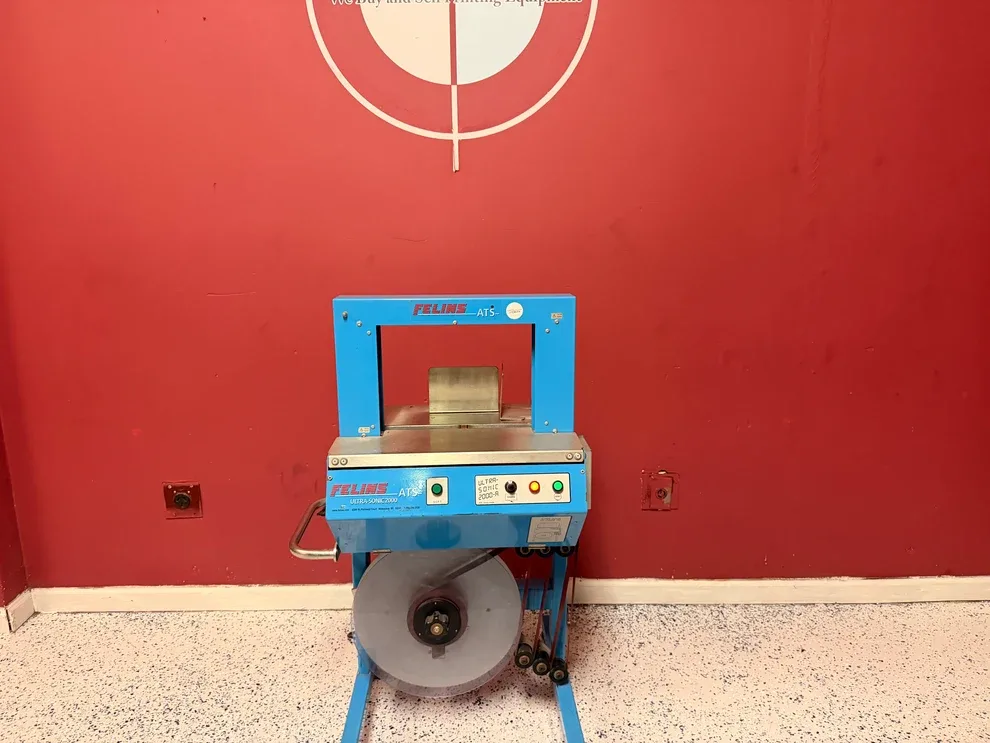
The Felins ATS Super-Sonic 2000A Banding Machine for Sale is a search worth exploring for businesses interested in specialist banding equipment. Banding machines secure products with a narrow strip of paper or plastic film, creating a compact bundle that is easier to handle, count, store, and distribute.
For businesses considering used packaging machinery, purchasing a pre-owned unit may provide an opportunity to expand production capabilities while managing the initial investment. However, the machine's condition, exact configuration, operating requirements, and compatibility with the products being banded must all be evaluated before making a purchase.
This guide explains how banding equipment works, where it can be useful, what to inspect when considering a used Felins ATS Super-Sonic 2000A, and how to determine whether the machine is suitable for your packaging operation.
What Is the Felins ATS Super-Sonic 2000A Banding Machine?
A banding machine holds a group of products together using a band placed around them. Unlike full shrink wrapping, which covers a product or bundle with film that contracts under heat, banding focuses on securing the items with a narrower strip of material.
Imagine a stack of printed brochures that needs to be kept together before dispatch. Instead of placing every stack inside a separate plastic bag, a suitable banding machine can apply a strip around each bundle. The result is a more organised package that can be easier to handle and store.
The Felins ATS Super-Sonic 2000A is a machine model that buyers may encounter when researching industrial and commercial banding equipment. Before purchasing a particular unit, however, confirm the exact model identification and technical specifications with the seller.
The name alone does not establish the machine's current condition, the material it supports, or the features included in a particular sale. Buyers should request photographs of the identification plate, available manuals, information about the installed components, and a demonstration where possible.
It is also important to establish whether the offered machine is complete and ready for use or requires additional parts, servicing, or installation work.
How Does a Banding Machine Work?
Banding equipment is designed to apply a strip of material around a product or group of products and secure the ends to create a closed band. The exact process depends on the machine's design and operating method.
Preparing the Products
The first step is arranging the items into the desired bundle. Products should be positioned consistently so that the band can hold them securely without damaging their edges or surfaces.
For example, a printing company might group a set of folded leaflets into batches of 50. Keeping each batch aligned makes it easier to apply a band and helps the finished bundles remain orderly.
The appropriate bundle size depends on the product dimensions, weight, shape, and the machine's documented capabilities.
Positioning the Band
The banding material is fed around the product or bundle. Depending on the equipment, this may involve placing the bundle into a banding area or positioning the material around the items before the machine completes the cycle.
The band should be placed so that it holds the products together without creating excessive pressure. Fragile printed materials, delicate surfaces, and easily crushed goods may require particular care when choosing the banding method.
Securing the Band
Once the material is positioned, the machine closes the band using its designed sealing or joining process.
The result is a closed strip that holds the bundle together. The specific joining method used by the Felins ATS Super-Sonic 2000A should be confirmed from reliable documentation or directly with the seller.
The quality of the finished band depends on several factors, including material compatibility, machine condition, correct setup, and the shape of the product being secured.
Inspecting the Finished Bundle
After banding, the operator should check that the strip is secure, properly positioned, and suitable for the product.
A band that is too loose may allow the items to shift, while excessive tension can damage the contents. Consistent setup and routine quality checks help businesses produce bundles that are suitable for their intended handling and storage conditions.
Why Consider a Used Felins ATS Super-Sonic 2000A?
Purchasing pre-owned machinery can be a practical option for companies that need additional packaging capacity without automatically investing in a brand-new machine.
The benefits depend on the condition of the specific unit, its included components, and the work it is expected to perform.
1. Manage Equipment Costs
Industrial packaging equipment can represent a considerable investment. Smaller manufacturers, printing businesses, and distribution companies may need to balance machinery purchases against expenses such as materials, staffing, rent, and transport.
A used banding machine for sale may provide a more accessible route to adding banding capabilities, provided the equipment is in suitable condition and its total cost remains reasonable.
However, a lower purchase price does not always mean better value. Repairs, transportation, installation, and replacement parts can add substantially to the initial expense.
Before agreeing to a purchase, compare the total estimated cost with the machine's expected contribution to the business.
2. Keep Products Organised
Businesses that handle numerous small products often need a simple way to group items into manageable quantities.
Banding can help keep compatible products together without requiring every bundle to be placed inside an individual box. This may be useful when preparing paper goods, printed materials, labels, or other items that can be secured safely with a band.
For example, a distributor handling stacks of printed inserts can use consistent bundles to simplify counting and stock organisation.
The suitability of this method depends on whether the band provides enough support and whether the product can tolerate the pressure applied during banding.
3. Support Repetitive Packaging Tasks
When a business prepares hundreds of similar bundles, applying each band manually can become repetitive and time-consuming.
A suitable banding machine can help standardise this task. Depending on its configuration and operating method, it may reduce the number of manual steps required for each bundle.
The actual productivity improvement should be assessed against the company's workload. Product size, operator experience, material changes, and the time needed to position bundles all influence practical output.
Ask for a demonstration using products similar to those your business handles rather than relying on general claims about machine speed.
4. Reduce Unnecessary Packaging Material
Banding can use less material than methods that cover an entire bundle, although the actual amount depends on the product and packaging requirements.
For suitable items, a narrow strip may be enough to hold a stack together. This can simplify handling while leaving much of the product visible.
However, banding is not a replacement for every packaging method. Products requiring protection against moisture, dust, impact, or other environmental conditions may need additional wrapping, cartons, or protective materials.
The best approach depends on what the package needs to achieve.
Where Can Banding Equipment Be Used?
Banding machines serve a range of applications in commercial and industrial environments. Their suitability depends on the machine's verified capabilities and the type of material being handled.
Printing and Paper Products
Printing businesses regularly handle brochures, flyers, folded leaflets, stationery, and other paper-based products.
Banding can help keep selected items grouped together after production. For example, a print shop may prepare identical stacks of promotional leaflets and band each stack before placing it into a shipping carton.
This creates a more organised intermediate package and may simplify counting, sorting, and distribution.
When working with paper, the band must be suitable for the bundle size and applied with appropriate tension. Excessive pressure can leave marks or damage delicate edges.
Labels and Printed Inserts
Manufacturers and distributors may handle labels, instruction sheets, product inserts, and other lightweight printed items.
For suitable products, banding can help keep individual batches together during storage or movement between workstations.
The operator should ensure that the strip does not damage the product surfaces or interfere with any required identification information.
Manufacturing and Assembly
Some manufacturing operations use banding to group components, accessories, or finished items into convenient quantities.
For example, a business assembling small compatible parts may need to keep a defined number of pieces together before transferring them to another production stage.
Banding can support this process when the items are stable enough to be secured with a strip. Heavy, sharp, irregular, or fragile products may require a different method.
Warehousing and Distribution
In warehouses, organised bundles can simplify stock handling and preparation for dispatch.
Banding may help keep certain products together during short-term storage or internal movement. However, it should not be assumed to provide the same protection as a shipping carton or a suitable load-securing system.
Businesses should select packaging according to the product's weight, transport conditions, and handling requirements.
What to Check Before Buying a Used Banding Machine
The condition of pre-owned machinery varies from one unit to another. A careful inspection helps establish whether the equipment is likely to meet the business's needs.
Confirm the Model and Technical Details
Begin by verifying that the machine is actually the Felins ATS Super-Sonic 2000A model being advertised.
Ask the seller for a clear photograph of the identification plate and any available technical documentation. Confirm the required electrical supply, supported banding materials, operating controls, and any stated limitations.
You should also establish the dimensions of the products the machine can handle and whether the available setup suits your intended bundle sizes.
Do not assume that every specification associated with a product family applies to the individual machine being offered.
Inspect the Material Feed and Banding Mechanism
Ask the seller to demonstrate how the banding material is loaded and fed through the machine.
Check for visible damage, worn components, unusual movement, or signs of poor maintenance. The mechanism should be inspected by a qualified technician if there are concerns about its condition.
A demonstration using compatible material can help reveal feeding problems or inconsistencies that might not be obvious from photographs.
Evaluate Band Quality
A banding machine must produce a secure and consistent result for the intended application.
During a supervised demonstration, observe whether the band is correctly positioned and whether the joining point remains secure. Check that the bundle is held together without unnecessary compression.
Use representative products rather than testing only with an empty cycle. The performance of a machine can vary according to bundle dimensions, product surfaces, and the material selected.
Review Maintenance History
Ask about routine servicing, previous repairs, periods of inactivity, and any unresolved faults.
Maintenance records can help establish whether the machine has received regular attention. If records are missing, that does not automatically make the machine unsuitable, but an independent inspection becomes more valuable.
Where repairs are required, obtain an estimate before finalising the purchase. This helps prevent unexpected expenses after delivery.
Check Safety and Operating Requirements
Banding equipment may include moving components, electrical systems, and mechanisms that apply tension or heat, depending on its design.
Ask for the operating instructions and information about the machine's safety features. Have a qualified professional assess whether the equipment is safe to install and operate under the applicable workplace requirements.
Do not use a machine with defective guards, damaged controls, or unresolved safety concerns. Protective devices should never be bypassed to make the machine run.
Confirm Replacement Materials and Parts
Before buying, establish which banding materials the machine supports and whether suitable supplies are readily available.
Also ask about replacement parts, servicing options, and any specialist tools required for routine maintenance.
These considerations matter because a machine that cannot be supplied with compatible consumables may become difficult or expensive to operate, even if its initial purchase price is attractive.
Calculating the True Cost of Ownership
The advertised price is only one part of the financial decision. Businesses should estimate the total amount required to acquire, install, and operate the equipment.
Include the purchase price, transportation, loading, installation, inspection, servicing, replacement components, banding materials, and operator training.
Consider two hypothetical offers. One machine has a lower asking price but needs repairs and specialist transport. Another costs more initially but has a documented service history and includes the required accessories.
The better choice depends on the inspection results, total cost, and expected production requirements. Comparing the complete costs provides a more reliable basis for making the decision.
It is also worth confirming the seller's terms in writing. Establish what equipment is included, whether a warranty is available, how delivery will be arranged, and what condition the machine is expected to be in when it arrives.
Finding Used Banding Equipment Through AA&D PressExchange
Searching for pre-owned packaging equipment requires clear information about availability, specifications, condition, and sale terms.
AA&D PressExchange is a resource to consider when researching used industrial and packaging machinery. Businesses looking for a Felins ATS Super-Sonic 2000A Banding Machine for Sale should verify whether the exact model is currently available and request up-to-date information before proceeding.
When contacting a seller, explain the type of products you intend to band, the typical bundle dimensions, the material you want to use, and the expected daily workload.
These details help determine whether the machine is appropriate for the intended application. Request photographs, maintenance records, available documentation, and a demonstration wherever possible.
Do not assume that a particular machine is available simply because it has appeared in an earlier listing. Confirm its current status directly and obtain written confirmation of the agreed sale terms.
Preparing Your Workplace for Installation
Once the machine has been selected, the next step is preparing the installation area.
Measure the available space and confirm that the equipment can be moved safely into position. Consider access routes, operator movement, material storage, and the location of finished bundles.
Have a qualified professional check the electrical requirements against the machine's documentation. Installation should follow the manufacturer's instructions and applicable workplace safety requirements.
Employees should also receive appropriate training before operating the equipment. They need to understand how to load the banding material, position products, recognise faults, and follow approved safety procedures.
Keeping the workstation organised can further improve the process. Store banding supplies where they are easy to access, separate unprocessed products from completed bundles, and inspect finished work at regular intervals.
These practical steps can help businesses integrate the machine into their existing production routine more effectively.
Conclusion
The Felins ATS Super-Sonic 2000A Banding Machine for Sale is worth investigating for businesses that need a practical way to group compatible products for handling, storage, and distribution.
A suitable pre-owned banding machine may help improve packaging consistency, reduce repetitive manual work, and support a more organised production process. However, its value depends on the condition of the individual unit, compatibility with the required banding material, and the costs associated with installation and maintenance.
Before purchasing, verify the model, inspect the banding mechanism, test the quality of the finished bundles, and check the availability of replacement materials and parts. Include transportation, servicing, and other operating expenses in your calculations.
By evaluating these factors carefully, businesses can make a more informed purchasing decision and select equipment that fits their actual packaging requirements rather than relying on the advertised price alone.