
Market Overview
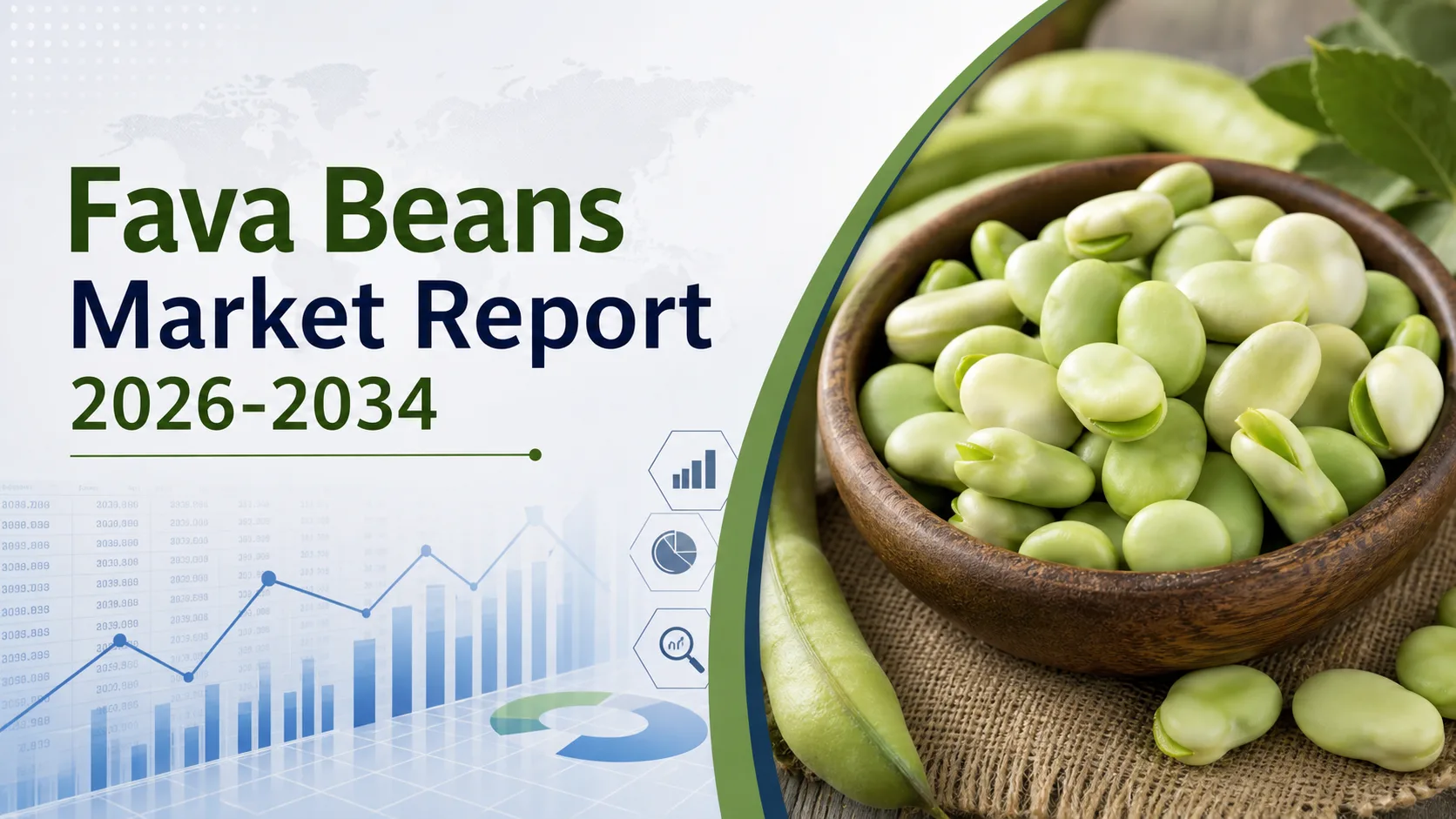
According to IMARC Group's latest research publication, "Fava Beans Market: Global Industry Trends, Share, Size, Growth, Opportunity and Forecast 2026-2034", the global fava beans market size reached 9.6 Million Tons in 2025. Looking forward, IMARC Group expects the market to reach 13.0 Million Tons by 2034, exhibiting a growth rate (CAGR) of 3.38% during 2026-2034.
This detailed analysis primarily encompasses industry size, business trends, market share, key growth factors, and regional forecasts. The report offers a comprehensive overview and integrates research findings, market assessments, and data from different sources. It also includes pivotal market dynamics like drivers and challenges, while also highlighting growth opportunities, financial insights, technological improvements, emerging trends, and innovations. Besides this, the report provides regional market evaluation, along with a competitive landscape analysis.
How Plant-Based Nutrition is Reshaping the Future of Fava Beans Market
- Fava beans are fortified with essential nutrients, including protein, dietary fiber, vitamins such as folate and vitamin K, and minerals like iron, potassium, and magnesium.
- The rising prevalence of obesity, diabetes, and hypertension is catalyzing the demand for products formulated with fava beans.
- Fava beans are recognized for their ability to fix nitrogen in the soil, reducing the need for synthetic fertilizers.
- Food manufacturers are continually expanding their product portfolio by incorporating fava beans into new and exciting products, such as fava-based pasta, chips, and snacks.
- The increasing international trade and rise in export activities are offering lucrative opportunities to farmers and suppliers of fava beans to reach global markets.
Grab a sample copy of this report: https://www.imarcgroup.com/fava-beans-market/requestsample
Key Trends in the Fava Beans Market
- Increasing Demand for Plant-Based Protein: The shifting consumer preferences for plant-based diets due to concerns about health, sustainability, and animal welfare represents one of the key factors catalyzing the demand for fava beans. Additionally, the rising adoption of veganism and vegetarianism is driving the demand for plant-based products like fava beans. Apart from this, the increasing awareness among individuals about the health benefits associated with reducing meat consumption is offering a favorable market outlook. Moreover, the environmental impact of meat production, including greenhouse gas emissions and land use, is encouraging consumers and food producers to explore sustainable protein alternatives.
- Health and Nutritional Awareness: The rising awareness among the masses about the nutritional content of fava beans is driving their demand across the globe. Fava beans are packed with folate, which supports cell division and the prevention of neural tube defects during pregnancy. Additionally, the increasing participation of individuals in fitness activities and the escalating demand for high protein intake are favoring the market growth. Apart from this, the rising prevalence of digestive health issues is catalyzing the demand for fava beans as they contain dietary fiber that promotes digestive health by aiding in regular bowel movements and supporting gut microbiota.
- Sustainable Agriculture and Crop Rotation: The rising emphasis of individuals and farmers on sustainable agriculture practices and crop rotation is another major factor strengthening the growth of the market. Fava beans, as a leguminous crop, have nitrogen-fixing capability that eliminates the need for synthetic nitrogen fertilizers, which contribute to various environmental issues, such as water pollution and greenhouse gas emissions. Apart from this, farmers and agricultural organizations are increasingly recognizing the ecological benefits of incorporating fava beans into crop rotation systems, which is augmenting the market growth.
- Expansion of Product Portfolio: Food manufacturers are continually expanding their product portfolio by incorporating fava beans into new and exciting products, such as fava-based pasta, chips, and snacks, to attract a wider consumer base. Moreover, the easy availability of products infused with fava beans through online distribution channels is supporting the market growth.
- Research and Development in Cultivation: Ongoing research into fava bean cultivation, breeding, and processing techniques is leading to improved crop yields and product quality, which is supporting the market growth. In addition, the increasing international trade and rise in export activities are offering lucrative opportunities to farmers and suppliers of fava beans to reach global markets.
Growth Factors in the Fava Beans Market
- Rising Prevalence of Chronic Diseases: The rising prevalence of obesity, diabetes, and hypertension is catalyzing the demand for products formulated with fava beans. Their fiber content supports digestive health, helps regulate blood sugar levels, and contributes to cardiovascular health by reducing cholesterol levels and supporting healthy blood pressure.
- Expansion of Food Service Sector: The expansion of hotels, restaurants, and cafes, coupled with the inclusion of fava beans in various dishes and beverages, is augmenting the market growth. Fava beans are used in various culinary preparations, including soups, stews, and salads to add a unique nutty flavor to dishes.
- Growing Fitness and Wellness Trend: The increasing participation of individuals in fitness activities and the escalating demand for high protein intake are favoring the market growth. Moreover, the expansion of gyms, aerobic centers, and Zumba classes across the globe is creating a positive market outlook.
- Environmental Sustainability Focus: Fava beans are recognized for their ability to fix nitrogen in the soil, reducing the need for synthetic fertilizers. The rising emphasis of individuals and farmers on sustainable agriculture practices and crop rotation is another major factor strengthening the growth of the market.
- Government Support and Incentives: The government provides support and incentives to encourage sustainable agriculture practices and research. This support includes subsidies, access to modern farming technologies, and initiatives to promote agricultural sustainability.
Leading Countries Operating in the Global Fava Beans Industry
- China
- Ethiopia
- Australia
- France
- Morocco
- Others
Fava Beans Market Report Segmentation
Breakup By Region
- China
- Ethiopia
- Australia
- France
- Morocco
- Others
China exhibits a clear dominance, accounting for the largest fava beans market share. The market research report has also provided a comprehensive analysis of all the major regional markets, which include China, Ethiopia, Australia, France, Morocco, and others. According to the report, China accounted for the largest market share due to its diverse geography and favorable climate conditions. Additionally, the availability of vast landmass in Yunnan, Sichuan, and Heilongjiang are well-suited for fava bean cultivation. These regions experience moderate temperatures, sufficient rainfall, and fertile soil, which creates an ideal environment for fava bean growth.
Apart from this, China has well-developed logistics networks, including ports and distribution centers, which facilitate the smooth flow of fava beans from Chinese farms to consumers worldwide. Moreover, Chinese farmers and agricultural experts are committed to continuous improvement in fava bean cultivation. They rely on advanced farming techniques, such as precision agriculture and eco-friendly pest control methods, to increase yields while minimizing environmental impact. Furthermore, they remain proactive in adapting to evolving market demands. They invest in research and development (R&D) activities to create fava bean varieties that are high-yielding and disease-resistant, addressing the challenges of sustainable farming while meeting consumer preferences. In addition, the government of the country provides support and incentives to encourage sustainable agriculture practices and research.
Competitive Landscape
Fava bean companies are actively involved in cultivating and farming fava beans. They are continuously investing in agricultural practices to optimize yields, enhance crop quality, and ensure sustainable farming methods. Additionally, they are expanding their product offerings beyond traditional fava bean varieties like fava bean snacks, spreads, and fava-based protein products to cater to diverse consumer preferences. Apart from this, they are implementing rigorous testing and quality control measures at every stage of production to ensure the safety and quality of their products.
Moreover, many companies are focusing on the adoption of sustainable farming practices, packaging materials, and supply chain optimizations to minimize their carbon footprint. Furthermore, many companies are actively engaged in corporate social responsibility (CSR) initiatives focused on sustainability and supporting reforestation projects to reduce water usage in farming. They are also focusing on zero-waste production processes to align with environmental goals. In addition, various companies are actively involved in educating consumers about the nutritional benefits and culinary versatility of fava beans. This includes providing recipes, cooking tips, and nutritional information to encourage broader consumption.
Note: If you require specific details, data, or insights that are not currently included in the scope of this report, we are happy to accommodate your request. As part of our customization service, we will gather and provide the additional information you need, tailored to your specific requirements. Please let us know your exact needs, and we will ensure the report is updated accordingly to meet your expectations.
About Us
IMARC Group is a global management consulting firm that helps the world's most ambitious changemakers to create a lasting impact. The company provide a comprehensive suite of market entry and expansion services. IMARC offerings include thorough market assessment, feasibility studies, company incorporation assistance, factory setup support, regulatory approvals and licensing navigation, branding, marketing and sales strategies, competitive landscape and benchmarking analyses, pricing and cost research, and procurement research.
Contact Us
IMARC Group
134 N 4th St. Brooklyn, NY 11249, USA
Email: [email protected]
Tel No:(D) +91 120 433 0800
United States: +1-201971-6302