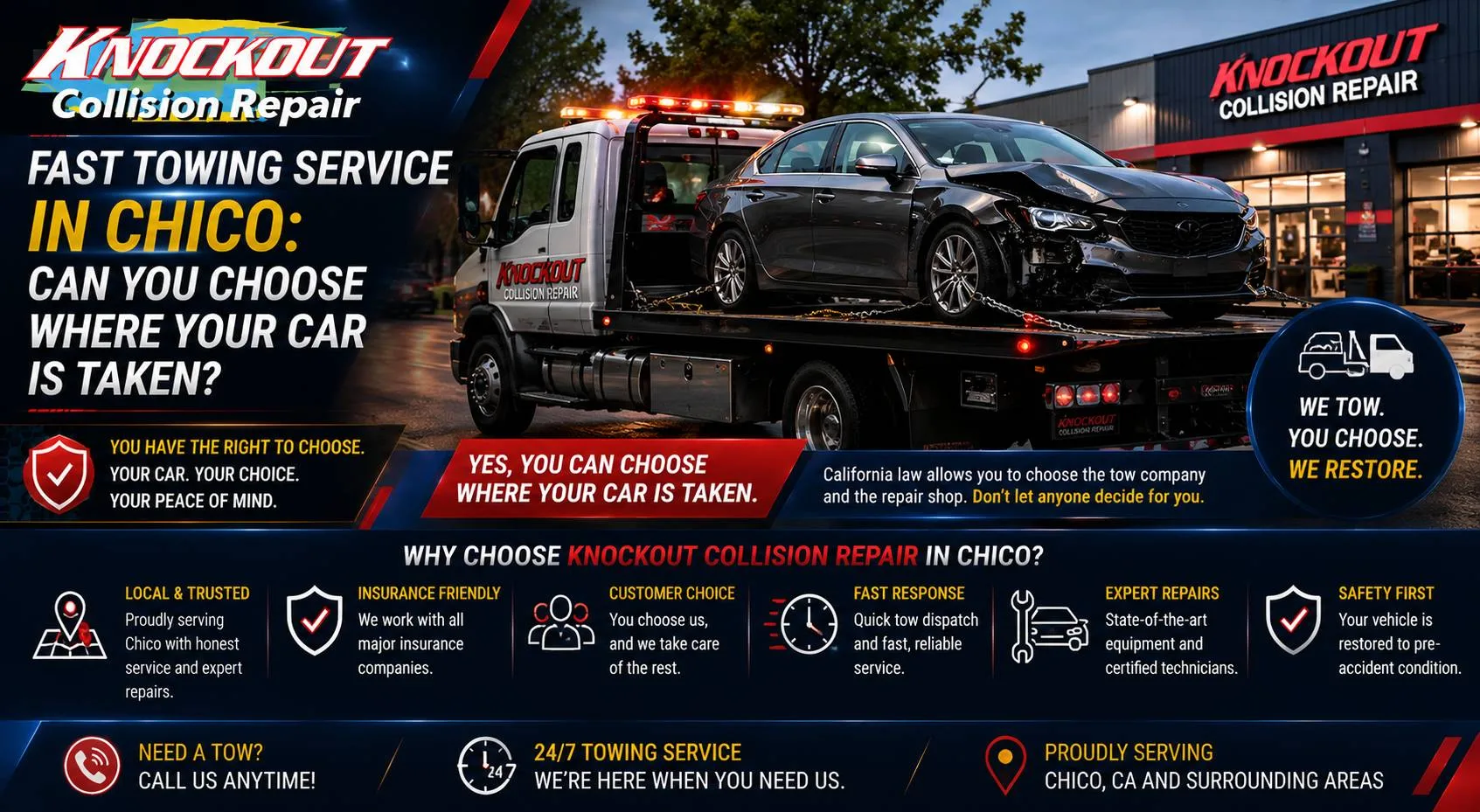
What would you do if a tow truck arrived after a crash and the driver asked where to take your car? Most people are not ready for that question. They may feel pressured, tired, or unsure about what the insurance company will allow. A fast towing service in Chico should remove the vehicle from danger, but the driver still needs to think about the destination.
That choice can affect storage charges, repair delays, inspection timing, and insurance paperwork. Knockout Collision Repair treats towing as the opening step in the repair process, not as a separate ride between two addresses.
Can You Tell the Tow Driver Where to Take Your Car?
In many situations, yes. The owner can ask for the vehicle to go to a collision shop, dealership, home, or storage location. The tow driver may suggest a facility. Still, the final choice usually stays with the owner unless police directions or road-safety rules require a different first stop.
A reliable and fast towing service in Chico should confirm the address before leaving. It sounds basic, but this prevents a frequent problem. A car may end up at a storage yard because nobody gave a definite destination. Moving it again means another tow, more paperwork, and possibly another charge.
Police-controlled tows work differently. An officer may send the vehicle to an approved yard when the car blocks traffic, creates a hazard, or forms part of an investigation. Once the immediate issue ends, the owner can often arrange a transfer to a preferred repair facility.
What Should You Check Before the Car Is Towed?
The scene may feel rushed. Even so, a few minutes of attention can protect the owner later. Before the vehicle moves, check these details:
- Confirm the exact delivery address.
- Ask when storage fees begin.
- Photograph the vehicle from several angles.
- Remove medication, identification, electronics, and work equipment.
- Find out who will receive the keys.
- Keep the tow receipt and release document.
- Avoid approving repairs before reading the estimate.
This record gives the insurer and repair shop a better starting point. It also helps when someone later asks where the vehicle went, when it arrived, or whether damage appeared during transport.
Why Direct Delivery to a Collision Shop Can Save Time
A fast towing service in Chico becomes more useful when the damaged vehicle goes straight to a shop that can inspect and repair it. A stop at a holding yard can slow the entire process. The insurer may wait for access. The repair shop may wait for a release. Meanwhile, the owner makes calls between businesses that do not share records.
Direct delivery also supports a better inspection. A damaged bumper may hide broken brackets, sensor damage, wiring issues, or movement in the vehicle structure. A wheel that appears straight can still have steering or suspension problems. The car needs more than a quick roadside look.
Knockout Collision Repair handles collision assessment, frame and unibody work, dent repair, refinishing, paint matching, and insurance support. The same location can receive the car, document damage, prepare an estimate, and discuss the next step with the insurer.
That connection can reduce avoidable handoffs. It also gives the owner one location for repair updates instead of separate calls to a storage yard, towing provider, adjuster, and body shop.
Can the Insurance Company Choose the Repair Facility?
Insurance companies often recommend shops from their own networks. During a stressful phone call, that recommendation can sound like an instruction. Drivers should still ask whether the policy actually requires that facility.
A reliable and fast towing service in Chico should not promise that the insurer will pay every towing charge. Coverage can depend on the policy, accident details, deductible, towing distance, and final claim decision. Some insurers pay the provider. Others reimburse the owner. The driver should check before assuming either arrangement.
Inspection permission and repair permission also differ. An inspection lets the shop examine the vehicle and prepare an estimate. Repair permission allows work to begin. Those are separate decisions. Reading each form can prevent disputes over teardown, storage, parts, or labor.
The owner should also keep copies of the towing invoice, accident photographs, claim number, estimate, and signed authorization. Missing documents can slow communication later, especially when the insurer requests proof of transport or storage charges.
What Should You Look for in a Repair Destination?
The closest facility may not be the right one. Ask whether the shop follows manufacturer procedures, handles structural work, documents hidden damage, and communicates with insurance adjusters.
Parts deserve a direct conversation. The shop should explain whether it plans to use original equipment parts, alternative parts, or a mix. The same applies to glass, paint, sensors, and safety-system calibration. A vague answer early can create a larger dispute later.
Read the warranty as well. A lifetime repair warranty may cover qualifying work while the customer owns the vehicle. It usually does not cover towing charges, unrelated damage, routine wear, or later maintenance. Written terms carry more weight than a verbal summary.
Repair updates also count. The owner should know when the inspection finishes, whether additional damage appears, when the insurer responds, and whether parts availability changes the schedule. Silence creates unnecessary concern.
Conclusion
Choosing the tow destination can prevent extra transfers, storage delays, and confusion during the claim. Confirm the address, fees, key handoff, repair capability, and insurance process before the vehicle leaves whenever conditions allow. Police may control the first move, but the owner often regains the choice once officers reopen the roadway. A fast towing service in Chico should support safe transport and a direct route into qualified collision repair.