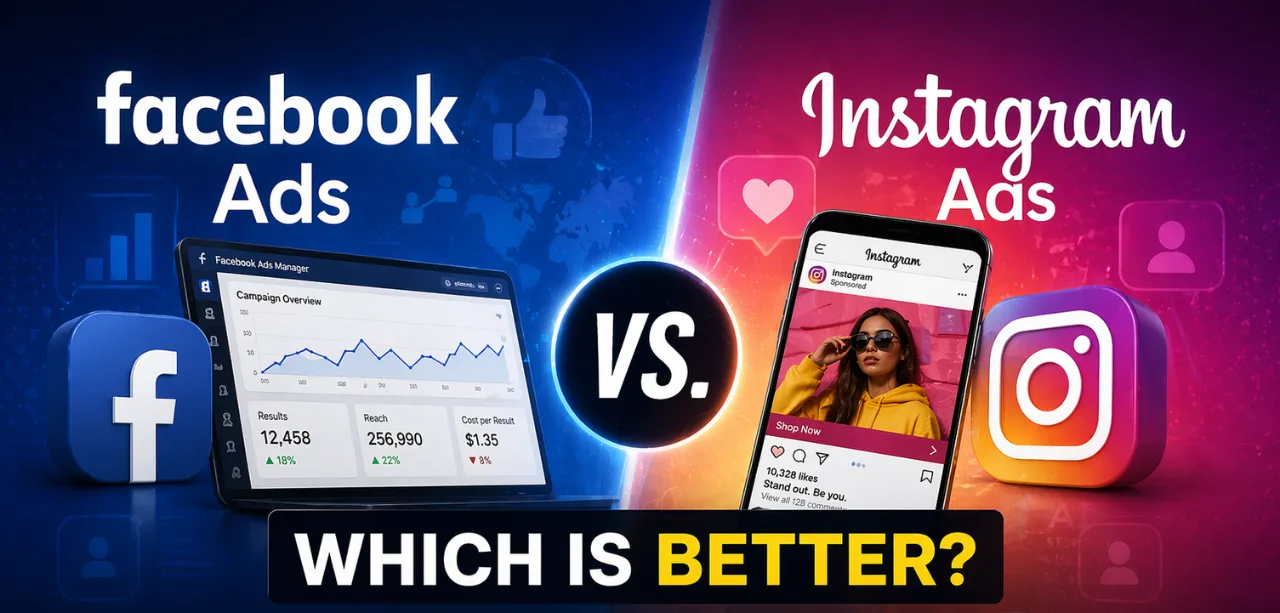
Online advertising continues to evolve, but social media remains one of the fastest ways to reach customers. Among the many platforms available today, Facebook and Instagram dominate the digital advertising space. Both platforms are part of Meta Platforms, allowing businesses to manage campaigns from a single dashboard while targeting different audiences.
Even though they share the same advertising system, their performance can vary depending on your business type, content style, and marketing goals. This guide explains the real differences between Facebook Ads and Instagram Ads so you can decide where to invest your budget for better results.
What Are Facebook Ads?
Facebook Ads are sponsored messages that appear within the Facebook ecosystem. These ads blend into user content and can show up in multiple locations, such as the feed, stories, video section, or marketplace.
One of Facebook’s strongest advantages is its detailed audience targeting. Businesses can reach users based on behavior, interests, demographics, and past interactions. This makes Facebook a reliable option for companies that want predictable results and measurable outcomes.
Common goals for Facebook Ads include:
- Collecting customer leads
- Driving traffic to websites
- Promoting professional services
- Increasing sales conversions
- Re-engaging previous visitors
What Are Instagram Ads?
Instagram Ads are paid promotions displayed inside the Instagram app. These ads are designed to match the visual nature of the platform and often look similar to regular posts.
Instagram focuses on images and short videos, which encourages users to interact quickly with content. Because of this, brands that rely on strong visuals often see better engagement on Instagram compared to other platforms.
Businesses commonly use Instagram Ads to:
- Showcase products
- Build brand recognition
- Increase social engagement
- Promote lifestyle content
- Boost online store sales
Main Differences Between Facebook Ads and Instagram Ads
Here is a straightforward comparison to help you understand how the two platforms operate.
CategoryFacebook AdsInstagram AdsUser BaseBroad and diverseYounger and trend-focusedContent StyleInformative and mixed mediaVisual and creativeEngagementSteadyHigher interactionBudgetOften more affordableSlightly higher costsPrimary PurposeLead generationBrand awarenessBoth platforms are powerful, but they serve different marketing purposes.
Audience Behavior: Where Your Customers Are Most Active
Knowing your audience is more important than choosing a platform randomly. Each platform attracts different types of users.
Facebook User Trends
Facebook has a wide range of users across age groups and professions. Many people use it daily to stay connected, read updates, and join communities.
Businesses that usually perform well on Facebook include:
- Service providers
- Training institutes
- Real estate agencies
- Healthcare clinics
- Local businesses
If your audience values information and decision-making content, Facebook is often the stronger choice.
Instagram User Trends
Instagram attracts users who enjoy visuals, entertainment, and fast content. Younger audiences spend significant time browsing photos, reels, and short videos.
Industries that often succeed on Instagram include:
- Fashion and apparel
- Food brands
- Fitness companies
- Beauty and skincare
- Online retailers
If your product looks appealing on camera, Instagram can generate strong attention.
Cost Differences Between Facebook Ads and Instagram Ads
Advertising budgets are always a concern for businesses, so understanding cost patterns is essential.
Facebook Advertising Expenses
Facebook campaigns are generally more budget-friendly. Businesses can start with small investments and gradually increase spending as results improve.
Reasons Facebook is often cost-effective:
- Larger inventory of ad placements
- Less competition in certain niches
- Flexible targeting options
Instagram Advertising Expenses
Instagram advertising can require a slightly higher budget because of strong competition for visual attention. However, higher engagement can sometimes justify the additional cost.
Factors that influence Instagram pricing:
- Demand for premium placements
- High user engagement
- Popular visual content formats
Engagement and Performance: What Matters Most
Many marketers notice that Instagram content receives more likes, comments, and shares compared to Facebook. This is mainly because Instagram users interact quickly with visual content.
However, engagement is only one part of the equation.
Real business success depends on outcomes such as:
- Leads generated
- Sales completed
- Website visits
- Customer inquiries
In many cases:
- Facebook delivers more leads
- Instagram builds stronger brand visibility
- Both platforms support long-term growth
Ad Formats Available on Facebook and Instagram
Because both platforms use the same advertising system, they offer similar ad types.
Popular ad formats include:
- Image advertisements
- Video advertisements
- Carousel advertisements
- Story advertisements
- Reels advertisements
- Collection advertisements
The difference lies in how users respond to each format.
Instagram usually performs best with:
- Short videos
- Creative visuals
- Product demonstrations
Facebook usually performs best with:
- Detailed offers
- Educational content
- Lead generation campaigns
When Facebook Ads Make More Sense
Facebook is a practical choice when your goal involves structured marketing and consistent results.
Use Facebook Ads when you want to:
- Generate customer inquiries
- Promote services
- Target specific locations
- Increase website traffic
- Build long-term customer relationships
Businesses that often rely on Facebook include professional services and local companies.
When Instagram Ads Are the Better Option
Instagram is a strong platform for brands that depend on appearance and storytelling.
Use Instagram Ads when you want to:
- Introduce new products
- Increase brand awareness
- Reach younger audiences
- Create visually appealing campaigns
- Encourage social interaction
Product-based businesses often benefit the most from Instagram advertising.
Facebook Ads vs. Instagram Ads: The Real Winner
There is no universal winner because each platform serves a different role in marketing.
Think of it this way:
- Facebook is built for decision-making
- Instagram is built for attention
Choosing the right platform depends on your business objective, not popularity.
The Most Effective Strategy: Combine Both Platforms
Many successful campaigns use both platforms together instead of choosing one.
Running ads on both Facebook and Instagram allows businesses to:
- Reach more potential customers
- Test different marketing messages
- Compare performance data
- Adjust budgets efficiently
- Improve overall results
This balanced approach reduces risk and increases the chances of success.
Final Thoughts
Both Facebook Ads and Instagram Ads remain essential tools for digital marketing in 2026. Facebook is known for reliable targeting and lead generation, while Instagram excels at visual engagement and brand building.
The smartest decision is not about picking the most popular platform. It is about choosing the platform that matches your audience and business goals.
Start small, measure performance, and scale what works. That discipline is what turns advertising into profit.