Reducing False Alarms with Explosion Proof PTZ Camera With IR in UK Maritime Yards
A single false alarm can halt cargo handling, interrupt vessel operations, and divert security teams from genuine threats. In busy UK maritime yards, where hazardous cargo, fuel storage, and continuous vehicle movement converge, repeated false alerts are more than an inconvenience—they increase operational costs, create alarm fatigue, and weaken emergency response effectiveness.
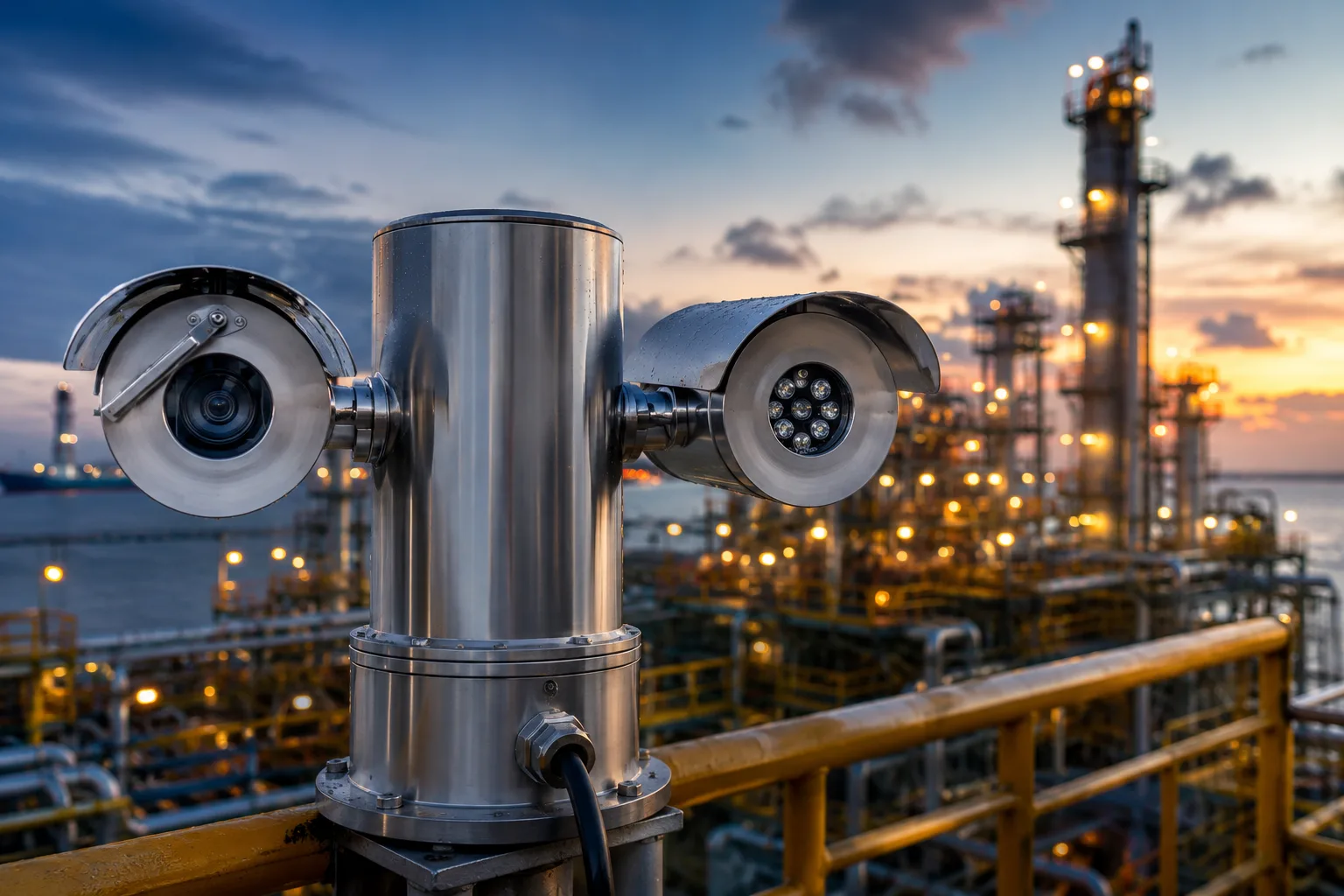
An Explosion Proof PTZ Camera With IR helps you improve detection accuracy while maintaining safe surveillance in hazardous dockside environments. Whether your facility handles petroleum products, chemicals, offshore equipment, or containerised freight, selecting intelligent hazardous-area imaging technology enables your team to distinguish genuine risks from environmental interference without compromising compliance or operational efficiency.

Understanding the Cost of False Alarms in Maritime Operations
Maritime terminals operate around the clock under constantly changing environmental conditions. Strong winds, sea spray, heavy rain, fog, moving cranes, vessel lighting, and wildlife can all trigger unnecessary security events if surveillance systems are not designed for demanding industrial environments.
Installing an Explosion proof ir ptz camera reduces these challenges by combining hazardous-area certification with intelligent monitoring capabilities. For facilities operating under the UK's Dangerous Substances and Explosive Atmospheres Regulations (DSEAR), HSE workplace safety standards, PUWER, and the ATEX Directive, surveillance equipment must support both operational safety and regulatory compliance.
Across industrial regions including the Humber, Teesside, Merseyside, Southampton, Aberdeen, South Wales, and the Forth Estuary, maritime, logistics, offshore energy, petrochemical, industrial manufacturing, and oil and gas operators increasingly rely on advanced surveillance to improve incident response while reducing unnecessary operational disruption.
Intelligent Infrared Features That Reduce False Positives
Environmental conditions at quays and dockside facilities constantly challenge conventional CCTV systems. Bright sunlight reflecting from water, vessel headlights, changing weather, and moving machinery can all generate unwanted alarms.
An ex-proof PTZ IR camera equipped with advanced imaging technologies significantly improves detection reliability. Wide Dynamic Range (WDR) balances scenes containing both intense light and deep shadows, while intelligent video analytics distinguish between routine operational movement and events requiring operator attention.
Temperature filtering further strengthens detection by identifying genuine thermal anomalies rather than reacting to every environmental change. Infrared imaging also maintains reliable monitoring after dark, during fog, or when visibility deteriorates due to adverse weather.
Features that contribute to fewer false alarms include:
- Wide Dynamic Range for difficult lighting conditions.
- Intelligent object classification and motion analytics.
- Temperature-based event filtering.
- Adjustable alarm sensitivity for operational zones.
- Infrared imaging for consistent night-time monitoring.
Together, these capabilities enable your security team to focus on verified incidents instead of responding to repeated nuisance alerts.
Camera Placement and Tamper Protection Improve Detection Accuracy
Even the most advanced surveillance technology delivers limited value if cameras are installed incorrectly. Strategic positioning remains one of the most effective ways to reduce false alarms across maritime facilities.
An ATEX PTZ Camera With IR should be installed with clear sightlines covering fuel transfer points, hazardous storage compounds, loading areas, quays, vessel berths, access gates, and restricted operational zones. Positioning should minimise reflections from water surfaces while avoiding direct exposure to high-intensity lighting where possible.
Physical protection is equally important. Marine-grade housings, anti-corrosion construction, vibration resistance, and tamper detection features help ensure uninterrupted operation despite harsh weather, mechanical impacts, or attempted interference.
When evaluating surveillance upgrades, consider these procurement criteria:
- Independent hazardous-area certification.
- Demonstrated false alarm reduction performance.
- Marine-grade ingress protection and corrosion resistance.
- Reliable remote diagnostics and maintenance capabilities.
- Long-term technical support and documented lifecycle performance.
These measurable indicators provide stronger procurement evidence than focusing solely on initial purchase price.
Integrated Surveillance Supports Faster Security Response
Modern ports rely on integrated security ecosystems rather than standalone cameras. Connecting surveillance devices with access control, perimeter protection, alarm management software, and CCTV control rooms enables faster incident verification and more effective decision-making.
An ir ptz camera for Hazardous Areas integrates with video management systems, command centres, and industrial security platforms, allowing operators to investigate alarms remotely before dispatching personnel.
For example, an automated perimeter alert triggered during poor weather can immediately be verified using infrared zoom capability. Operators determine whether the activity involves wildlife, authorised maintenance staff, moving equipment, or an actual security breach. Accurate verification reduces unnecessary call-outs while allowing genuine incidents to receive immediate attention.
Historical video also supports post-incident investigations, operational reviews, insurance documentation, regulatory reporting, and continuous improvement across maritime security programmes.

SharpEagle Technology Explosion Proof IR PTZ Camera
Key Features
SharpEagle Technology's Hazardous Area PTZ Cameras With IR combine certified explosion-proof construction, high-definition imaging, infrared illumination, precision pan-tilt-zoom capability, corrosion-resistant stainless-steel housing, and dependable performance for hazardous environments across oil and gas, chemical, petrochemical, mining, maritime, and industrial applications.
Benefits
The solution improves situational awareness, enables safer remote inspections, enhances visibility during adverse weather and night operations, reduces unnecessary personnel exposure to hazardous locations, and supports compliance with demanding industrial safety requirements.
Unique Selling Points
SharpEagle Technology delivers robust hazardous-area surveillance engineered for harsh industrial environments, seamless integration with existing security infrastructure, dependable lifecycle reliability, and responsive technical support.
Organisations searching for a supplier of hazardous area PTZ cameras UK, an IR PTZ camera hazardous area oil and gas solution, an explosion proof PTZ camera oil and gas UK deployment, or an ex-proof PTZ IR camera supplier UK benefit from specialist expertise focused on safety-critical operations.
Conclusion
Reducing false alarms is about improving operational confidence rather than simply decreasing notification volumes. Certified infrared hazardous-area surveillance enables your security and operations teams to identify genuine risks more quickly, protect personnel more effectively, and optimise resource allocation across complex maritime facilities. As UK ports continue investing in smarter infrastructure and connected security systems, accurate hazardous-area monitoring will become an increasingly valuable operational asset. To strengthen your maritime surveillance strategy, contact SharpEagle Technology.