Modern businesses rely heavily on data. Whether it’s improving customer experience, predicting trends, or making smarter decisions, data acts as the foundation. But data alone is not enough. To truly benefit from it, organizations need someone who can collect, organize, clean, and manage data in a reliable way. This is where a certified data engineer plays a major role.
In this blog, we will explore who a certified data engineer is, why they are so important in today’s digital world, what skills they bring to the table, and how organizations can benefit from hiring one. We will also discuss how aspiring professionals can build a strong career through certifications like the IABAC Data Engineer Certification, which is widely recognized in the industry.
What Is a Certified Data Engineer?
A data engineer is a professional who designs, builds, and maintains data systems. Their main responsibility is to ensure that data flows smoothly from one point to another. Think of them as architects and builders of pipelines that move data safely and efficiently.
When a data engineer becomes certified, it means they have completed a structured learning program, demonstrated practical understanding, and passed an evaluation. Certification verifies that the person has real knowledge and skills needed for the job.
Why Data Engineering Matters in Modern Systems
Today’s systems deal with massive volumes of data. Organizations gather information from mobile apps, websites, sensors, transactions, social media, and more. Managing all this manually is impossible.
A certified data engineer helps transform raw information into usable datasets. This is important because:
- Businesses need quick access to correct data.
- Data must be stored in a clean and organized way.
- Systems need to run without interruptions.
- Insights should be available in real time.
Without well-structured data systems, even the best analytics tools cannot perform well.
The Role of a Certified Data Engineer
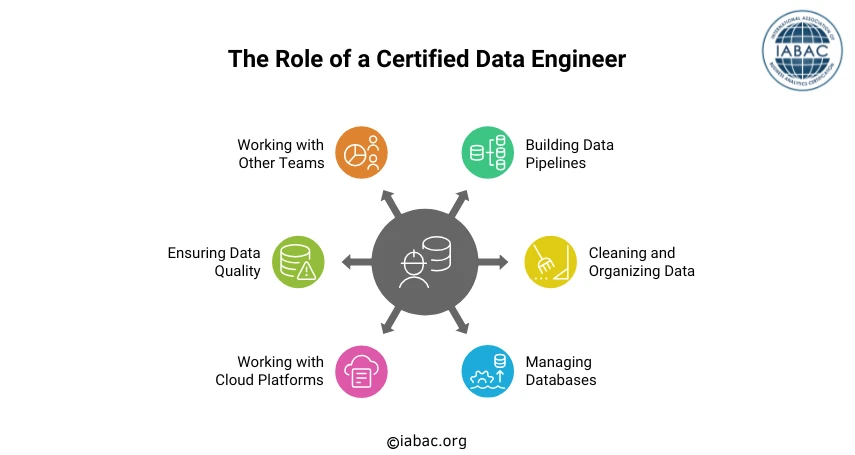
A data engineer has a wide range of responsibilities. Their tasks include:
1. Building Data Pipelines
These pipelines move data from one location to another. For example, from a website to a database or from a database to a dashboard.
2. Cleaning and Organizing Data
Raw data often contains errors, missing values, duplicated records, or incorrect formats. Engineers fix these issues.
3. Managing Databases
They choose the right database systems and ensure they run smoothly.
4. Working with Cloud Platforms
Most companies store data in the cloud. Certified data engineers work with tools such as AWS, Azure, and Google Cloud.
5. Ensuring Data Quality
They set up rules and systems that keep data accurate and trustworthy.
6. Working with Other Teams
Data engineers collaborate with data scientists, analysts, and developers so everyone can access the data they need.
A certified data engineer brings a disciplined approach to these tasks, following industry best practices.
Modern Data Systems and Their Needs
Modern data systems are designed to handle:
- Large-scale data (terabytes or petabytes)
- Different types of data (text, images, video, logs, real-time streams)
- Fast processing requirements
- Complex transformations
These systems often involve:
- Cloud storage
- Real-time streaming tools
- ETL (Extract, Transform, Load) tools
- Data warehouses
- Big data frameworks
- Machine learning environments
A certified data engineer ensures all parts of these systems work together properly.
Skills of an Expert Certified Data Engineer
To qualify as an expert, a data engineer must have strong skills in multiple areas.
Technical Skills
- SQL and NoSQL databases
- ETL and ELT processing
- Data modeling
- Cloud platforms (AWS, Azure, GCP)
- Big data frameworks (Hadoop, Spark)
- Python and scripting languages
- Data pipelines using tools like Airflow, Kafka, or Snowflake
Soft Skills
- Problem-solving
- Clear communication
- Collaboration
- Understanding of business needs
A certification helps validate that the engineer not only learned these skills but can also apply them in real projects.
Why Organizations Prefer Certified Data Engineers
Employers often prefer certified professionals for several reasons:
1. Verified Skills
Certification shows that the engineer has passed industry-level evaluations.
2. Up-to-Date Knowledge
Certified engineers stay aligned with modern tools and practices.
3. Better Reliability
Organizations trust certified engineers to design stable and scalable systems.
4. Reduced Training Time
Certified professionals need less time to get started on projects.
5. Higher Productivity
They understand how to optimize systems for better speed, cost, and performance.
This is why certified data engineers are in high demand across industries like finance, e-commerce, healthcare, logistics, and technology.
Career Benefits for Data Engineers
Becoming certified has many advantages for professionals as well:
- Improved job opportunities
- Higher salary potential
- Strong professional credibility
- Better chances of career growth
- Opportunity to work on advanced systems
Data engineering is one of the fastest-growing tech careers today. With more businesses depending on AI and data-driven decisions, the need for skilled engineers continues to rise.
IABAC Data Engineer Certification – A Strong Choice
If you want to build a successful career in data engineering, the IABAC Data Engineer Certification is an excellent option. It is globally recognized and designed for real-world applications.
Here’s why many professionals choose this certification:
✔ Industry Recognition
IABAC certifications are known across multiple countries and trusted by employers.
✔ Practical Learning
The content focuses on real tools and practical implementation.
✔ Covers Modern Data Engineering Needs
You learn about cloud systems, ETL pipelines, databases, big data, and more.
✔ Suitable for Beginners and Experienced Professionals
Whether you're starting new or expanding your skills, it supports all learning levels.
✔ Boosts Career Opportunities
Having an IABAC certification strengthens your resume and helps you stand out.
If you want a clear learning path and a structured way to enter the field, this certification can be a strong first step.
How a Certified Data Engineer Helps Businesses Grow
A certified data engineer brings value in many ways.
1. Faster Decision-Making
Reliable data pipelines ensure that decision-makers have updated information.
2. Better Customer Insights
Clean and structured data helps analyze customer behavior more accurately.
3. Stronger Data Security
Engineers ensure that data is stored safely and accessed only by the right people.
4. Cost Savings
Optimized systems reduce unnecessary cloud and storage costs.
5. Scalability
As businesses grow, data systems must grow too. Certified engineers design systems that scale smoothly.
6. Support for AI and Analytics
Machine learning models need large amounts of organized data. Engineers ensure that this is available.
The more efficient the data systems, the more competitive the business becomes.
Future of Data Engineering
The future looks very promising for data engineering. Technologies like AI, automation, IoT, and big data continue to grow rapidly. This means the demand for skilled data engineers will also rise.
Future trends include:
- Automated data pipelines
- Real-time analytics
- AI-driven data quality checks
- Multi-cloud systems
- Advanced data orchestration tools
A certified data engineer is better prepared to work with these future technologies.
A certified data engineer plays a vital role in building modern data systems. They help organizations structure data in a clean, reliable, and scalable way. Their skills allow businesses to make better decisions and support the development of AI and analytics solutions.
For those who wish to grow in the field, programs like the IABAC Data Engineer Certification offer a solid foundation. They help you gain industry-recognized skills and become job-ready.
Whether you are a business seeking expert talent or an individual aiming for a strong career path, understanding the importance of certified data engineers is the key to staying competitive in today’s data-driven world.