UK business expansion immigration is something international companies should think about before making plans to enter the British market. Finding customers, choosing a business location and setting a budget are all important steps, but there is another question to consider: who will be able to work in the UK and help run the business? Founders may want to oversee the launch themselves, while established companies may need to bring experienced employees into the country. Looking at immigration requirements early can help businesses plan these decisions alongside their wider expansion goals.
Why Immigration Should Be Part of Your UK Expansion Plan
Moving into a new market brings practical questions that may not arise when a company operates in just one country. A business might need someone to manage its first UK office, introduce its services to local customers or train a new team. In other cases, the company may want to recruit people who already live in the UK.
Each situation needs to be considered on its own merits. A founder's circumstances may differ from those of a specialist employee or a senior manager moving from an overseas branch. The work involved, the person's role and the company's arrangements can all affect which immigration options are worth exploring.
Leaving these questions until the last minute can make recruitment and relocation planning more difficult. By considering immigration at the beginning, businesses can identify what they need to investigate before committing to a launch date, employment arrangements or relocation costs.
Which UK Immigration Routes Might Be Relevant?
There is no single immigration route that suits every international company or every person involved in a business expansion. The right option depends on the individual's circumstances, the proposed work and the requirements that apply at the time of application.
For instance, the Skilled Worker route may be relevant when a UK employer wants to recruit someone for an eligible job and the necessary conditions are satisfied. Depending on the case, these may include an eligible sponsoring employer, the role's requirements, the applicable salary threshold and the worker's eligibility.
Some international businesses may also need to investigate routes that relate to particular business activities, founders or employees moving between overseas operations and the UK. However, owning a company or opening a UK office does not, by itself, give someone permission to live or work in the country.
Before choosing a route, businesses should describe the work that needs to be done, identify who will carry it out and check the relevant requirements. Official UK government guidance is a useful starting point, while individual circumstances may require advice from a suitably qualified immigration professional.
Sponsorship: What Employers Need to Consider
If a company plans to employ people through a sponsored immigration route, it needs to understand what the process involves. Sponsorship is not simply a matter of offering someone a job. The employer may need the appropriate licence and must meet the conditions attached to the route being used.
There can also be responsibilities after sponsorship has been granted. Depending on the applicable rules, these may involve keeping employment records, checking workers' eligibility, reporting certain changes and meeting ongoing compliance duties.
For a company that is new to the UK market, these tasks may be unfamiliar. It can help to decide in advance who will handle the paperwork, keep track of relevant dates and communicate with the teams responsible for recruitment and business operations.
The details matter because sponsorship requirements depend on the route and the circumstances involved. Businesses should check the current rules before making employment or relocation decisions rather than relying on assumptions about what will be required.
Moving Founders, Managers and Specialist Employees
An international business may want to send an experienced member of its existing team to the UK instead of building every part of the operation from scratch. This person might help establish the office, manage local employees, work with clients or share knowledge with colleagues.
Before arranging the move, the company should be clear about the purpose of the assignment. What work will the person carry out? How long is the assignment expected to last? Will the individual be managing a team, providing specialist support or taking on a different role?
These questions help businesses understand which immigration requirements they need to investigate. An employee's existing position in another country does not automatically mean that the same person can undertake the same work in the UK without meeting the relevant conditions.
Practical preparation also matters. Employers may need to gather supporting documents, coordinate with HR and allow time for the required application process. Discussing these steps early can make it easier to align a proposed move with the company's wider plans.
Challenges Companies May Encounter
UK expansion can involve several immigration-related questions at once, particularly when a company is hiring people or moving employees across borders.
Choosing the right route is one of the first things to investigate. A route that may work for one employee or business arrangement may not fit another. Companies need to consider the actual job, the individual's circumstances and the rules that apply to the proposed arrangement.
Managing timelines can be another concern. A business may have a planned office opening, a client commitment or a project that depends on a particular employee being available. Application preparation and processing can affect these plans, so businesses should avoid assuming that permission will be granted by a particular date.
Getting documentation ready also deserves attention. Employers may need information about the role, the business and the individual involved. Missing details or inconsistencies can create extra work, making it sensible to review documents carefully before submitting an application.
Understanding ongoing responsibilities is equally important. Immigration planning does not necessarily end when an employee arrives in the UK. Depending on the route, an employer may need to continue maintaining records, reporting relevant changes and meeting other compliance obligations.
Thinking about these areas together gives businesses a clearer starting point for identifying questions that need further investigation.
How to Prepare Before Entering the UK Market
A useful first step is to write down what the company wants to achieve in the UK. This might involve opening an office, serving new customers, recruiting a local team or transferring existing employees. The business can then identify which people will need to work in the country and what responsibilities they are expected to take on.
The next step is to review the proposed roles and research the immigration routes that may be relevant. If sponsorship could be required, the company should investigate the licence process and the responsibilities associated with it.
It is also worth deciding who will coordinate the work internally. HR, recruitment, legal advisers and business managers may all need to contribute information. Giving each task a clear owner can help prevent important details from being overlooked.
Finally, companies should check the latest official guidance and obtain professional advice when a situation requires individual assessment. Immigration rules and eligibility conditions can change, so information found during early research should be checked again before decisions are finalised.
UK business expansion immigration is best considered alongside recruitment, budgets and operational planning, rather than as a task to deal with only when someone is ready to relocate. Taking time to understand the relevant requirements can help businesses ask better questions and prepare their next steps more carefully.
LSET Webinar: Immigration Strategies for Businesses Expanding to the UK
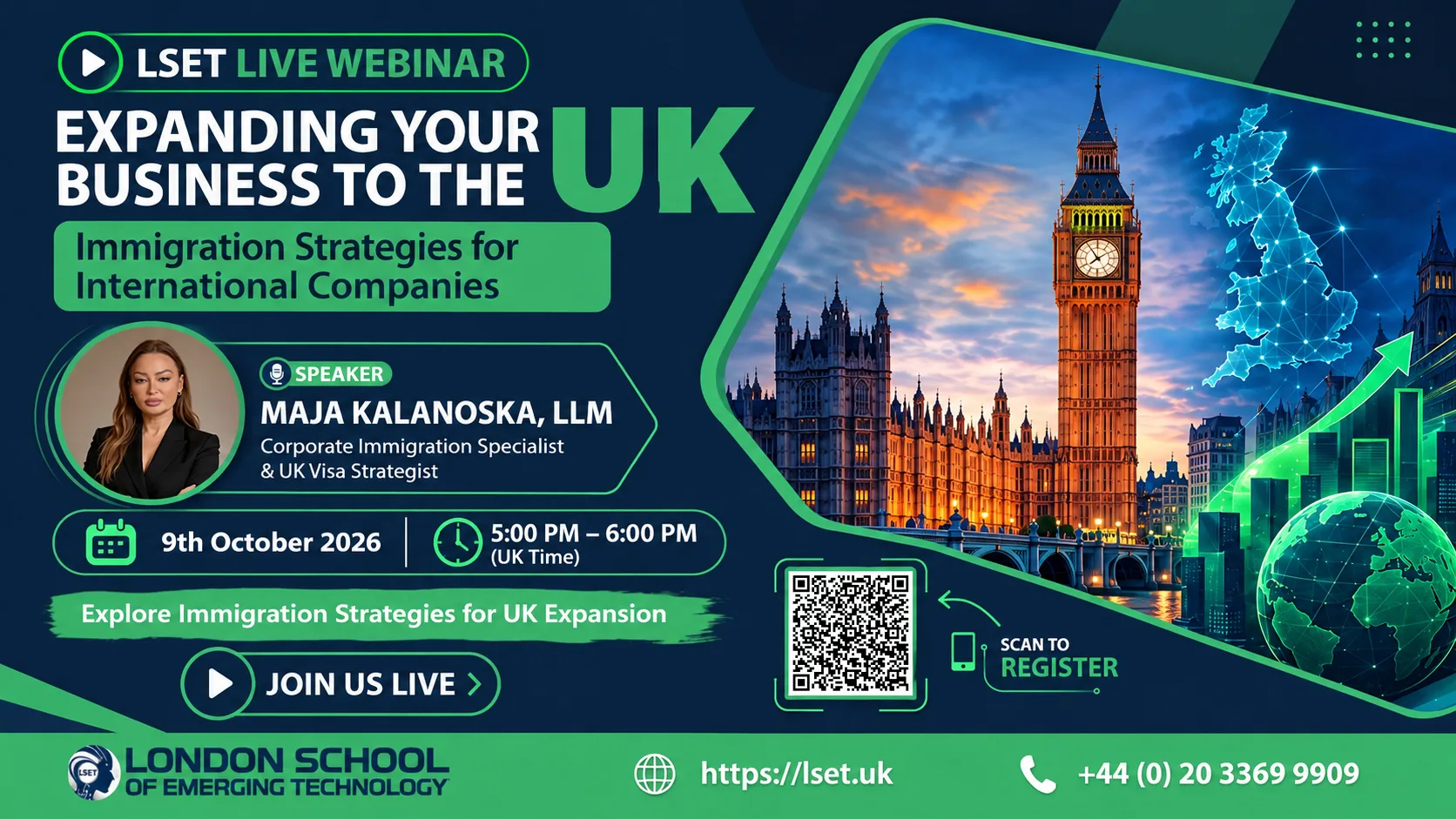
Companies looking to learn more about these issues can explore the London School of Emerging Technology's webinar, Expanding Your Business to the UK: Immigration Strategies for International Companies.
The session features Maja Kalanoska, Corporate Immigration Specialist and UK Visa Strategist. It covers immigration considerations for international businesses, potential routes for moving founders and key employees, sponsorship requirements, the Skilled Worker route, employer responsibilities and workforce mobility.
The webinar is aimed at business owners, founders, entrepreneurs, senior executives, HR professionals, global mobility teams and employers considering a UK presence. These audiences may find the topic relevant when assessing how staffing and immigration questions fit into their expansion plans.
According to the event page, the webinar is scheduled for 9 October, from 5:00 pm to 6:00 pm UTC+0, and is listed as free. Readers should visit the official LSET event page to check the latest event and registration information.
The session is educational and should not be treated as individual legal or immigration advice. Requirements depend on the circumstances of each case, so businesses should consult current official guidance and seek advice from an appropriately qualified professional where necessary.
Expanding into another country involves more than identifying a market opportunity. Companies also need to think about the people who will deliver their plans and the requirements that may affect their ability to work in the UK. For organisations preparing their next stage of international growth, UK business expansion immigration is one area worth