How thoughtful booth design earns attention, holds it, and turns a busy show floor into real conversations.
Walk onto any major trade show floor and you'll see the same quiet drama play out hundreds of times an hour. A visitor slows, scans a row of booths, and decides in a second or two where to stop and where to keep moving. That split-second judgment is what your exhibition stall design is really up against. It's a competition for attention, and attention is scarce.
After years helping brands prepare for expos, the pattern holds: the companies that win the floor aren't always the ones with the biggest budgets. They're the ones who grasp that a stall has one job before it can do anything else: it has to earn a stranger's curiosity in the seconds it takes them to walk past.
What this guide covers
- Why stall design decides who stops
- Four ideas that make visitors stop and stay
- How to tell if your design is working
- The one mistake worth avoiding
Why does exhibition stall design decide who stops at your booth?
Because on a crowded floor, your stall is the first and sometimes the only message a visitor receives about your brand. Before anyone reads a word or shakes a hand, they've formed an impression from the layout, the lighting, and how open the space feels.
That first impression carries real commercial weight. Data pulled together by Statista underlines how much buyers still value face-to-face events, where most attendees arrive specifically to find new products and suppliers. Your design decides whether they see you as worth a few minutes. Get it right, and the stall becomes a lead magnet. Get it wrong, and even great products go unnoticed.
What makes visitors actually stop and stay?
Four design choices do most of the heavy lifting, and none needs a big budget. They work in a modest corner or a large island space.
1. Give the eye one clear place to land
Cluttered stalls confuse people, and confused people keep walking. The strongest exhibition stall design ideas start with a single focal point: one bold headline, one hero product, or one striking visual a passerby can absorb instantly. Open layouts help too: space to walk in feels welcoming, not crowded. Say one thing loudly before you try to say ten things quietly.
2. Build in a moment people can touch
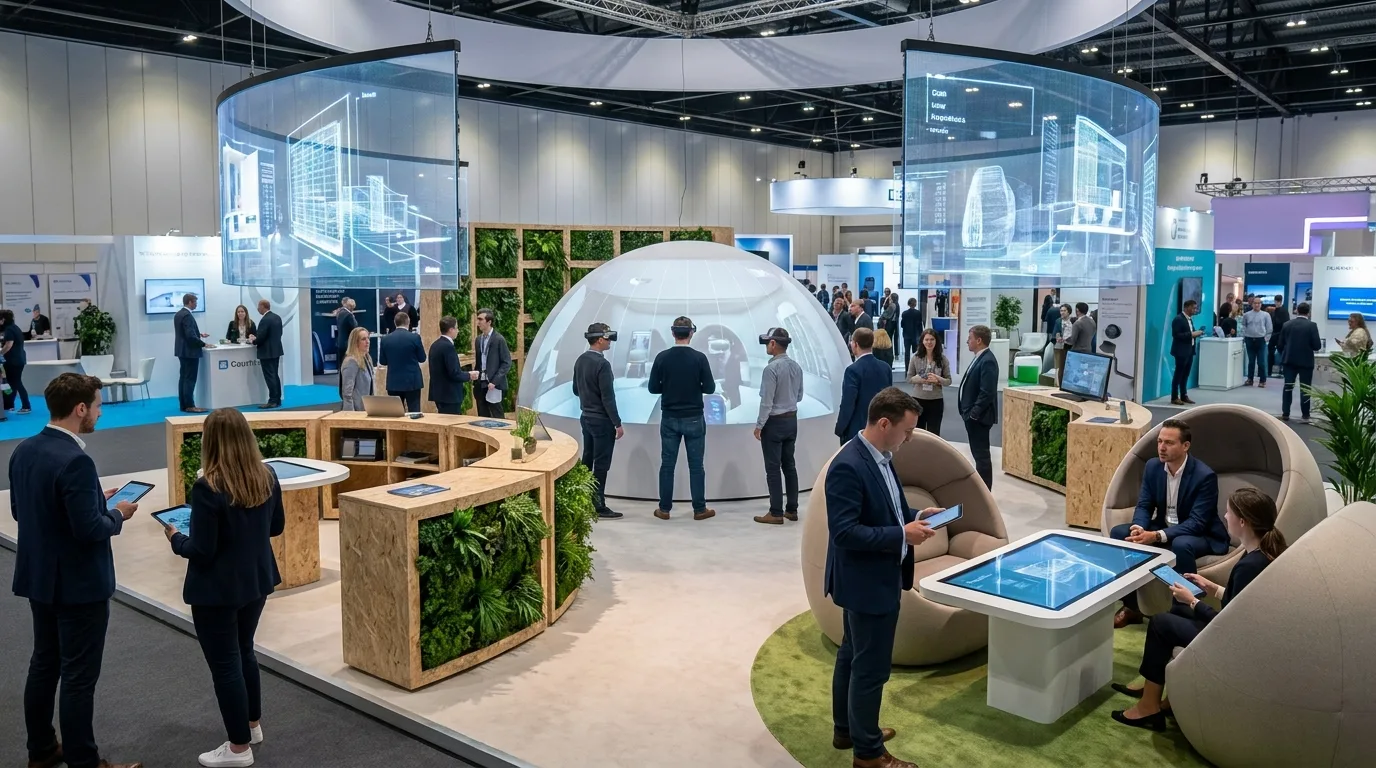
A stall that invites participation almost always beats one that only displays. A touchscreen configurator, an AR demo, or a hands-on trial gives visitors a reason to pause instead of glancing and leaving.
This blend of physical and digital, often called "phygital," is one of the defining shifts on the modern show floor, which is why a growing number of brands now work with studios that engineer interactive exhibition stands and expo experiences rather than static panels. An interactive moment doesn't just entertain, it opens a conversation your team can build on.
3. Make it modular and sustainable
Reusable, modular builds have moved from a nice idea to a practical expectation. A well-designed modular stall can be reconfigured for different venues, which saves money over a season and cuts waste. Materials matter now, too: recycled panels, responsibly sourced timber, and energy-efficient lighting signal that a brand thinks beyond the show floor. Sustainable design isn't a compromise, it's usually the smarter long game.
4. Give people a reason to linger
Trade shows are exhausting, and a stall that offers a moment of calm stands out. Seating, softer lighting, a coffee counter, or greenery create a space where people relax and stay longer. Lounge-style, biophilic environments lift dwell time, and longer dwell time means deeper conversations, stronger recall, and better leads.
How do you know your exhibition stall design is working?
You measure it, rather than guessing from a vague sense that the booth felt busy. The numbers that matter most are dwell time, quality leads captured, and how many visitors move from a first glance to a real conversation.
Sensors, badge scans, and simple lead-capture tools turn a chaotic day into usable data. A stall you can measure is a stall you can improve, show after show. Booths with interactive demos tend to hold visitors far longer than passive displays, and that gap is obvious once you start tracking it.
What's the biggest exhibition stall design mistake to avoid?
Trying to say everything at once. When a stall is crammed with competing messages, dense text, and a dozen product shots, visitors can't tell what matters, so they tune all of it out.
The fix is discipline: pick the one idea you want remembered, design the space around it, and let everything else support that message. Clarity almost always beats clutter on a show floor. A focused stall respects a visitor's time, and respected visitors are the ones who stay.
Practical Takeaways
- Lead with one message. Decide what you want remembered, then build the stall around it.
- Design for a few seconds, not a few minutes. Most people only glance, so make the glance count.
- Add one genuine interaction. A demo or hands-on trial earns attention and starts conversations.
- Choose modular and sustainable. Reusable builds save money over a season and signal responsibility.
- Create somewhere to pause. Seating, warmth, and natural touches lift dwell time and lead quality.
- Track what happens. Use lead capture and simple metrics so every show informs the next.
Frequently Asked Questions
What is the most important part of exhibition stall design?Clarity comes first. A visitor should grasp who you are and why you matter within a few seconds, so a strong focal point and an open, easy-to-enter layout matter more than any expensive add-on.
How much does a good exhibition stall cost?
It varies widely with size, materials, and technology. The better question is value over a season: a reusable, well-planned stall often costs less per event than building fresh each time.
Do interactive and digital features really help?
Yes, when they serve a purpose. Touchscreens, AR demos, and hands-on trials hold visitors longer and start natural conversations, which is why "phygital" stalls have become so common.
How do I make my stall stand out on a crowded floor?
Say one thing boldly, give people something to do, and create a comfortable reason to stay. Standing out is less about noise and more about being clear, engaging, and worth a visitor's time.