
Introduction
In today’s fast-moving software development environment, organizations need structured frameworks to deliver projects efficiently and with high quality. Professional Scrum Master PSM Certification Training equips professionals with practical skills to guide agile teams, implement Scrum practices, and achieve business objectives. This program is ideal for project managers, developers, team leads, and IT professionals aiming to enhance their knowledge of agile methodologies. By learning how to manage Scrum roles, ceremonies, and artifacts effectively, participants can help teams deliver projects faster and with better results.
Why Do Teams Need Skilled Scrum Masters?
Scrum has become a preferred methodology for managing complex projects in IT, finance, healthcare, and other industries. Professionals trained as Scrum Masters play a crucial role in:
- Facilitating Team Collaboration: Promote communication among development teams, product owners, and stakeholders.
- Streamlining Processes: Remove impediments, monitor progress, and ensure smooth sprint cycles.
- Driving High-Quality Delivery: Ensure that deliverables meet project goals and client expectations.
- Encouraging Agile Mindset: Foster continuous improvement and iterative learning in teams.
These competencies make certified Scrum Masters highly valuable in organizations adopting agile practices.
Essential Skills Built Through PSM Training
Sterling Next provides structured training combining practical exercises, real-world examples, and exam preparation guidance. Key skills gained include:
- Scrum Framework Expertise: In-depth understanding of roles, artifacts, and ceremonies.
- Effective Team Facilitation: Techniques to coach, motivate, and guide teams during sprints.
- Agile Planning & Estimation: Use story points, product backlogs, and sprint velocity to plan efficiently.
- Continuous Improvement Practices: Conduct retrospectives and track performance metrics to optimize workflows.
- Risk Management & Problem Solving: Identify blockers, resolve issues, and maintain project momentum.
Candidates develop real-world skills to apply these skills in real-world agile projects confidently.
Who Can Benefit Most from Scrum Certification?
This training is ideal for:
- Project managers transitioning to agile methodologies.
- Team leads looking to enhance team performance.
- Developers and IT professionals moving into Scrum roles.
- Beginners with foundational project management knowledge seeking structured agile guidance.
The program supports different experience levels, offering practical, career-ready skills applicable across industries.
Inside the PSM Exam: What to Expect?
Professional Scrum Master Certification Exam assesses both knowledge and practical application of Scrum principles:
- Exam Duration: 60 minutes
- Number of Questions: 80 multiple-choice and multiple-response questions
- Passing Score: 68 out of 80
- Percentage : 80%
- Exam Content: Scrum Framework, Agile Principles, Team Facilitation, Product Backlog Management, Sprint Planning, Retrospectives
- Exam Fee: $150 USD
Successfully passing the exam demonstrates the ability to lead Scrum teams and implement agile practices effectively.
Smart Preparation Techniques for Certification
To prepare efficiently for the PSM exam:
- Divide Learning into Modules: Focus on Scrum roles, artifacts, and events separately for clarity.
- Hands-On Practice: Apply Scrum concepts in real or simulated team projects.
- Attempt Mock Exams: Improve timing, identify weak areas, and get familiar with the exam format.
- Review Official Resources: Study the Scrum Guide and related agile documentation.
- Engage with Communities: Join online forums, webinars, and discussions to learn industry best practices
These strategies improve confidence and readiness for both the exam and practical team management scenarios.
Agile Practices Transforming Team Performance
Scrum continues to evolve as organizations refine agile practices:
- Scaled Agile Framework (SAFe): Coordinate large projects across multiple Scrum teams.
- Agile DevOps Integration: Combine Scrum with automation and continuous delivery practices.
- Remote Team Management: Adopt tools and techniques to lead distributed agile teams.
- Data-Driven Agile: Use analytics to improve backlog prioritization and sprint performance.
Awareness of these trends ensures Scrum Masters stay competitive and guide teams effectively in modern workplaces.
Applying Scrum Knowledge in Everyday Work
Beyond the exam, Scrum knowledge applies to daily project operations:
- Running effective daily stand-ups, sprint planning, and retrospectives.
- Monitoring project progress using key metrics like velocity and burn-down charts.
- Resolving conflicts and removing team impediments efficiently.
- Encouraging a culture of continuous improvement and accountability.
Practical application of these skills strengthens teams, enhances productivity, and supports organizational goals.
Opportunities Unlocked by PSM Training
Earning PSM certification provides several professional advantages:
- High Demand in Industry: Agile adoption is growing, creating a need for certified Scrum Masters.
- Competitive Salaries: Professionals with Scrum Master expertise are often highly compensated.
- Leadership and Team Management Skills: Learn to guide teams effectively and improve project outcomes.
- Credibility and Recognition: Certification validates knowledge, practical skills, and readiness for advanced responsibilities.
Conclusion
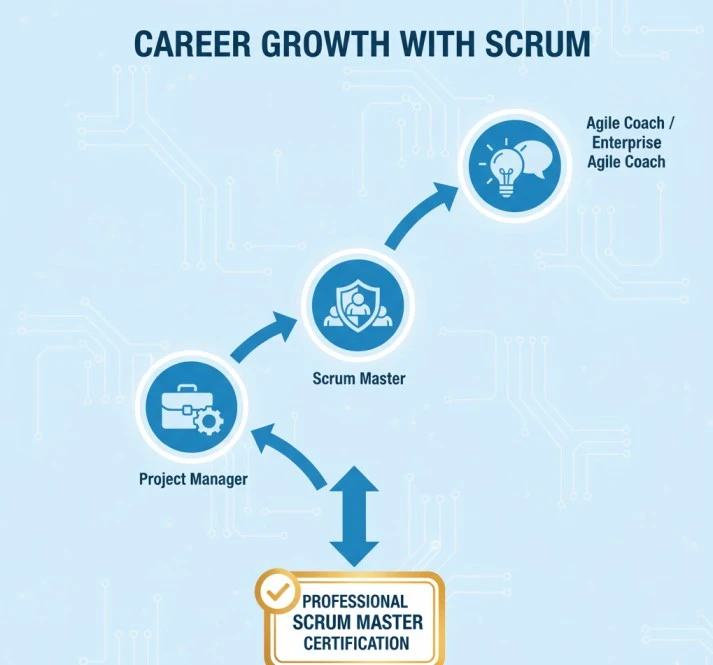
Professional Scrum Master PSM Certification Training equips professionals to lead agile teams, implement Scrum practices, and drive project success. Sterling Next ensures learners gain structured guidance, real-world experience, and exam-focused preparation. By mastering Scrum principles, team facilitation, agile planning, and continuous improvement techniques, participants can secure high-demand roles, enhance their credibility, and achieve long-term career growth. Enroll today to advance your agile expertise and earn a globally recognized PSM certification.
TOP 10 FAQS
1. Are there any prerequisites for PSM Certification?
No, there are no formal prerequisites. Anyone interested in Scrum practices can take the PSM certification training and exam.
2. How difficult is the PSM Certification exam?
The exam is manageable with the right preparation. Candidates who study Scrum concepts thoroughly and practice regularly can clear it on the first attempt.
3. What is the validity of the PSM Certification?
The Professional Scrum Master certification is valid for a lifetime. It does not require renewal.
4. How will I receive my PSM certificate?
Once you pass the exam, you can instantly download your Professional Scrum Master certificate from scrum.org.
5. What is the cost of the PSM Certification exam?
The cost of the PSM exam is $150 USD. The exam is directly conducted by scrum.org.
6. How long does it take to become a Professional Scrum Master?
Most candidates complete a two-day training program and take the exam within 10 days. Generally, it takes less than 15 days to earn the certification.
7. What topics are covered in PSM Certification training?
Key topics include Time Boxing, Scrum project management, Sprint practices, and concepts from the official Scrum Guide.
8. What is the process to get PSM Certification?
Candidates need to attend training, register for the exam with scrum.org, and pass the test. On passing, they receive the Professional Scrum Master certification.
9. What modes of training are available for PSM Certification?
Training is available in three modes: Online training, Live Virtual Instructor-Led training, and Classroom training. Candidates can choose based on convenience.
10. Is the PSM Certification internationally recognized?
Yes, the PSM certification is globally recognized and respected across industries. It adds credibility to a professional’s Scrum and Agile expertise.