Direct expansion refrigeration systems depend on the controlled evaporation of refrigerant inside a heat exchanger. The efficiency of this process is influenced by refrigerant distribution, airflow, heat-transfer area, operating pressure and the conditions under which the equipment operates. DX Coils are engineered evaporators that bring these factors together to provide cooling in commercial air conditioning, industrial refrigeration and specialized temperature-control systems.

Unlike chilled-water coils, which use water or a water-based fluid to transfer heat, direct expansion coils allow refrigerant to evaporate within the heat exchanger. Their design must match the refrigeration circuit, required cooling capacity, operating temperature and available installation space. Understanding these relationships helps engineers assess coil performance, construction quality and suitability for long-term industrial service.
How Direct Expansion Evaporators Work
A direct expansion coil operates as the evaporator in a refrigeration circuit. Refrigerant passes through an expansion device, which reduces its pressure before the refrigerant enters the heat exchanger. As air moves across the finned surface, heat transfers from the air to the refrigerant, causing the refrigerant to evaporate. The resulting vapour returns to the compressor through the suction line.
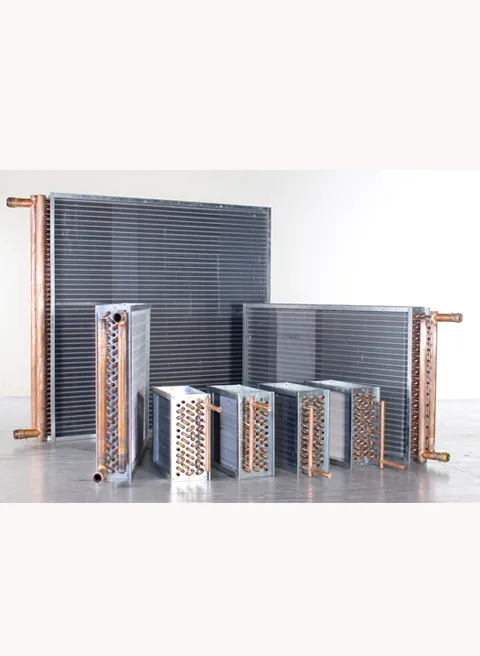
DX Coils are used in packaged air conditioners, rooftop units, air handling equipment and industrial refrigeration installations. Their construction typically includes refrigerant tubes, extended-surface fins, return bends, headers or distributors, connections and a supporting frame. The arrangement varies according to the refrigerant, cooling load, entering-air conditions and equipment configuration.
When evaluating DX Coils Manufacturers, engineers should consider whether the proposed design addresses the actual operating conditions rather than relying only on nominal capacity or external dimensions.
Refrigerant Circuiting and Heat-Transfer Geometry
The internal refrigerant circuit determines how effectively the coil uses its available heat-transfer surface. A poorly balanced circuit can create uneven temperatures, reduce effective cooling and complicate expansion-device control.
Refrigerant distribution
Many evaporators contain multiple parallel circuits supplied by a refrigerant distributor. Each circuit receives a portion of the total refrigerant flow and carries it through a defined sequence of tubes. The number of circuits, their length and the distributor arrangement influence refrigerant velocity, pressure drop and evaporation performance.
Uneven distribution may starve certain sections of refrigerant while supplying excessive liquid to others. This reduces the effective use of the coil surface and may contribute to unstable operation. Circuit design must therefore consider refrigerant mass flow, tube diameter, evaporating temperature, expansion-device characteristics and the expected operating range.
Technical buyers comparing Dx Coils Suppliers should request sufficient design information to establish that the refrigerant circuit is suitable for the intended equipment. Distributor selection and circuit geometry should be assessed together, particularly in systems with multiple parallel circuits.
Tube and fin configuration
Copper tubes are commonly used because of their thermal conductivity, formability and established use in refrigeration equipment. Aluminium fins extend the heat-transfer surface beyond the tubes, increasing the area available for exchanging heat with the air stream.
Important design variables include tube diameter, wall thickness, fin spacing, number of tube rows and overall coil depth. Closely spaced fins can increase surface area within a restricted volume, but they may also increase air-side resistance and become more susceptible to dust accumulation.
Wider fin spacing may be preferable in environments where airborne contaminants, frost formation or frequent cleaning are important considerations. The correct geometry depends on the operating conditions, maintenance requirements and available fan capacity.
Material Selection and Mechanical Integrity
Copper tubing is widely used in conventional evaporators, while aluminium fins provide an effective extended surface. In coastal locations, chemical-processing facilities and other corrosive environments, protective coatings or alternative materials may be necessary. Material selection must also consider cleaning chemicals, condensate exposure and the expected service environment.
Tube wall thickness should be appropriate for the design pressure, temperature range, material properties and applicable construction requirements. Nominal diameter alone does not establish whether a tube is suitable for the intended pressure conditions.
Headers, return bends, distributors and refrigerant connections require equal attention. Unsuitable joining procedures, contamination or incompatible materials can contribute to leakage, corrosion and premature failure.
For customized equipment, DX Coils Suppliers in India should be able to communicate the relevant construction details and clarify whether the proposed assembly matches the approved technical drawings. This is particularly important when the equipment must fit an existing air handling unit or refrigeration cabinet.
Manufacturing Accuracy and Quality Control
Manufacturing processes directly influence the thermal and mechanical performance of a finished coil. Typical operations include tube forming, fin assembly, tube expansion, return-bend installation, joining, frame assembly and final inspection.
Dimensional accuracy is equally important. Incorrect overall dimensions or connection positions can cause installation difficulties and create air bypass around the heat-transfer surface. Condensate drainage must be arranged to limit standing water and support routine maintenance.
For procurement teams comparing DX Coils Manufacturers, relevant checks include manufacturing documentation, dimensional inspection, joint integrity and consistency between approved drawings and supplied assemblies.
Custom designs should define coil height, width, depth, tube arrangement, number of rows, fin spacing, connection locations, airflow direction and mounting details. Any design change should be reviewed for its effect on capacity, pressure drop and system compatibility.
Applicable Standards and Verification Procedures
ASME Boiler and Pressure Vessel Code Section VIII may be relevant to qualifying pressure-vessel components or assemblies where the design falls within its scope. A conventional finned-tube evaporator should not automatically be classified as a pressure vessel without reviewing the applicable requirements.
ASHRAE standards and guidance may be relevant to refrigeration safety, refrigerant classification and system design. AHRI rating standards may apply when the relevant equipment category and rating programme cover the product being assessed. The specific standard and its scope should be identified rather than assuming that every document applies to every coil.
ASTM material specifications can establish requirements for particular materials and product forms used in construction. The selected specification must match the material supplied and the requirements of the design.
When assessing Dx Coils Exporters, buyers should establish which inspection records, material documents and test reports accompany the equipment. Any claimed certification should be relevant to the supplied product and supported by appropriate documentation.
Industrial Applications and Design Priorities
The operating environment determines the appropriate coil configuration, material selection and maintenance strategy.
Commercial air conditioning: Packaged units, rooftop systems and selected air handling equipment require controlled air temperatures, acceptable humidity levels and manageable air-side pressure drop. The evaporator must operate effectively with the compressor, expansion device and fans.
Industrial process cooling: Manufacturing facilities may use direct expansion systems to control equipment temperatures or remove heat generated during production. Selection depends on process loads, ambient conditions, operating schedules and airborne contaminants.
Food storage and processing: Low-temperature refrigeration applications may experience substantial moisture loads and frost formation. Fin spacing, defrost arrangements, drainage and corrosion resistance are therefore important considerations.
Pharmaceutical and laboratory facilities: Controlled environments may require precise temperature and humidity management. The coil must form part of a properly designed environmental-control system; the component alone does not establish compliance with cleanroom or pharmaceutical requirements.
Retail and specialized refrigeration: Compact display equipment often requires application-specific geometry to fit restricted spaces while providing the required cooling performance.
Projects sourcing DX Coils Exporters in India should consider the destination environment, equipment specifications, documentation requirements and packaging conditions. International shipping capability is commercially useful, but technical suitability must still be established through design information and performance evidence.
Procurement, Documentation and Supplier Assessment
When evaluating Dx Coils Suppliers, procurement teams should establish whether the supplier is the actual manufacturer or a distributor and clarify responsibilities for technical support, traceability and warranty documentation.
For projects involving DX Coils Manufacturers in India, comparisons should focus on documented cooling performance, construction consistency, inspection procedures and compliance with project drawings. A lower initial purchase price may not represent the lowest lifecycle cost if the selected equipment increases fan energy consumption, requires excessive maintenance or fails to achieve the intended cooling duty.
Buyers evaluating Dx Coils Suppliers in India should also confirm that the supplied configuration matches the approved specification. Substitutions in tube material, fin geometry, circuiting or connection arrangement should be reviewed before acceptance.
For international purchasing, Dx Coils Exporters should provide documentation required by the contract and destination market. Depending on the project, this may include approved drawings, inspection records, material information, packing lists and country-of-origin documents. Packaging should protect fins, tube connections and structural components from impact, moisture and contamination during transport.
Reliability Through System-Level Engineering
Long-term performance depends on the complete refrigeration system, not simply on the heat exchanger. Refrigerant charge, expansion-device control, compressor operation, airflow distribution, filtration and condensate drainage all influence the conditions under which the evaporator operates.
The engineering value of DX Coils lies in their ability to provide predictable heat transfer under defined operating conditions. Accurate specifications, appropriate material selection, controlled manufacturing processes and documented performance verification support reliable operation across commercial and industrial applications.
For manufacturers, suppliers, engineers and technical buyers, the most dependable decisions are based on the complete operating envelope, application suitability and verifiable technical information. This approach supports efficient cooling, consistent quality and long-term service reliability without compromising engineering requirements.
Contact Us
Parmar Techno Centre, Phase II, Gala No. 36, Pelhar Village, Nr Vasai Phata, Vasai (E), 401208
+91-9820511832
+91-9833471118