
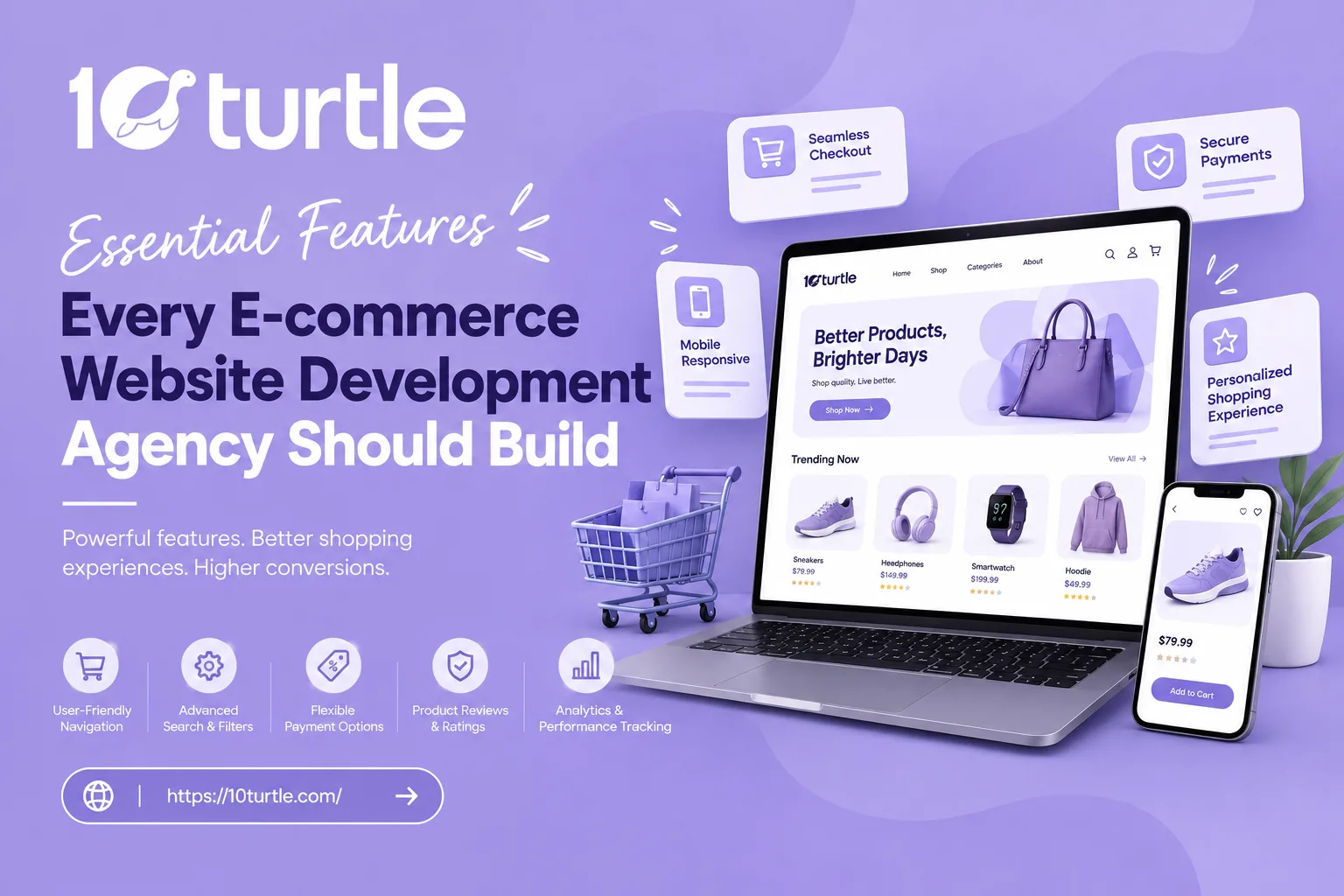
Online shoppers in the US decide fast. A slow page, a confusing checkout, or a missing payment option is often enough to send them to a competitor. That is why the features built into a store matter far more than how polished the homepage looks.
If you are comparing an ecommerce website development agency, the real question is whether the team builds the functionality that turns visitors into repeat customers. This guide covers the essential ecommerce website features to expect, and how to tell whether a partner will deliver them.
Why Feature Planning Matters for Online Stores
Many store owners start with design inspiration and think about functionality later, which causes expensive rework. Features like inventory sync, tax handling, and site search shape the database, integrations, and hosting, so they need planning before the first mockup is approved.
A good ecommerce development company treats each feature as a business decision tied to a goal: higher conversion, lower support load, faster fulfillment, or better retention.
Core Features Every Ecommerce Website Needs
Fast, Mobile-First Design
Most online browsing now happens on phones, so a store must be designed for small screens first and scaled up. That means responsive layouts, thumb-friendly buttons, compressed images, and quick load times. Ask any agency how it tests performance against Google's Core Web Vitals.
Intuitive Navigation and Smart Site Search
Shoppers who use search often have strong buying intent. Look for autocomplete, typo tolerance, filters (size, color, price, brand), and sorting options. Clear category structures and breadcrumbs help both customers and search engines understand the catalog.
Clear, Persuasive Product Pages
A strong product page includes high-quality images or video, honest descriptions, size guides, stock status, shipping estimates, and customer reviews. Structured data markup is also important, since it helps products appear with price and rating details in search results.
A Frictionless Checkout
Checkout is where revenue is won or lost. The essentials are guest checkout, address autofill, a visible order summary, and minimal form fields. Offering express options such as Apple Pay, Google Pay, PayPal, and buy-now-pay-later gives customers the choice they have come to expect.
Secure Payments and Data Protection
Trust is non-negotiable. An agency should implement SSL, PCI DSS-compliant payment processing, fraud screening, and sensible privacy controls. For businesses serving California shoppers, this also includes cookie consent and data-request workflows aligned with CCPA requirements.
Features That Help Stores Scale
Inventory, Order, and CRM Integrations
As order volume grows, manual processes break. Connecting the storefront to inventory systems, shipping carriers, accounting software, and a CRM keeps stock accurate and customer data unified. Many growing brands also need ERP connections, and companies with complex operations often explore custom ecommerce development to build integrations that off-the-shelf plugins cannot handle.
Automated Tax, Shipping, and Multi-Channel Selling
Selling across the United States means handling varying state sales tax rules. Automated tax calculation and real-time carrier rates reduce errors and surprises at checkout. Product feeds and channel syncing help stores that also sell on marketplaces and social platforms.
SEO and Analytics Foundations
A store that cannot be found cannot sell. Agencies should build in clean URLs, XML sitemaps, canonical tags, fast page speed, and proper heading structure. Analytics and conversion tracking, including GA4 ecommerce events, let you see where shoppers drop off and what to improve next.
Accessibility
Accessible stores reach more customers and reduce legal risk. Following WCAG guidelines, with keyboard navigation, alt text, sufficient color contrast, and screen-reader-friendly forms, supports the goals of the Americans with Disabilities Act and improves usability for everyone.
Customer Accounts, Personalization, and Retention Tools
Saved addresses, order history, wishlists, and abandoned-cart emails all encourage repeat purchases. Loyalty programs and back-in-stock alerts add value as the business matures.
How to Evaluate an Ecommerce Development Partner
Choosing among ecommerce development agencies can feel overwhelming. A few practical checks help:
- Review relevant case studies. Look for stores with similar catalog size, platform, and audience.
- Ask about platform expertise. Shopify, WooCommerce, BigCommerce, Magento, and headless builds each suit different needs.
- Clarify ownership and support. Confirm who owns the code and what ongoing maintenance looks like.
- Check their testing process. Strong teams test checkout, speed, and security before launch.
- Discuss the roadmap. The best agencies plan phased releases so your store can grow without a full rebuild.
Practical Tips for a Smoother Build
Start with a prioritized feature list that separates must-haves from nice-to-haves. Launch with the core experience, then add advanced features based on real customer data. Budget for ongoing optimization, because an ecommerce site is never truly finished.
Frequently Asked Questions
What features should an ecommerce website have?
At minimum: a mobile-responsive design, strong search and filtering, detailed product pages, a simple checkout with multiple payment options, strong security, and analytics. Growing stores should add integrations, automation, and personalization.
How do I choose an ecommerce website development company?
Compare portfolios, platform experience, communication style, and post-launch support. Ask for references and request a clear scope, timeline, and cost breakdown.
How much does ecommerce website development cost?
Costs vary widely based on platform, design complexity, integrations, and custom functionality. A template-based store costs far less than a custom build with ERP and CRM integrations, so request a detailed proposal.
Do I need custom features, or is a template enough?
Templates suit simpler catalogs. Custom features make sense for unique workflows, complex pricing, or integrations standard apps cannot support.
Final Thoughts
The right features turn an online store from a digital brochure into a reliable revenue channel. When you evaluate an ecommerce website development agency, look beyond visuals and ask how each feature will support conversions, security, and long-term growth. A partner that plans for scale from day one will save you time and money as your business expands.