Cranes are among the most critical pieces of equipment used in modern construction. They allow contractors to lift heavy materials, move equipment across large job sites, and complete projects efficiently. However, cranes also present significant safety risks if they are not operated and maintained properly. Implementing strict crane safety practices is essential to protect workers, equipment, and surrounding structures. Companies like 808 Crane emphasize the importance of safety protocols to ensure construction operations remain both productive and secure.
The need for crane safety is supported by industry data. According to the U.S. Bureau of Labor Statistics (BLS), cranes and derricks are involved in dozens of workplace fatalities every year in the construction industry, highlighting the importance of strict safety procedures and training.
Understanding and applying proper crane safety practices helps reduce accidents, improve efficiency, and maintain regulatory compliance on construction sites.
Why Crane Safety Is Critical on Construction Sites
Cranes operate under complex conditions involving heavy loads, high elevations, and constant movement. Even a small operational mistake can lead to serious accidents or structural damage.
Risks Associated with Crane Operations
- Falling loads that can injure workers
- Crane tip-overs due to instability
- Mechanical failures from poor maintenance
- Collisions with structures or power lines
- Operator errors due to lack of training
These risks make it essential for construction companies to implement comprehensive safety practices.
Proper Crane Operator Training
One of the most important factors in crane safety is ensuring that operators are properly trained and certified.
Key Elements of Crane Operator Training
- Understanding crane load charts
- Learning proper lifting techniques
- Identifying potential hazards on job sites
- Operating crane controls accurately
- Communicating effectively with signal personnel
Training ensures that operators can respond quickly and safely to changing site conditions.
Certification and Licensing Requirements
In many regions, crane operators must hold certifications that demonstrate their competence. These certifications ensure operators understand both operational procedures and safety regulations.
Certified operators are more capable of handling complex lifting tasks while maintaining strict safety standards.
Conduct Daily Equipment Inspections
Regular crane inspections help identify potential problems before they lead to accidents or equipment failures.
Items to Inspect Before Crane Operation
- Structural components and connections
- Hydraulic systems and fluid levels
- Hoist cables and lifting hooks
- Control systems and safety devices
- Outriggers and stabilization components
Daily inspections reduce the likelihood of mechanical issues that could compromise safety.
Follow Proper Load Management Practices
Handling loads correctly is essential for maintaining crane stability and preventing accidents.
Safe Load Handling Guidelines
- Never exceed the crane’s rated load capacity
- Ensure loads are balanced and properly secured
- Use appropriate rigging equipment
- Lift loads slowly and steadily
- Maintain clear communication between operators and ground crews
Proper load management ensures both equipment stability and worker safety.
Maintain Clear Communication on the Job Site
Communication between crane operators and ground workers is critical during lifting operations. Miscommunication can result in dangerous situations.
Effective Communication Methods
- Standardized hand signals
- Two-way radios for large job sites
- Clearly assigned signal personnel
- Visual indicators for crane movement
Consistent communication helps coordinate lifting operations safely and efficiently.
Crane Safety Checklist
The following table summarizes essential crane safety practices that construction sites should follow.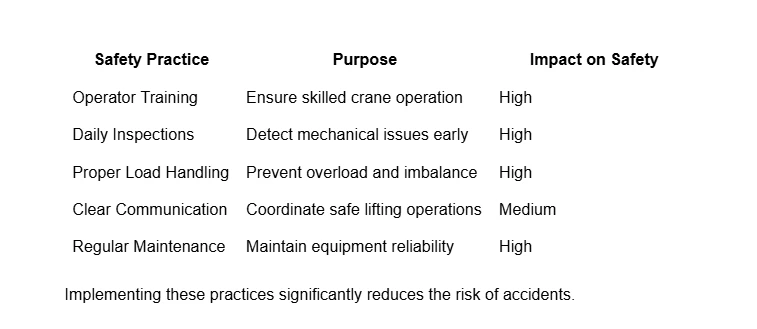
Implementing these practices significantly reduces the risk of accidents.
Establish Safe Work Zones
Creating designated work zones around crane operations helps keep workers safe and prevents unauthorized access to dangerous areas.
Key Work Zone Safety Measures
- Use barriers and warning signs around crane operations
- Restrict access to essential personnel only
- Maintain safe distances from lifting areas
- Ensure clear escape routes for workers
These measures help minimize the risk of injury from falling materials or moving equipment.
Monitor Weather Conditions
Weather conditions can significantly affect crane operations. High winds, rain, or lightning can create dangerous working environments.
Weather-Related Safety Considerations
- Stop operations during strong winds
- Avoid lifting loads during storms
- Monitor wind speeds regularly
- Secure crane equipment when not in use
Monitoring weather conditions ensures that crane operations remain safe under changing environmental conditions.
Implement Regular Crane Maintenance
Preventive maintenance ensures cranes remain in proper working condition and helps extend their operational lifespan.
Important Maintenance Activities
- Lubricating moving components
- Replacing worn cables and rigging equipment
- Testing braking and control systems
- Checking structural integrity
Regular maintenance not only improves safety but also reduces unexpected equipment downtime.
Use Proper Rigging Equipment
Rigging equipment plays a crucial role in safe crane operations. Incorrect rigging can cause loads to shift or fall during lifting.
Essential Rigging Safety Tips
- Use slings rated for the specific load weight
- Inspect rigging equipment before each use
- Ensure balanced load distribution
- Avoid damaged or worn rigging components
Proper rigging ensures that loads remain secure throughout the lifting process.
Develop a Crane Safety Plan
Every construction site should establish a detailed crane safety plan that outlines procedures, responsibilities, and emergency response actions.
Key Components of a Safety Plan
- Risk assessment procedures
- Operator responsibilities
- Emergency response protocols
- Equipment inspection schedules
- Training requirements
A clear safety plan ensures all workers understand how to operate safely around cranes.
Benefits of Implementing Crane Safety Practices
Following proper safety procedures benefits both workers and construction companies.
Advantages of Strong Safety Practices
- Reduced risk of accidents and injuries
- Improved job site efficiency
- Compliance with safety regulations
- Lower insurance and liability costs
- Increased worker confidence and morale
A culture of safety helps create a more productive and reliable construction environment.
Conclusion
Crane operations are essential to modern construction, but they also involve significant risks if safety procedures are not properly followed. Implementing strong safety practices such as operator training, daily inspections, proper load handling, and clear communication helps reduce accidents and protect both workers and equipment.
Construction companies that prioritize safety not only comply with industry regulations but also create more efficient and productive job sites. By maintaining strict safety standards and using reliable equipment providers like 808 Crane, construction teams can ensure that lifting operations remain secure and successful across every project.
FAQs
1. Why is crane safety important in construction?
Crane safety prevents accidents, protects workers, and ensures heavy lifting operations are completed safely and efficiently.
2. How often should cranes be inspected?
Cranes should undergo daily inspections before operation and periodic professional inspections according to regulatory guidelines.
3. What is the most common cause of crane accidents?
Common causes include operator error, exceeding load limits, poor maintenance, and inadequate communication.
4. What training is required for crane operators?
Operators must complete specialized training programs and obtain certifications that demonstrate their knowledge of crane operations and safety standards.
5. How can construction sites improve crane safety?
Sites can improve safety by providing proper training, performing regular inspections, maintaining equipment, and enforcing clear safety procedures.