One of the few coffee-related debates that coffee lovers often stumble across is espresso beans vs coffee beans—are they different products, or are marketers simply getting clever with their language? Although the names sound like two different kinds of bean, what we have here is a much simpler truth. Knowing the difference can help you select coffee that is more suitable for your brewing method and taste preference.
Beans are roasted, ground, and brewed for a tailored experience, be it a rich espresso shot or a smooth cup of drip coffee! That is why brands like Greenbrrew believe that the key to good coffee lies in understanding your coffee.
What are coffee beans?
Coffee beans are actually the seeds contained within a coffee cherry. They then go through processing (drying, roasting) to get ready for brewing. Globally, most coffee bean types range within two main categories:
Arabica Coffee Beans
- Smooth and sweet flavor
- Higher acidity
- Popular for premium coffee
- Contains slightly less caffeine
Robusta Coffee Beans
- Strong, bold taste
- Higher caffeine content
- More bitter than Arabica
- Commonly used in espresso blends
Coffee beans are flavored based on things like their place of growing, the height at which they were grown, how they have been processed, and the roast level.
What are espresso beans?
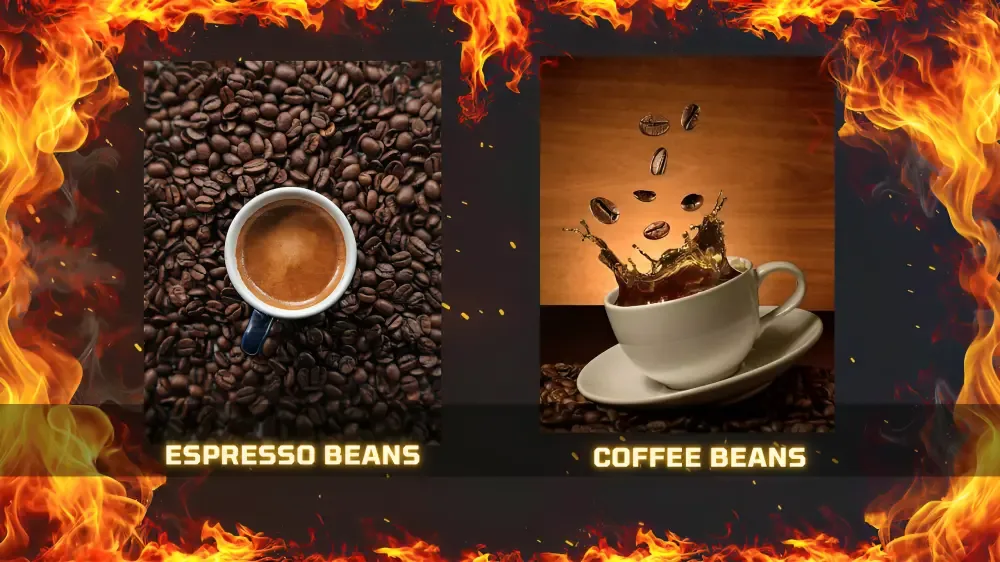
One of the greatest misconceptions about espresso is that it comes from a different type of coffee bean. Espresso Beans: In fact, they are coffee beans roasted for espresso.
These beans are generally roasted darker to create the following:
- Rich flavor
- Full body
- Lower acidity
- Thick crema during extraction
Espresso beans can also be Arabica, Robusta, or a combination of both.
Espresso beans vs Coffee beans: The Main Differences
While both come from the same coffee plants, a few things make them different.
1. Roast Level
Espresso Beans
- Usually medium-dark to dark roast
- Rich, chocolatey, caramel-like flavors
- Less acidity
Coffee Beans
- Available in light, medium, and dark roasts
- Wider range of flavor notes
- Can highlight fruity, floral, or nutty characteristics
Espresso is made from dark-roasted coffee beans, which help retain the bold flavor with the high-pressure brewing process.
2. Brewing Method
Espresso beans are roasted for use to load up in espresso machines, which drive hot water through finely ground coffee under high pressure.
Regular coffee beans are commonly used for:
- Drip coffee makers
- French Press
- Pour-over
- Cold brew
- AeroPress
This, however, is not an absolute rule. If ground appropriately, you can brew espresso beans in a drip machine and normal coffee beans in an espresso machine.
3. Grind Size
Extraction has a lot to do with grain size.
Espresso
- Very fine grind
- Fast extraction (20–30 seconds)
Regular Coffee
- Medium to coarse grind
- Longer brewing times
Even the finest coffee beans will taste off if the grind size isn't suited to your brewing method.
4. Flavor Profile
Espresso is known for the following:
- Bold taste
- Concentrated flavor
- Rich body
- Thick crema
Regular brewed coffee offers:
- Lighter body
- More delicate flavors
- Higher clarity
- Easier sipping over a longer period
Which roast you find the most enjoyable usually depends on your favorite flavor.
5. Caffeine Content
Espresso is widely thought to contain more caffeine than regular brewed coffee, but this mostly isn't the case.
The reason is that because a shot has less total volume than a full cup of coffee, even one single espresso carries more caffeine per ounce proportionally.
Espresso is simply more concentrated.
Can you use espresso beans for regular coffee?
Absolutely.
Espresso beans work perfectly in:
- Drip coffee makers
- French Press
- Pour-over
- Cold brew
If you like medium roast coffee, you can expect a fuller, bolder taste and less acidity compared to the light coffee roasts.
Can regular coffee beans be used for espresso?
Yes.
As long as:
- The beans are freshly roasted
- They're ground finely
- You use an espresso machine
Lighter roasted coffee beans can produce unique espresso shots with fruity or floral notes, though they may be more acidic than traditional espresso.
Espresso Beans vs Coffee Beans: Which One Should You Choose?
The answer depends on your taste preferences.
Choose espresso beans if you enjoy:
- Strong coffee
- Rich crema
- Chocolate or caramel flavors
- Milk-based drinks like cappuccino or latte
Choose regular coffee beans if you prefer:
- Balanced flavor
- Fruity or floral notes
- Filter coffee
- Black coffee with greater clarity
There is no universally "better" option—only what's right for your brewing method and palate.
Tips for Buying Quality Coffee Beans
Keep the following points in mind while shopping for coffee —
Buy Freshly Roasted Beans
Fresh beans hold aroma and flavor considerably better than older stock.
Check the roast date.
Try to go for a relatively more recent roast date instead of focusing only on expiry.
Store Properly
Store beans in an airtight container away from heat, humidity, and sunlight.
Grind Just Before Brewing
Grind it fresh for maximum flavor and aroma.
Choose a Trusted Brand
Coffee lovers no longer have to settle for the best they can find, as reliable brands such as Greenbrrew strive for quality sourcing and careful roasting, delivering consistently excellent cups.
Common Myths About Espresso Beans
Myth 1: Espresso beans are a different species.
Fact: They're the same coffee beans, simply roasted differently.
Myth 2: Espresso always has more caffeine.
Fact: Espresso is more concentrated, but a full cup of brewed coffee often contains more total caffeine.
Myth 3: Espresso beans can only be used in espresso machines.
Fact: Espresso beans can be brewed using almost any coffee maker.
How Greenbrrew helps coffee enthusiasts
Greenbrrew takes the approach that everyone is different, whether you are a novice to coffee or an old hat, and suggests trying out other roast profiles to see how each particular roast profile tastes against your palate. Whether you need balanced brews for your everyday cup or want something more espresso-like, with high-quality beans brewed properly, take your coffee to the next level.
Conclusion
Espresso beans vs coffee beans is actually pretty simple once you dig into it. And while both come from the same coffee plant, different roast levels + grind sizes + brewing methods = very unique drinking experiences. Espresso beans are typically roasted darker for a bolder, more concentrated cup of coffee, whereas regular coffee beans are far more versatile and can be used with many brewing techniques
Instead of asking which is better, how do you like your coffee? Espresso beans are the ideal choice if you like a full-bodied, bold shot with a syrupy layer. Regular coffee beans might be better for you if you like lighter, more subtle full-cup flavors. Not only do you get to pick fresh, high-quality beans from trusted brands such as Greenbrrew, but you can pair the beans with your desired brew method to ensure a great-tasting coffee experience every time.