
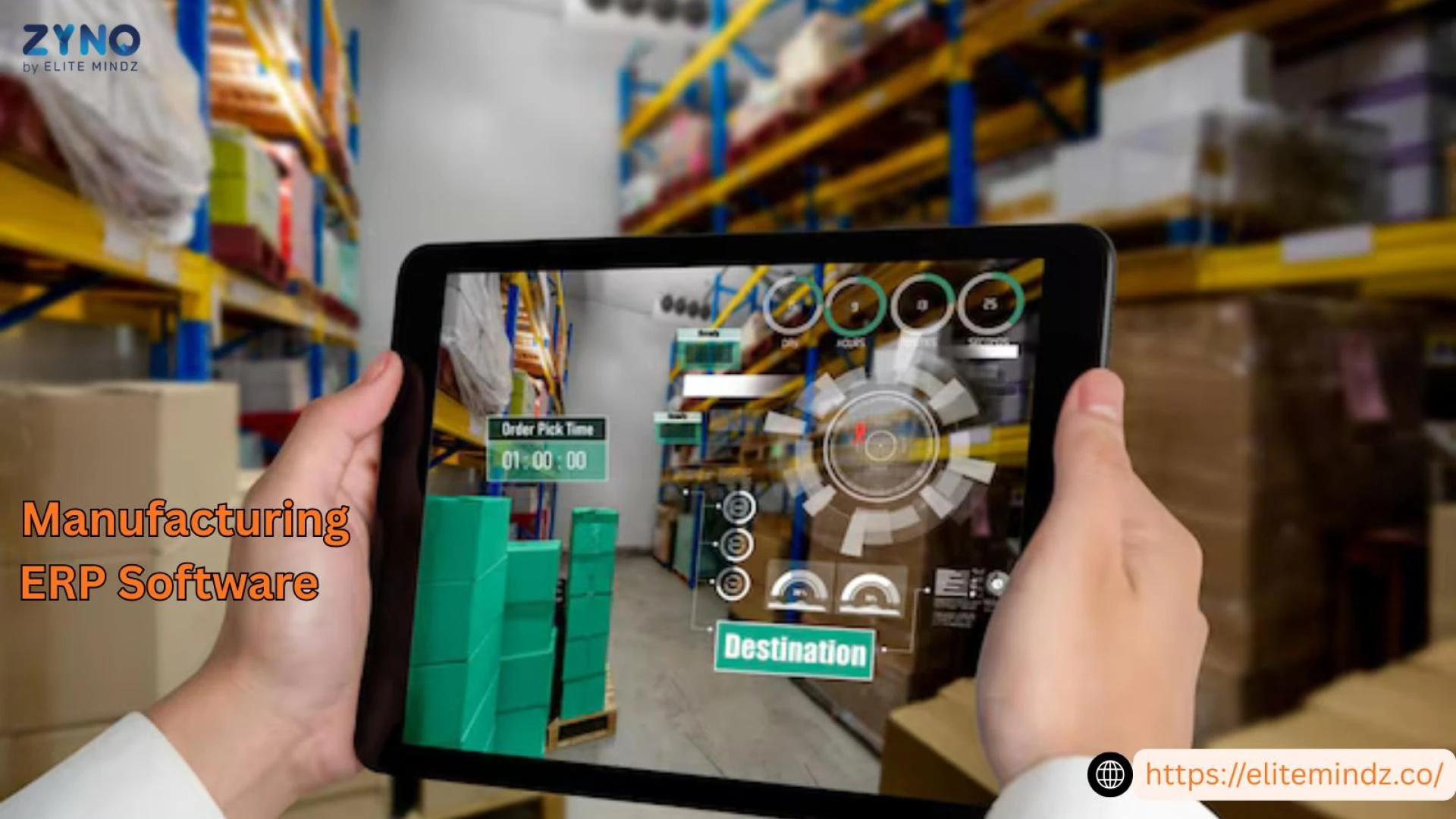
The manufacturing industry is becoming more complex as companies deal with growing production demands, global supply chains, and increasing customer expectations. Managing operations manually or through disconnected systems can lead to inefficiencies, production delays, and higher operational costs. This is why many organizations are adopting manufacturing ERP software to streamline their business processes.
Enterprise Resource Planning (ERP) systems integrate production, inventory, finance, procurement, and supply chain management into a single digital platform. This integration enables manufacturers to improve operational efficiency and gain real-time visibility into their business.
Solutions like ZYNO, developed by Elitemindz, provide powerful tools designed specifically for manufacturing businesses. These platforms are often recognized among the best ERP software for manufacturing in India.
In this blog, we will explore the step-by-step process of ERP implementation in manufacturing and explain how companies can successfully adopt the best ERP system for manufacturing.
Understanding ERP Software for Manufacturing
Before implementing ERP, it is important to understand what ERP software for manufacturing actually does.
Manufacturing ERP systems integrate all core business operations into a single system. Instead of managing separate tools for production planning, inventory management, accounting, and procurement, companies can handle everything from one centralized platform.
Typical modules included in ERP manufacturing software are:
- Production planning and scheduling
- Inventory and warehouse management
- Procurement and supplier management
- Sales and order processing
- Financial accounting and reporting
- Quality control and compliance
- Supply chain management
This integration improves collaboration between departments and ensures that businesses operate efficiently.
ERP implementation is a strategic decision that can significantly improve business performance.
Manufacturing companies implement the best ERP software for manufacturing to achieve several goals:
Improved Operational Efficiency
ERP systems automate repetitive tasks and streamline workflows across departments.
Better Production Planning
Manufacturers can plan production schedules more accurately and optimize resource utilization.
Real-Time Data Insights
ERP dashboards provide real-time data on production, inventory, sales, and financial performance.
Enhanced Supply Chain Coordination
ERP systems improve communication between suppliers, manufacturers, and distributors.
These advantages make ERP an essential tool for companies seeking long-term growth.
Implementing ERP is a multi-stage process that requires careful planning and execution.
Below is a step-by-step guide to implementing ERP manufacturing software successfully.
Step 1: Identify Business Requirements
The first step in ERP implementation is understanding your business needs. Every manufacturing company has unique processes, so it is important to identify the features required in the ERP system.
Key questions to consider include:
- What challenges does the company currently face?
- Which departments require automation?
- What type of reports and analytics are needed?
Answering these questions helps businesses select the best manufacturing ERP software for their operations.
Step 2: Choose the Best ERP System for Manufacturing
Selecting the right ERP platform is one of the most critical steps in the implementation process.
Manufacturers should evaluate ERP systems based on:
- Industry-specific features
- Scalability and flexibility
- Integration capabilities
- User interface and usability
- Cost and return on investment
Choosing the best ERP for manufacturing ensures that the system supports long-term business growth.
Step 3: Plan the Implementation Strategy
Once the ERP system is selected, the next step is creating an implementation plan.
This includes:
- Defining project goals
- Assigning responsibilities to team members
- Setting timelines for each implementation phase
- Identifying potential risks
A well-structured implementation strategy helps ensure smooth deployment of the ERP system.
Step 4: Data Migration and System Configuration
During this phase, existing data from legacy systems is transferred to the new ERP platform.
Data migration may include:
- Customer and supplier records
- Inventory data
- Financial information
- Production data
At the same time, the ERP system is configured to match the company’s specific processes and workflows.
Step 5: Employee Training
Training employees is a crucial step in ERP implementation. Even the best ERP software for manufacturing will not deliver results if employees do not understand how to use it effectively.
Training programs should include:
- System navigation and dashboard usage
- Data entry and reporting processes
- Department-specific workflows
Well-trained employees ensure that the ERP system is used efficiently across the organization.
Step 6: Testing the ERP System
Before launching the system fully, it is important to conduct thorough testing.
Testing ensures that:
- All modules function correctly
- Data has been transferred accurately
- Business processes run smoothly
This stage helps identify and resolve issues before the system goes live.
Step 7: Go-Live and Continuous Monitoring
Once testing is complete, the ERP system can be officially launched.
However, ERP implementation does not end here. Businesses must continuously monitor system performance and make improvements when necessary.
Regular system updates and employee training help maximize the benefits of ERP manufacturing software.
Many companies today prefer cloud based manufacturing ERP software because of its flexibility and cost advantages.
Cloud ERP systems are hosted on remote servers and accessed through the internet.
Advantages of Cloud ERP
Lower Infrastructure Costs
Businesses do not need to invest in expensive hardware or IT infrastructure.
Remote Accessibility
Employees can access the ERP system from anywhere using secure internet connections.
Faster Deployment
Cloud ERP solutions can be implemented much faster than traditional ERP systems.
Automatic Updates
Software updates and security patches are automatically handled by the ERP provider.
Because of these benefits, many companies are shifting to Cloud-Based Manufacturing ERP Systems.
Manufacturing companies require ERP systems that are tailored to their operational needs.
ZYNO provides an integrated platform that helps businesses manage production, inventory, procurement, and financial processes efficiently.
Many organizations consider it one of the ERP software for manufacturing industry due to its advanced capabilities.
Key advantages include:
- Cloud-based infrastructure for scalability
- Real-time analytics and reporting
- User-friendly interface for easy adoption
- Advanced security features
- Seamless integration with other business tools
These features make ZYNO one of the best ERP software for manufacturing companies looking to modernize their operations.
ERP systems are widely used across many manufacturing sectors.
Industries that benefit from ERP software for manufacturing include:
- Automotive manufacturing
- Electronics and electrical manufacturing
- Textile and garment industry
- Food and beverage manufacturing
- Pharmaceutical manufacturing
- Chemical manufacturing
For these industries, implementing the best ERP system for manufacturing helps improve productivity and operational efficiency.
ERP implementation is a critical step for manufacturing companies seeking digital transformation and operational excellence. By integrating business processes into a single platform, manufacturing ERP software enables organizations to improve efficiency, reduce costs, and gain real-time insights into their operations.
Solutions like ZYNO by Elitemindz provide powerful tools that support modern manufacturing processes. With its advanced features and scalable cloud architecture, it is widely recognized as one of the best ERP software for manufacturing in India.
For businesses looking to stay competitive in today’s fast-evolving industrial landscape, investing in the best manufacturing ERP software is a strategic move that can drive long-term growth and success.