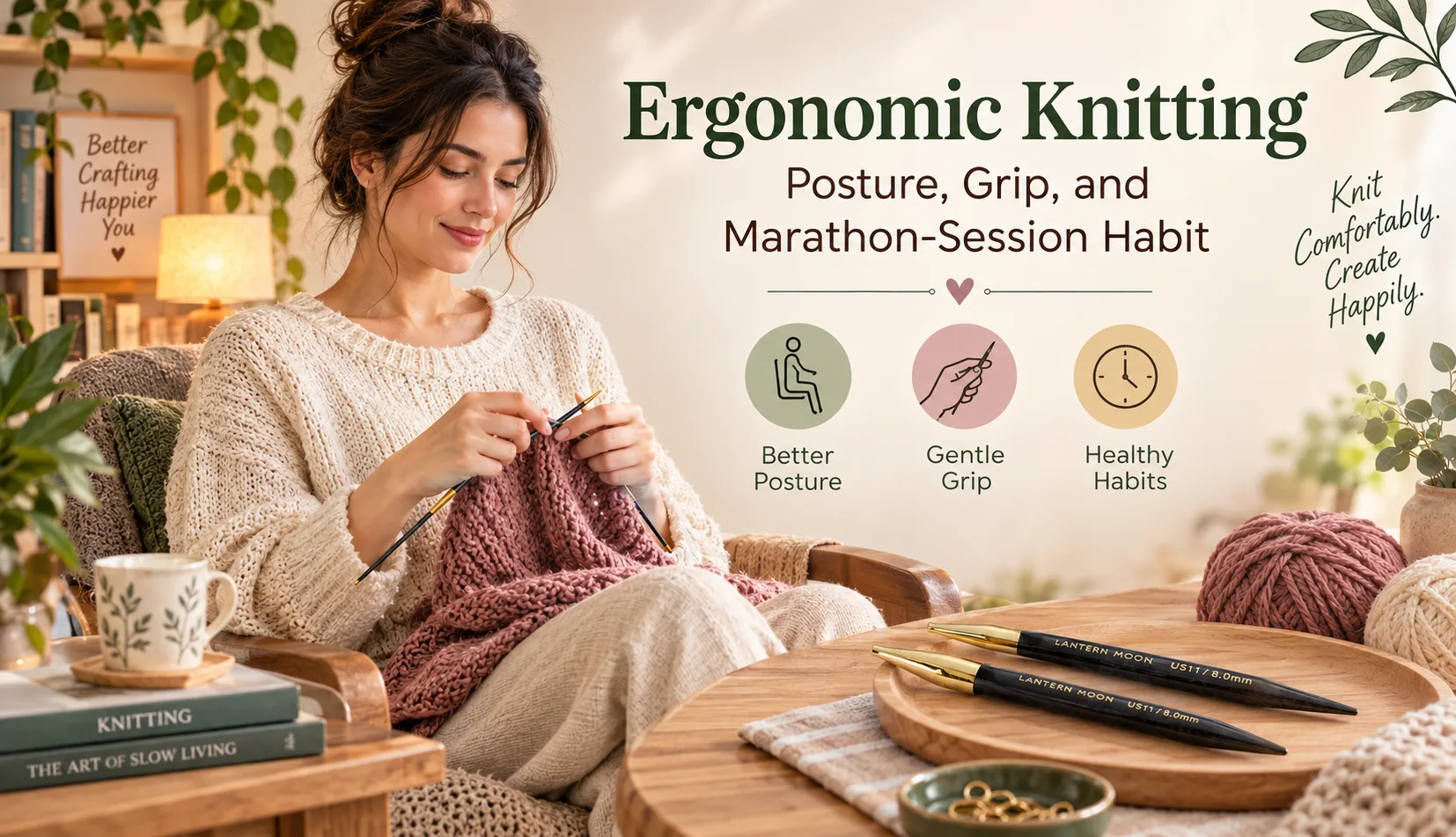
Aching hands, a tight neck, tingling fingers: knitting shouldn't hurt. Watching sweaters take shape on social media makes knitting look effortless. Then you start, and your hands ache, your shoulders knot up, and your fingers tingle.
Many crafters face hand fatigue or backaches that interrupt their long sessions. Ergonomic knitting is the secret to pain-free crafting. By changing your posture, adjusting your grip, and building healthy marathon-session habits, you can knit comfortably for years to come.
Master Your Knitting Posture
A comfortable long crafting session depends on body posture. Good knitting posture protects your spine, neck, and shoulders.
Some Helpful Tips:
- Choose a supportive chair: Pick a comfortable chair that supports your lower back and keeps your spine neutral, and avoid slumping. You can even place a small pillow behind your lower back if you need extra support.
- Keep your feet flat: Place both your feet on the floor or a footrest. Don't sit crossing your legs; a straight position keeps your hips aligned and maintains blood circulation.
- Relax your shoulders: Roll your shoulders backwards and let them sink away from your ears. Crafters often lean forward while working on intricate patterns. So, always check your shoulders and do a few shoulder rolls between rows.
- Support your forearms: Keep your elbows bent at a comfortable angle close to your body. Place a cushion or lap pillow under your forearms.
- Bring your work up to eye level: Rest your project on a pillow or lift your hands slightly so you don't hunch over your stitches.
Make Changes in Your Knitting Grip and Tools
How you hold your knitting needles plays a crucial role because it prevents fatigue and wrist pain. A tight grip forces your hand muscles to work much harder than necessary.
- Explore different knitting styles: If the English knitting style of throwing yarn strains your wrist, try Continental knitting, which uses small movements and can reduce repetitive wrist motion.
- Loosen the grip: Relax your hands while knitting. Hold your needles gently. Excess tension in your hands transfers straight into your stitches and causes joint soreness.
- Switch to circular needles: Heavy projects on long straight needles put strain on your wrists. Circular needles distribute the weight of a blanket or sweater onto the center cable resting in your lap.
- Invest in ergonomic needles: Square or cubic knitting needles are much easier to hold than traditional round ones. Wooden or bamboo needles are also lightweight and feel warm to the touch.
Healthy Habits for Marathon Knitting Sessions
When you get into the flow, hours pass quickly. However, marathon knitting sessions without breaks are a fast track to repetitive strain injuries like tendonitis. If pain or numbness persists, see a doctor.
- Warm up your hands first. Cold muscles are more prone to injury. Before you pick up your needles, run your hands under warm water or rub them together to boost blood flow.
- Follow the 45-minute rule. Set an alarm on your phone and take a break after every 45 minutes. Stand up, stretch your legs and hands, and rest for 5 minutes.
- Illuminate your workspace. Poor lighting causes strain on your eyes because you have to lean forward while knitting. Always use a bright task lamp or a flexible neck light to illuminate your stitches clearly.
- Perform simple hand and wrist stretches. Rotate your wrists for at least 30 seconds. Extend your arms, spread your fingers wide, then make a gentle fist. Repeat 5 times.
- Drink plenty of water. Keep your body hydrated; this prevents muscle cramping. Keep a water bottle near your knitting chair.
Final Thought
Knitting isn't a race. It is the process of enjoying the slow movement of hands. Take care of your body as carefully as you care for your yarn and patterns. By practicing good knitting posture, softening your grip, and taking regular stretch breaks, you can protect your hands and joints. Listen to your body whenever it asks you to take rest.
Make these simple changes in your habits today and keep making beautiful hand-knit projects completely pain-free!