Electricity is the backbone of modern life. From industries and hospitals to homes and offices, almost every aspect of daily life depends on a stable and continuous power supply. In Pakistan, the demand for electricity has grown rapidly over the years due to population growth, industrial expansion, and urban development. To ensure that electricity generated at power plants reaches consumers safely and efficiently, the country relies heavily on a strong transmission and distribution system. A critical part of this system is the electrical substation.
Substations help regulate voltage levels, control power flow, and maintain stability within the power grid. Without properly designed and constructed substations, electricity cannot be transmitted effectively over long distances. This is why substation construction companies in Pakistan play such an important role in strengthening the national power infrastructure.
These companies specialize in engineering, designing, building, and maintaining electrical substations that support the country’s energy network. Their expertise ensures that the power grid operates safely, efficiently, and reliably.
The Importance of Substations in Power Distribution
Electrical substations serve as the connection points between power generation facilities and electricity consumers. When electricity is generated at power plants, it is transmitted at very high voltages to minimize energy loss over long distances. However, this high voltage cannot be used directly by households or commercial facilities.
Substations reduce this voltage to safer levels using transformers and other electrical equipment. This process ensures that electricity can be distributed to cities, towns, and rural areas safely.
Substations also perform several additional functions, including switching operations, system protection, and power flow control. These facilities contain equipment such as circuit breakers, transformers, isolators, busbars, and control systems that help manage the electrical grid.
In Pakistan, substations range from smaller distribution units to large high-voltage grid stations that handle massive amounts of electrical power. Their proper construction and maintenance are essential for ensuring a reliable energy supply.
Growth of Pakistan’s Power Infrastructure
Pakistan has made significant progress in expanding its energy infrastructure during the past decade. With the increasing demand for electricity, the government and private sector have invested in various power generation projects, including hydroelectric plants, thermal stations, solar farms, and wind energy projects.
These developments require an extensive transmission network supported by modern substations. Without new substations, the electricity generated by these projects cannot be delivered efficiently to consumers.
Major national initiatives have focused on improving grid stability, increasing transmission capacity, and reducing power losses. As part of these efforts, new substations have been constructed across the country while many existing ones have been upgraded with modern technology.
The growth of these infrastructure projects has created strong demand for experienced substation construction companies in Pakistan capable of handling complex engineering projects.
Services Provided by Substation Construction Companies
Substation construction companies provide a wide range of specialized services that ensure the successful development of power infrastructure projects.
The process usually begins with engineering and design. During this phase, engineers conduct feasibility studies, load calculations, and system planning to determine the best design for the substation. Careful planning is required to ensure the system can handle future electricity demand.
Procurement is another important stage. Construction companies must source high-quality electrical equipment such as transformers, switchgear, protection systems, cables, and control panels. The quality of these components directly affects the performance and reliability of the substation.
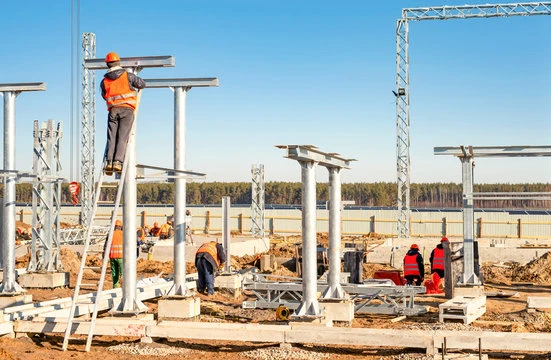
Civil construction work follows the design and procurement phase. This includes building foundations, control rooms, cable trenches, equipment structures, and security installations that support the electrical systems.
After construction is completed, the electrical equipment is installed and tested. Engineers perform extensive testing to confirm that all components operate safely and meet technical standards. Once testing is successful, the substation is commissioned and integrated into the national power grid.
Many companies also provide long-term operation and maintenance services to ensure the facility continues to operate efficiently throughout its lifespan.
Major Substation Construction Companies in Pakistan
Pakistan has several engineering firms that specialize in the construction and development of electrical substations and grid stations. These companies work on projects for government organizations, power utilities, and private sector clients.
One well-known company in the industry is DECON International. The company has extensive experience in the engineering and construction of electrical infrastructure, including high-voltage substations and transmission networks. Their services include design, installation, and maintenance of grid stations using modern electrical technologies.
Another important organization is the National Power Construction Corporation (NPCC). Established in the 1970s, NPCC has been involved in many major power infrastructure projects across Pakistan. The company has constructed numerous substations and transmission systems for national energy authorities.
EnergiCO is also recognized for its expertise in the energy sector. The company offers engineering, procurement, and construction services for power transmission and distribution projects. In addition to construction services, EnergiCO also manufactures certain components used in substations.
Power Engineering Services Company is another key player in the industry. The company focuses on delivering complete EPC solutions for power infrastructure projects, including substation construction and grid modernization.
Several other engineering firms and contractors also contribute to the development of Pakistan’s electrical infrastructure by providing specialized services in design, installation, and project management.
The EPC Model in Substation Projects
Many substation construction projects in Pakistan follow the EPC model, which stands for Engineering, Procurement, and Construction. Under this model, a single contractor manages the entire project from initial design to final commissioning.
The EPC approach offers several advantages for large infrastructure projects. It simplifies project management by assigning responsibility to one contractor instead of multiple service providers. This helps reduce delays, improve coordination, and ensure consistent quality throughout the construction process.
Clients benefit from receiving a fully operational facility at the end of the project without needing to coordinate separate engineering, procurement, and construction teams.
Because of its efficiency and reliability, the EPC model has become a preferred approach for many power infrastructure projects in Pakistan.
Modern Technologies in Substation Construction
The power industry has evolved significantly with the introduction of advanced technologies that improve efficiency, safety, and reliability.
One of the most important technologies used in modern substations is the SCADA system. SCADA stands for Supervisory Control and Data Acquisition. It allows operators to monitor and control substations remotely, reducing the need for manual intervention and improving operational efficiency.
Another important development is Gas Insulated Switchgear (GIS). Unlike traditional switchgear systems that require large open spaces, GIS equipment is compact and enclosed, making it ideal for urban environments where space is limited.
Digital protection systems are also becoming increasingly common. These systems detect faults in the electrical network and automatically isolate affected sections to prevent equipment damage and power outages.
Many substation construction companies in Pakistan are adopting these modern technologies to improve the reliability and performance of the power grid.
Challenges Facing the Industry
Despite the growth of Pakistan’s power infrastructure sector, substation construction companies still face several challenges.
One major challenge is the shortage of highly skilled engineers and technicians who specialize in high-voltage power systems. Training and retaining qualified professionals is essential for maintaining high standards in the industry.
Another challenge is the dependence on imported equipment. Many critical components used in substations must be imported from international manufacturers, which can increase costs and create supply delays.
Financial constraints also affect large infrastructure projects. Substation construction requires significant investment, and project delays can occur if funding is not available on time.
Environmental and safety regulations also require careful planning to ensure that projects comply with national and international standards.
Future Opportunities in the Power Sector
Despite these challenges, the future outlook for substation construction companies in Pakistan is very promising. The country continues to invest heavily in energy infrastructure to support economic growth and meet increasing electricity demand.
Renewable energy projects such as solar and wind power plants are creating new opportunities for substation construction. These projects require specialized substations to connect renewable power sources to the national grid.
Another major opportunity lies in upgrading existing substations with modern digital technologies. Many older grid stations require modernization to improve efficiency and reliability.
Smart grid systems, automated monitoring technologies, and energy management systems are expected to play an important role in the future development of Pakistan’s power network.
Contribution to National Development
Reliable electricity supply is essential for economic development. Industries rely on consistent power to operate machinery and production lines, while hospitals and educational institutions depend on electricity for critical services.
Substation construction companies contribute directly to national development by ensuring that power generated by various energy sources can be transmitted and distributed efficiently.
Their work not only improves energy reliability but also supports job creation, technological advancement, and infrastructure growth.
As Pakistan continues to modernize its energy sector, the role of these companies will become even more important.
Conclusion
Substation construction companies in Pakistan are vital to the development of the country’s electrical infrastructure. Through their expertise in engineering, procurement, and construction, they build the facilities that regulate and distribute electricity across the nation.
Organizations such as DECON International, NPCC, EnergiCO, and other engineering firms have played a key role in expanding the power grid and improving energy reliability.
With rising electricity demand, increasing renewable energy projects, and continued investment in infrastructure, the need for modern substations will continue to grow. As technology advances and new opportunities emerge, substation construction companies will remain central to powering Pakistan’s future and supporting its economic progress.