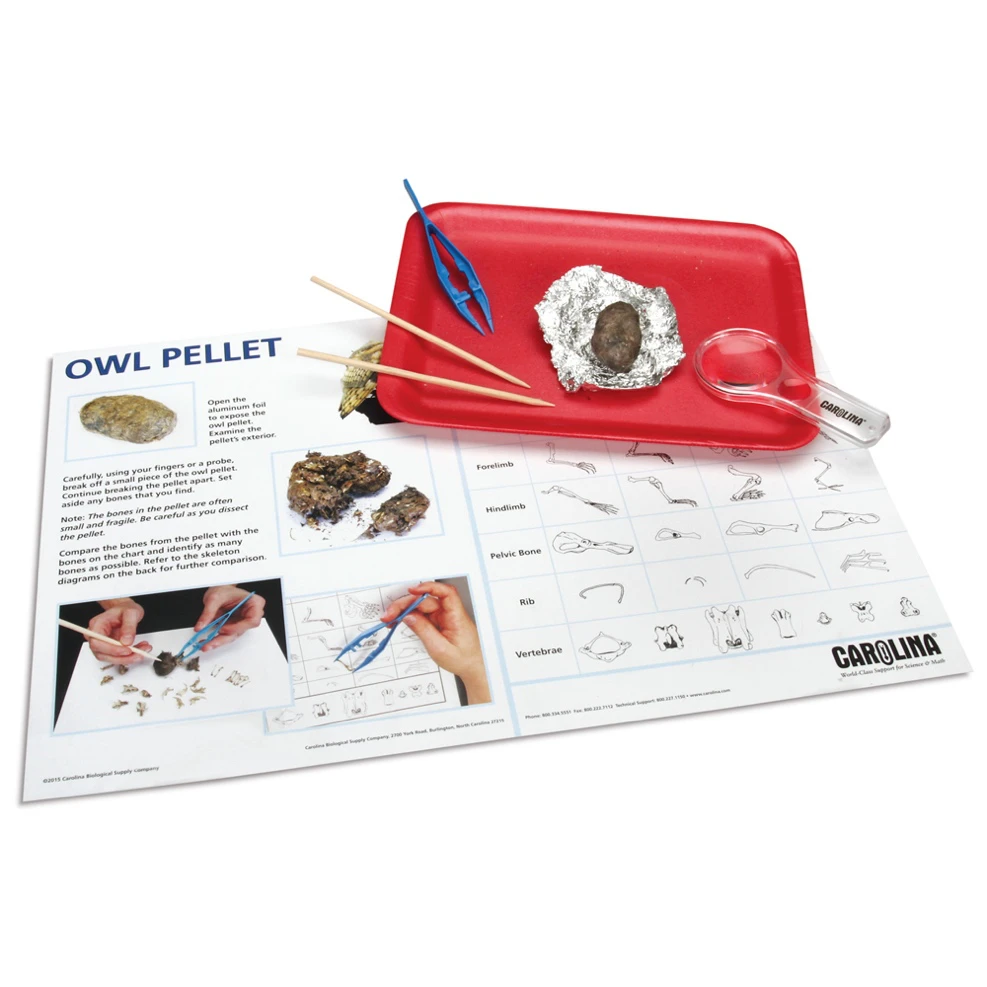
Hands-on activities are widely recognised as one of the most effective ways to engage students in science. Among these, owl pellets provide a fascinating opportunity for learners to investigate predator-prey relationships, skeletal anatomy, and ecological systems. Dissecting owl pellets allows students to observe first-hand the diet of owls, analyse prey remains, and make informed inferences about local ecosystems.
These investigations help students develop critical scientific reasoning skills, including observation, classification, and hypothesis testing. Unlike worksheets or purely digital simulations, owl pellet studies offer tactile learning experiences that leave a lasting impression. Students are able to see, touch, and organise real biological material, making abstract ecological concepts tangible and memorable.
Owl Pellet Studies in the Classroom
An owl pellet is a compact mass containing fur, bones, feathers, and sometimes insect parts, regurgitated by owls. It contains undigested parts of their prey, providing students with a unique window into the predator’s diet and local biodiversity. By dissecting these pellets, students can:
· Identify skeletal structures of prey species such as rodents and birds
· Understand predator-prey dynamics within food chains
· Compare bone morphology to infer evolutionary relationships and functional adaptations
· Record and analyse ecological data for classroom discussions or lab reports
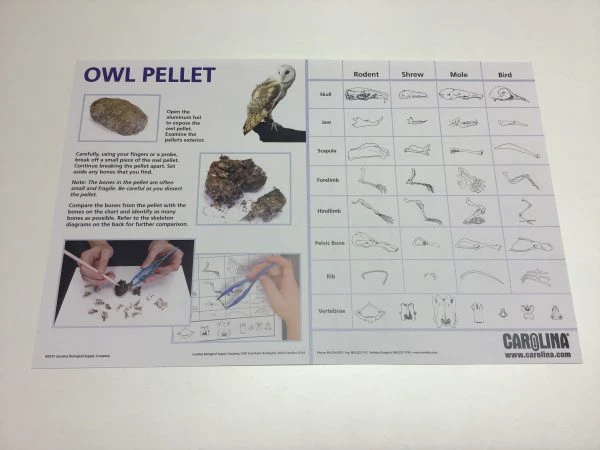
While owl pellets alone do not include a mat, Blades Biological also offers an owl pellet dissection mat as part of a comprehensive kit. This mat allows students to work in a clean, organised space while sorting and classifying bones, improving the accuracy of observations, and reducing contamination risks.
Teachers can integrate these investigations into broader biology lessons on ecology, anatomy, or conservation. For example, students may track seasonal variations in owl prey species or study how environmental changes impact food availability and predator behaviour.
Classroom Integration and Lesson Planning
Blades Biological’s owl pellets for sale can be used alongside classroom tools like magnifying glasses, dissecting trays, and microscope slide sets to create immersive learning experiences. Educators can guide students to:
· Carefully dissect and classify bones to learn anatomical structures
· Record observations systematically and draw conclusions based on evidence
· Form hypotheses about prey behaviour, owl feeding patterns, or ecosystem health
· Engage in discussions and collaborative group work to reinforce critical thinking skills
By combining hands-on experimentation with structured objectives, students gain a deeper understanding of ecological principles. This approach also encourages curiosity, problem-solving, and independent investigation. Research shows that students who engage in tactile, real-world science activities retain information better and develop stronger analytical skills.
Promoting Safety and Responsible Handling
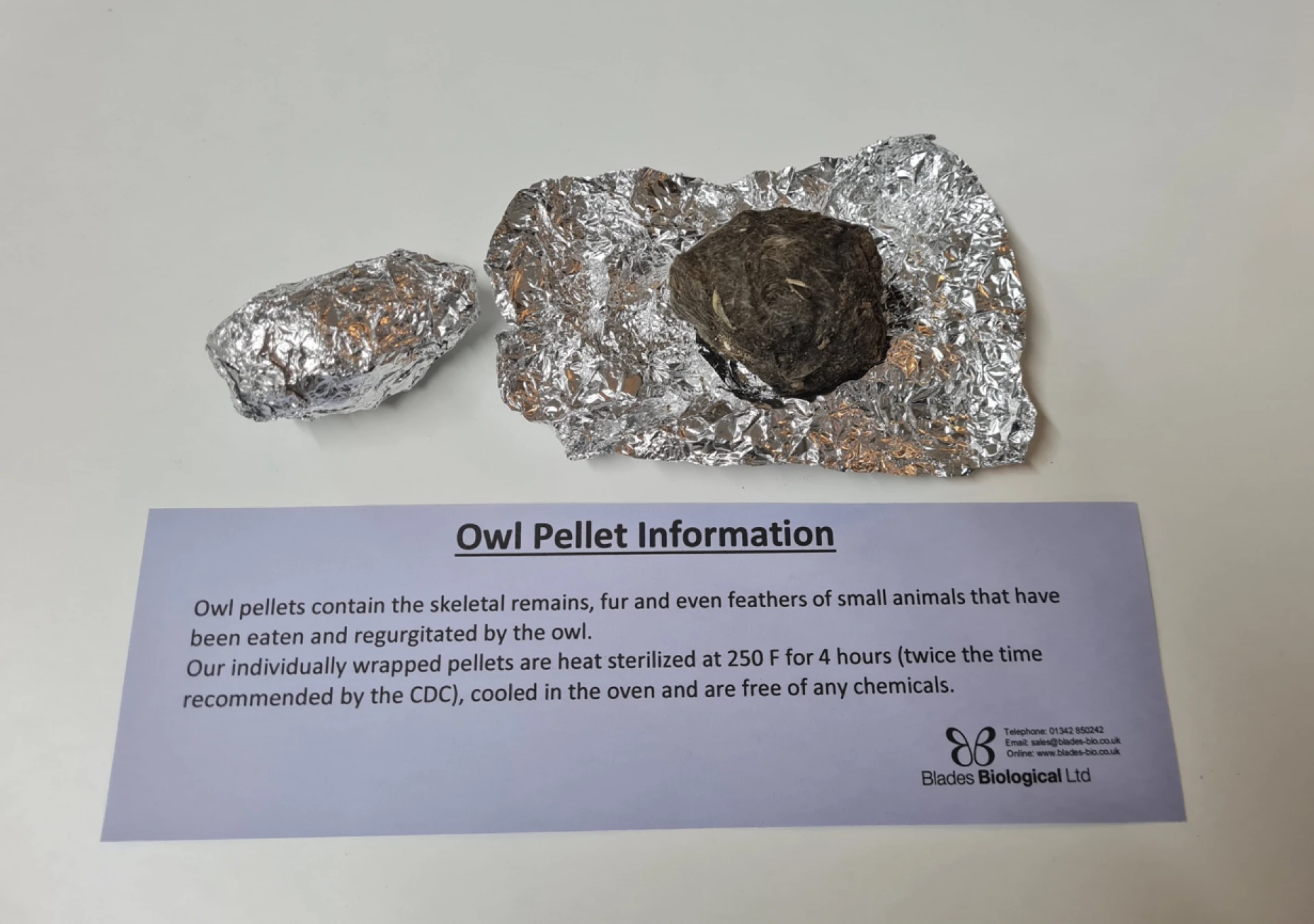
Blades Biological ensures that all owl pellets are heat-sterilised at 250° F, individually wrapped, and chemical-free. Safety and hygiene are key priorities, making these specimens suitable for learners of all ages. Kits include step-by-step instructions for safe handling, dissection, and disposal.
Students can confidently explore real specimens while teachers maintain classroom safety standards. Observing and analysing real biological material helps students develop skills that go beyond memorisation, encouraging curiosity, attention to detail, and critical thinking, essential abilities for budding scientists.
Benefits Beyond the Classroom
Owl pellet investigations help students develop multiple STEM skills simultaneously. Beyond biology, students practice mathematical skills by measuring bones, data recording, and calculating ratios of prey types. Communication skills are enhanced when learners present their findings, explain patterns, or defend conclusions.
Blades Biological also encourages pairing owl pellets with other classroom resources, such as:
· Dissection charts for identifying bones and skeletal structures
· Prepared microscope slide sets to compare the microscopic features of prey
· Preserved specimens to understand anatomy and physiology in greater depth
This multi-layered approach ensures that students not only understand biological concepts but also see how they connect to real-world ecosystems.
Empower Students with Hands-On Owl Pellet Investigations
For educators seeking engaging, hands-on biology lessons, Blades Biological offers owl pellets for sale, along with dissection mats and kits to support safe, educational investigations. Give your students the opportunity to explore food chains, skeletal anatomy, and ecological relationships in a hands-on, memorable way by visiting Blades Biological to explore the full range of owl pellet kits, charts, and supporting educational resources.