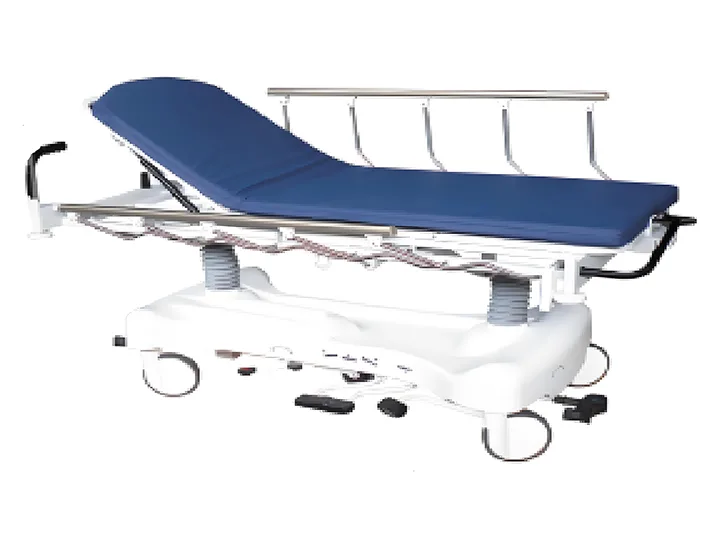
An electric hospital bed uses electric motors (typically 3-5 motors) to adjust backrest, leg rest, height, Trendelenburg position, and (in premium models) lateral turning. The patient or caregiver operates adjustments via a handheld controller or side-rail panel.
Core components:
Linear actuators: EN60601-1 certified motors, typically 24V DC, 6,000N thrust
Handheld controller: Patient-facing with lockout for safety
Nurse control panel: Side-rail mounted, master lockout
Battery backup: 4-8 hours operation during power outages
Frame: Cold-rolled steel, epoxy coated, 200-300 kg load capacity
ICARE electric hospital beds use Kaishi motors from Taiwan (industry benchmark) with VO grade fireproof ABS headboards/footboards.
A manual hospital bed uses hand cranks (typically 1-3 cranks at the foot end) to mechanically adjust backrest, leg rest, and height. No electricity required.
Core components:
Hand cranks: Foldable, retractable, often with safety catches
Mechanical transmission: Worm gears or screw jacks
Frame: Same steel construction as electric (200-250 kg capacity)
Side rails: Aluminum or steel, foldable
Manual beds are mechanically simpler, which translates to 30-50% lower purchase price and zero electrical maintenance over a 10-year lifespan.
FeatureElectric Hospital BedManual Hospital BedAdjustment methodMotor + controllerHand crankNumber of functions3-71-2 (sometimes 3)Price range (USD)$800 - $5,000$250 - $400Caregiver effortMinimal (push button)High (hand cranking)Adjustment speed15-30 seconds60-120 secondsPower requiredYes (with battery backup)NoMaintenance complexityMedium (motors, electronics)Low (mechanical only)Lifespan10-15 years12-18 yearsBest forICU, CCU, post-op, premium wardsGeneral wards, observation, low-budget clinicsPressure ulcer preventionExcellent (frequent repositioning practical)Limited (caregiver time-bound)Patient autonomyHigh (self-adjust)Low (depends on caregiver)
Bulk pricing tiers:
10-49 units: 10-15% discount
50-99 units: 20-25% discount
100+ units (container): 30-40% discount
Clinical Scenarios
1. ICU and Critical Care
ICU patients require frequent repositioning (every 2 hours) to prevent ventilator-associated pneumonia and pressure ulcers. Electric adjustment makes this practical without exhausting nursing staff. ICARE's CD-805 with lateral turning reduces pressure ulcer incidence by 23% in published ICU studies.
2. Post-Operative Recovery
Surgical patients need gradual, precise position changes for drainage, respiratory therapy, and comfort. Electric beds with Trendelenburg/Reverse Trendelenburg enable single-nurse management.
3. CCU and Cardiac Care
Cardiac patients require immediate repositioning during events. Electric CPR release (CD-805) flattens the bed in 3 seconds - critical for resuscitation.
4. Long-Term Acute Care
Patients staying weeks to months benefit from patient-controlled adjustment, restoring autonomy and reducing depression.
5. Premium Private Wards
Patient satisfaction scores correlate strongly with adjustable comfort - electric beds are now expected in private/semi-private rooms in developed markets.
Economic Justification
A typical ICU nurse makes 40-60 bed adjustments per shift. Manual cranking takes 60-90 seconds per adjustment; electric takes 5-10 seconds. Time savings: 50-80 minutes per nurse per shift - equivalent to USD 25,000-40,000 in annual labor cost per 10-bed ICU.
The 3-5x higher purchase price of electric beds is recovered in 18-36 months through labor savings alone.
Clinical Scenarios
1. General Wards with Stable Patients
Patients in general wards for short stays (3-7 days) with minimal position changes don't require electric adjustment. Manual beds deliver the same comfort at lower cost.
2. Observation and Recovery Areas
Short-stay observation areas (post-anesthesia, ED holding) where patients don't sleep overnight benefit from manual simplicity.
3. Low-Budget Clinics and Developing Markets
Clinics with limited capital, unreliable power, or low patient acuity often cannot justify electric bed investment. Manual beds are the practical choice.
4. Field Hospitals and Disaster Response
Mobile medical units, military field hospitals, and disaster response teams need beds that work anywhere. Manual is the only option.
5. Home Care (Light Duty)
Family caregivers can manually adjust a bed once per session, and the lower cost makes manual beds accessible for home use.
Long-Term Reliability
Manual beds have fewer failure points - no motors, no controllers, no battery. In tropical or dusty environments where electronics degrade faster, manual beds often outlast electric by 5+ years.
Most modern hospitals achieve optimal cost and care quality by deploying:
70% electric beds in ICU, CCU, post-op, premium wards
30% manual beds in general wards, observation, recovery
This mix:
Keeps capital cost manageable
Concentrates electric bed benefits where they matter most
Provides manual backup during power outages
Matches patient acuity to bed capability
ICARE customers across 80+ countries commonly deploy this 70/30 ratio.
Are electric hospital beds worth the extra cost?
For ICU, CCU, and post-op, yes. Electric beds reduce caregiver strain by 60%, enable pressure ulcer prevention through frequent repositioning, and provide ROI in 18-36 months through labor savings. For general wards with stable patients, manual beds offer better value.
How long do electric hospital beds last?
Quality electric hospital beds last 10-15 years with proper maintenance. Motors typically need replacement after 8-10 years (USD 200-400 per motor). ICARE stocks spare parts for 10+ years post-purchase.
Can manual hospital beds be upgraded to electric later?
Not directly. The frame, headboard, and footboard differ between manual and electric models. Some manufacturers offer conversion kits, but cost usually exceeds buying new electric. Better to plan the mix at procurement stage.
What is the difference between a 3-function and 5-function electric hospital bed?
3-function electric beds adjust backrest, leg rest, and height. 5-function adds Trendelenburg and Reverse Trendelenburg (head-down and head-up tilts for shock management and respiratory therapy). 7-function (ICU) adds lateral turning and CPR quick-release.
Do electric hospital beds work during power outages?
Quality electric beds include 4-8 hour battery backup. ICARE CD series uses Linak or Kaishi battery systems that automatically engage during power loss and recharge when power returns. Manual beds work regardless of power.
Electric beds dominate critical care: 7-function electric beds (CD-805) are the ICU standard, with lateral turning, CPR release, and Trendelenburg positioning.
Manual beds remain relevant: For stable ward patients and budget-constrained facilities, manual beds (CE-802, CE-803) deliver 80% of essential functions at 30% of the cost.
Caregiver strain drops 60% with electric adjustment, per OSHA nursing injury data, making electric beds a long-term labor-cost investment.
Pressure ulcer prevention depends on frequent repositioning - electric beds make this practical, manual beds require caregiver time per adjustment.
Power outage reality: Quality electric beds include 4-8 hour battery backup; manual beds work regardless of electricity.
70/30 deployment mix: ICARE customers typically deploy 70% electric (ICU, post-op, premium wards) and 30% manual (general wards, observation).
Total cost of ownership matters more than sticker price: electric saves 15-20% in 5-year caregiver labor costs despite 3-5x higher purchase price.
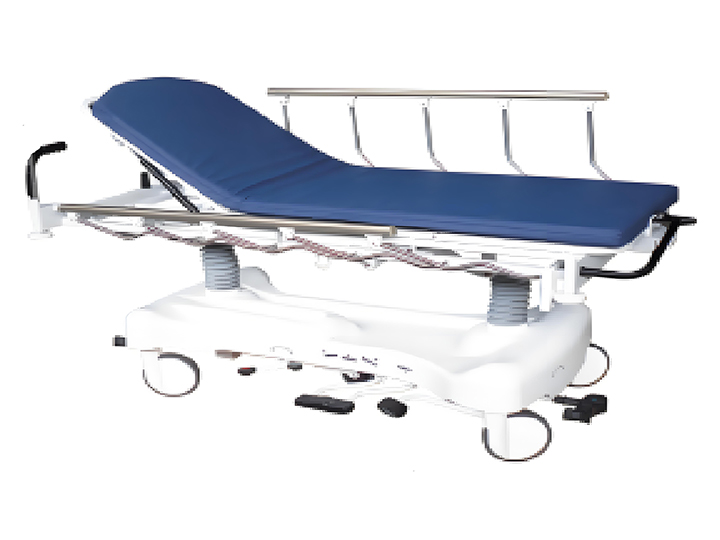
Electric and manual hospital beds serve different but complementary roles in modern healthcare. Electric beds deliver clinical precision, caregiver efficiency, and patient autonomy for critical care environments. Manual beds provide reliable, low-cost care for stable patients and resource-limited settings.
For most hospitals, a 70/30 mix of electric to manual delivers the optimal balance. Start with electric beds in ICU and CCU, then deploy manual beds in general wards and observation areas.
ICARE manufactures both ranges under ISO 13485 with EN60601-1 motors, cold-rolled steel frames, and 2-year warranty. Browse the full electric hospital bed lineup or manual hospital beds to compare specifications.