Charging Ahead: The Surge of Electric Vehicles in 2026
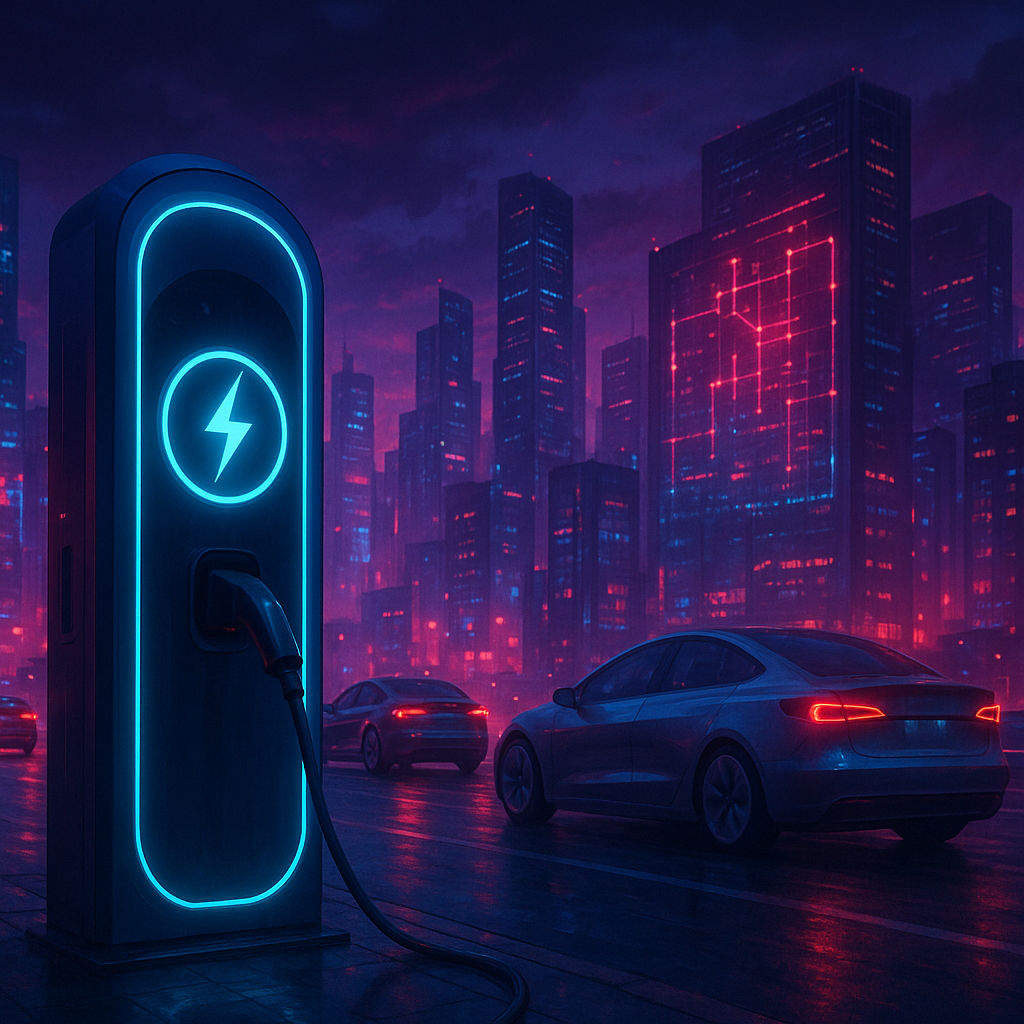
On a bustling morning in Oslo, Norway, an electric vehicle (EV) quietly pulls away from a charging station powered entirely by renewable energy. This serene scene, repeated in thousands of cities worldwide, underscores a pivotal shift in automotive history. Global electric vehicle sales crossed the 20 million mark in 2025, a remarkable milestone that reflects both consumer enthusiasm and government policy momentum, according to the International Energy Agency (IEA). Yet beneath this optimistic façade lurks a critical challenge: the electric grid. The rapid proliferation of EVs is straining power infrastructures globally, threatening to slow down the transition to sustainable transport.
The impact of EVs extends far beyond the vehicles themselves; it reverberates through energy markets, urban planning, and environmental policy. As the automotive world races toward electrification, power utilities and regulators face mounting pressure to upgrade grids, integrate renewable sources, and manage demand peaks. This article explores the intricate dynamics driving electric vehicle adoption and the looming grid challenges, drawing on the latest data and expert insights.
"The electric vehicle revolution is not just about cars; it’s about reimagining how we produce, distribute, and consume energy," says Dr. Lena Martinez, energy systems specialist at the University of California, Berkeley.
From Niche to Norm: How Electric Vehicles Reached This Inflection Point
Electric vehicles were once a niche market dominated by early adopters and environmental advocates. The journey from curiosity to mainstream began in the early 2010s when advances in lithium-ion battery technology and supportive policies converged. Tesla’s Model S debut in 2012 demonstrated that EVs could deliver performance and range competitive with traditional cars, transforming public perception.
Government incentives accelerated adoption. By 2020, more than 60 countries had introduced subsidies, tax rebates, or zero-emission mandates. China’s aggressive push, backed by the world’s largest EV subsidy program and a rapidly growing charging network, positioned it as the largest EV market by volume. Europe followed closely, with Norway leading in market penetration—over 90% of new cars sold there were electric by 2025.
Battery costs plummeted from over $1,200 per kWh in 2010 to below $90 per kWh in 2025, making EVs increasingly affordable. Meanwhile, automakers committed to electrification strategies, with General Motors, Volkswagen, and Hyundai pledging to phase out internal combustion engines by 2035. These developments laid the groundwork for the explosive growth observed today.
- Global EV stock grew from 17 million in 2023 to 25 million in 2025 (IEA).
- Battery energy density improved by 40% between 2020 and 2025 (BloombergNEF).
- Charging infrastructure expanded to over 6 million public chargers worldwide by 2025 (EV-Volumes).
"The shift to electric mobility is irreversible, driven by technology and policy alignment," notes Bjorn Larsen, CEO of Nordic EV Solutions.
Crunching the Numbers: Grid Impacts and Energy Demand
The surge in EV adoption translates to significant increases in electricity consumption. A typical electric car consumes approximately 30 kWh to travel 100 miles, meaning widespread EV usage adds substantial load to power grids. According to the U.S. Energy Information Administration (EIA), the average EV adds about 3,000 kWh per year of electricity demand, roughly equivalent to powering a modest household.
The complexity arises not only from total demand but from temporal and spatial factors. Peak charging periods, often coinciding with evening hours, can exacerbate peak grid loads already stressed by residential consumption. Utilities report that unmanaged EV charging can increase peak demand by 15-20%, necessitating costly grid reinforcements.
Renewable energy integration further complicates matters. Solar generation peaks midday, while EV charging peaks post-sunset. Without smart charging strategies or vehicle-to-grid (V2G) technologies, this mismatch leads to inefficiencies and increased reliance on fossil fuel peaker plants. The grid must evolve to balance this dynamic load.
- Projected global electricity demand from EVs is expected to reach 1,200 TWh by 2030, up from 300 TWh in 2025 (IEA).
- Unmanaged charging could lead to 10-15% higher grid operating costs by 2030 (EPRI report).
- Smart charging and V2G can reduce peak load impacts by up to 30% (National Renewable Energy Laboratory).
The strain on distribution networks is especially acute in urban areas where EV density is highest. Transformers, substations, and local lines require upgrades to handle new load profiles. Utilities in California and Germany have reported localized outages linked to EV charging surges, highlighting the urgency of infrastructure modernization.
2026 Developments: Innovations and Policy Responses
This year has seen rapid advancements addressing the grid challenge alongside EV growth. Governments and private sector actors have accelerated investments in smart grid technologies, energy storage, and flexible demand management.
In the EU, the European Commission unveiled its Smart Charging Initiative 2.0, aiming to mandate interoperability standards and incentivize time-of-use tariffs. This policy encourages consumers to charge during off-peak hours and enables utilities to control charging loads dynamically. Meanwhile, the U.S. Department of Energy approved $1.2 billion in grants for grid modernization projects focused on EV integration.
Battery technology continues to evolve. Solid-state batteries, now commercially available in limited models, promise faster charging and higher energy densities, potentially reducing charging times and smoothing demand spikes. Vehicle-to-grid systems are gaining traction, with pilot programs showing that aggregated EV fleets can provide grid services such as frequency regulation and peak shaving.
Charging infrastructure is expanding beyond urban centers. Fast-charging corridors now span continents, with over 12,000 ultra-fast chargers operational in North America and Europe combined. Companies like ChargePoint and EVgo report 50% annual growth in network usage, reflecting both rising EV sales and longer-distance travel.
Despite progress, challenges remain. Supply chain disruptions for critical battery materials—lithium, cobalt, nickel—have moderated production growth. Environmental concerns over mining practices prompt calls for recycling and alternative chemistries. Additionally, equitable access to charging stations in underserved communities is a policy priority as highlighted in recent White House reports.
Industry Insights: Navigating the Transition
Industry leaders emphasize collaboration as key to overcoming grid constraints. Automakers, utilities, policymakers, and technology firms are forging partnerships to create integrated ecosystems. For instance, Volkswagen’s "Electrify America" initiative works closely with grid operators to implement smart charging and V2G pilots in multiple U.S. cities.
"The future of mobility hinges on intelligent energy management, not just vehicle innovation," says Elena Kim, CTO at VoltGrid Technologies.
Utilities are transforming from passive energy suppliers into active grid managers. Companies like Enel and Duke Energy have launched EV-specific tariffs and demand response programs, rewarding customers who shift charging to off-peak periods. These programs have achieved participation rates exceeding 40%, demonstrating consumer willingness to adapt.
Financial markets are also factoring grid readiness into valuations. Analysts note that companies investing in grid modernization and EV infrastructure command premiums, reflecting growing investor confidence in sustainable growth pathways. Conversely, regions lagging in grid upgrades risk losing competitiveness as EV adoption accelerates.
Consumer behavior studies reveal increasing interest in home solar paired with EV ownership, creating localized energy ecosystems. However, lack of awareness about grid impacts and charging options remains a barrier. Educational efforts are underway, as documented in our recent article Are Consumers Considering Electric Vehicles? A Deep Dive into the 2026 Landscape.
Looking Forward: What to Watch in the EV-Grid Nexus
The electric vehicle revolution is far from over, but its sustainability depends on solving the grid puzzle. Future developments to monitor include:
- Expansion of smart charging: Regulatory mandates and technology improvements should increase adoption, smoothing demand and lowering costs.
- Battery innovation: Breakthroughs in solid-state and alternative chemistries will shape charging behavior and infrastructure needs.
- Vehicle-to-grid scaling: Emerging business models may monetize EVs as distributed energy resources, providing revenue streams for owners and grid stability.
- Grid infrastructure investments: Public-private funding will be critical to upgrading transformers, lines, and substations to handle new load patterns.
- Equity and access: Ensuring that underserved communities benefit from EV transition through accessible charging and incentives.
"EV adoption is accelerating, but the grid must be reimagined to support this new era of mobility," warns Dr. Martinez.
Consumers and businesses alike should stay informed about charging options, incentives, and technology trends. Policymakers must balance growth objectives with infrastructure readiness to avoid bottlenecks. As detailed in our comprehensive coverage Electric Vehicles Are Booming — But the Grid Isn't Ready, the coming years will be decisive for the electrification trajectory.
The transition to electric vehicles offers unparalleled environmental and economic opportunities. However, it demands coordinated action across sectors and scales. The road ahead is electric — but only if the grid keeps pace.