
Reimagining Education: A June 2026 Snapshot
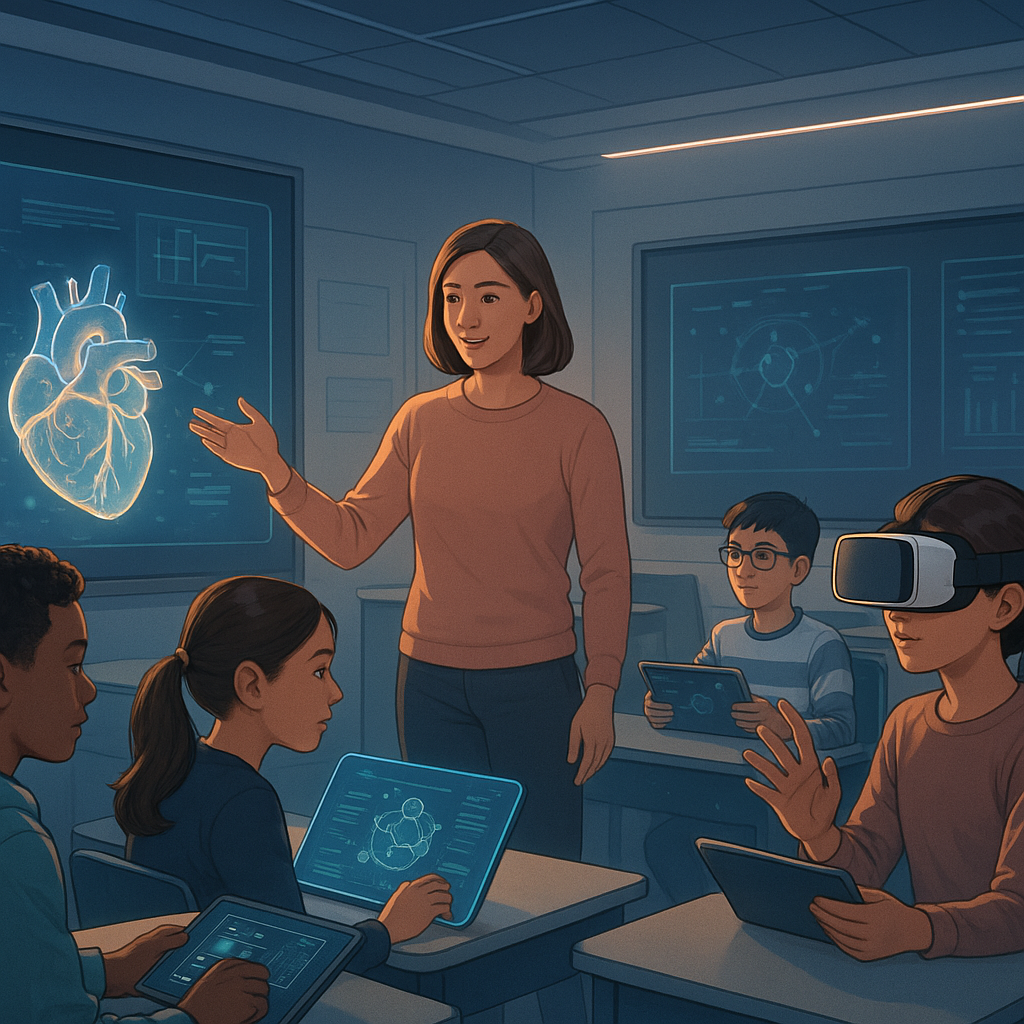
On a cool morning in June 2026, classrooms across the globe pulse with a new energy—one infused by the latest wave of educational technology. Far from the static, lecture-driven formats of decades past, contemporary learning environments are dynamic hubs, blending artificial intelligence, immersive simulations, and personalized content to meet students where they are. In Silicon Valley, a pilot program at Redwood High School utilizes AI-driven tutors that adapt in real time to student responses, offering tailored feedback that some educators claim resembles the attention of a one-on-one mentor. Meanwhile, in Nairobi, low-cost VR headsets enable students to explore ancient civilizations and molecular biology in vivid detail, democratizing access to experiences once limited to elite institutions.
This scene encapsulates a broader transformation. According to data from the Global EdTech Consortium, the global edtech market reached an estimated $450 billion by mid-2026, growing at over 12% annually since 2023. This surge reflects not just technological advances but also shifting pedagogical paradigms and policy endorsements worldwide. As education systems struggle to keep pace with rapid societal changes, edtech has emerged as a critical lever to enhance engagement, equity, and outcomes.
"The combination of AI personalization and immersive technologies has moved us from standardized education to truly individualized learning journeys," says Dr. Leila Jamal, a leading cognitive scientist at the International Education Institute.
From Roots to Revolution: The Path Leading Here
To appreciate the current state of edtech, it is essential to trace how the sector evolved over the past decade. The early 2020s were marked by an acceleration of digital adoption triggered by the COVID-19 pandemic. Overnight, schools and universities pivoted to remote learning, exposing significant gaps in infrastructure and digital literacy but also igniting innovation. Platforms like Zoom and Google Classroom became household names, while foundational investments in cloud computing and broadband expansion laid groundwork for more ambitious applications.
By 2024, the focus shifted towards integrating AI and data analytics to transcend mere content delivery. Adaptive learning systems emerged, capable of analyzing millions of data points to customize curricula and predict learner needs. Concurrently, augmented reality (AR) and virtual reality (VR) technologies matured, making immersive learning experiences affordable and scalable.
Policy frameworks worldwide began to acknowledge edtech’s potential. The UNESCO Global Education Monitoring Report 2025 emphasized technology’s role in advancing the United Nations Sustainable Development Goals, particularly quality education for all. Several governments increased funding for digital literacy programs and incentivized public-private partnerships. Meanwhile, ethical concerns about data privacy and algorithmic biases spurred the creation of international standards, balancing innovation with protection.
These developments set the stage for the breakthroughs witnessed in 2026, where edtech is no longer an adjunct but an integral, sophisticated component of education ecosystems.
Core Innovations Driving 2026’s EdTech Landscape
The heart of June 2026’s edtech revolution beats strongest in three intertwined innovation domains: artificial intelligence, immersive technologies, and blockchain certification systems.
Artificial Intelligence and Personalization
AI algorithms now power real-time adaptation in educational content, assessment, and feedback. Platforms utilize natural language processing to understand student queries and misconceptions, enabling instant scaffolding. A 2026 report from EdTech Analytics reveals that AI-driven tutoring platforms have boosted student performance by an average of 18% in STEM subjects globally, with gains especially pronounced in underserved regions.
Moreover, AI supports educators by automating administrative tasks, freeing them to focus on mentoring. Predictive analytics help identify at-risk students early, allowing timely intervention.
Immersive Learning Environments
VR and AR have transcended novelty status, becoming core tools in curricula. From virtual chemistry labs allowing safe experimentation to historical reenactments where students embody key figures, immersion fosters deeper engagement and retention. The International VR in Education Survey 2026 records a 35% increase in VR adoption in public schools compared to 2024.
Importantly, immersive tech also addresses accessibility. Haptic feedback gloves and voice recognition accommodate learners with disabilities, expanding inclusion.
Blockchain and Credentialing
Blockchain technology streamlines the verification and portability of academic credentials. Decentralized digital diplomas, transcripts, and badges reduce fraud and facilitate lifelong learning pathways. Employers increasingly trust these immutable records, as confirmed by the World Economic Forum’s 2026 report on Future of Work and Learning.
"Blockchain credentials have revolutionized trust in educational achievements, enabling seamless transitions across institutions and careers," notes Maria Chen, CTO of EduChain Solutions.
June 2026 Milestones and Emerging Trends
The first half of 2026 has been eventful for edtech advancements, with several notable milestones:
- Launch of AI-Powered Collaborative Platforms: New software integrates AI moderators facilitating group work and peer learning in virtual classrooms, improving interaction quality.
- Expansion of 5G Networks: Enhanced connectivity has enabled smooth streaming of high-fidelity immersive lessons even in rural and remote areas, narrowing digital divides.
- Rise of Micro-Credential Ecosystems: Platforms offering stackable certificates aligned with industry needs have gained traction, supporting agile workforce development.
- Focus on Data Ethics: Global coalitions have introduced transparent AI audit frameworks to address bias and privacy concerns, building user trust.
- Growth in Teacher Training Programs: Specialized courses prepare educators to harness new technologies effectively, emphasizing pedagogy over tool novelty.
Further, the integration of cross-disciplinary content—combining coding, social-emotional learning, and sustainability themes—reflects a holistic approach to preparing students for complex futures. Governments and institutions increasingly recognize edtech as a strategic priority; for example, the European Union’s 2026 Digital Education Action Plan allocates €2 billion to innovation hubs.
These developments align with broader shifts highlighted in our recent coverage, such as how edtech is redefining learning beyond traditional classrooms and how AI and data strategies are transforming the sector (How EdTech Is Redefining Learning Beyond the Classroom Walls, Harnessing AI and Data: Advanced Strategies Transforming EdTech Today).
Voices from the Field: Expert Perspectives and Industry Impact
Industry leaders and educational experts weigh in on the transformative impact of edtech in 2026. Dr. Sophia Martinez, Chief Innovation Officer at GlobalEdTech Ventures, emphasizes that technology is amplifying human-centric learning rather than replacing educators.
"EdTech is a powerful amplifier for teachers, enabling personalized support at scale. The human connection remains irreplaceable," Martinez explains.
Meanwhile, policy analysts observe that equitable access remains a critical challenge. Despite gains, disparities persist, especially in low-income countries where infrastructure and investment lag. Nonprofit initiatives such as Learning Without Borders are partnering with governments to bridge these gaps through community-driven models.
From a market perspective, venture capital flowing into edtech startups has surpassed $15 billion in the first half of 2026, signaling strong confidence. Companies focusing on AI tutoring, immersive content, and credentialing platforms lead investment rounds. The competitive landscape is also marked by strategic alliances between tech giants and education providers, aiming to scale innovations globally.
Educators globally report improved student motivation and outcomes, but also stress the need for ongoing professional development and ethical oversight. As one veteran teacher in Tokyo remarks, "Technology opens doors, but we must ensure it also opens minds, fostering critical thinking and empathy."
Looking Ahead: What to Watch in EdTech’s Next Chapter
As June 2026 closes, several trends promise to shape edtech’s trajectory:
- AI Advances in Emotional and Social Learning: Next-generation AI systems are being developed to recognize and respond to students’ emotional states, supporting social-emotional skills.
- Hybrid Physical-Virtual Campuses: Institutions are experimenting with blended models offering seamless transitions between in-person and virtual experiences.
- Global Standardization of Digital Credentials: Efforts to harmonize credential frameworks across borders will facilitate international mobility for learners and workers.
- Greater Focus on Sustainability Education: Edtech tools will increasingly incorporate environmental literacy, reflecting growing societal urgency.
- Expansion of AI Ethics in Curriculum: Teaching students about AI’s ethical dimensions is becoming integral, preparing future citizens for complex digital landscapes.
Stakeholders must remain vigilant to potential risks, including data breaches and overreliance on automated systems. Balancing innovation with inclusivity and quality will be paramount. For those tracking education and technology trends, continuous engagement with evolving research and policy debates is essential.
Further exploration of these future directions can be found in our comprehensive analyses on related sectors such as green technologies and their societal impacts (June 2026: Green Tech's Transformative Momentum and What It Means for Our Planet).
"The future of education lies in a harmonious blend of human insight and technological precision," predicts Dr. Jamal.
In sum, June 2026 stands as a pivotal moment where edtech innovations are reshaping how knowledge is acquired, validated, and applied worldwide. The ongoing challenge will be to harness these tools thoughtfully to create equitable and meaningful learning experiences for all.