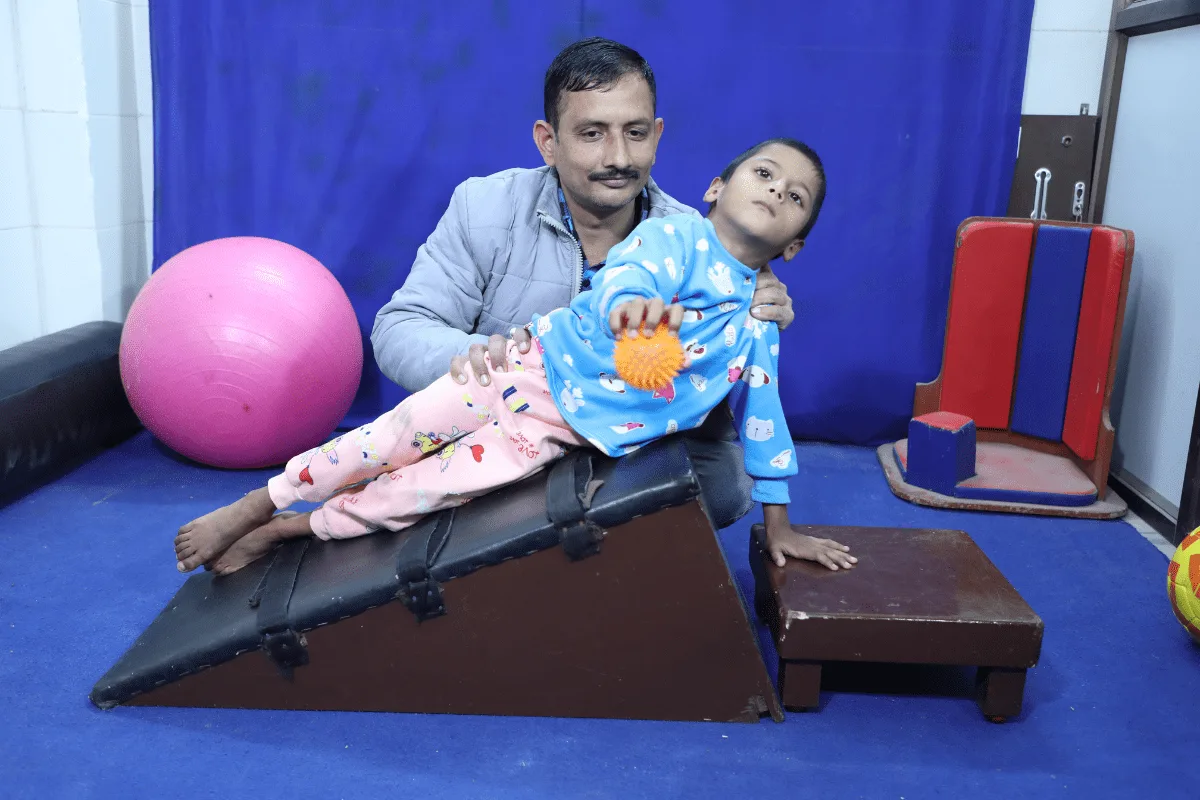
Exercises for cerebral palsy are essential for improving flexibility, reducing muscle stiffness, and enhancing overall mobility. Individuals with cerebral palsy often experience tight muscles and a limited range of motion due to spasticity.
Incorporating simple stretching exercises into a daily routine can help manage these challenges and support better movement and independence.
1. Hamstring Stretch
Tight hamstrings are common in people with cerebral palsy and can affect posture and walking ability. To perform this stretch, sit on the floor with one leg extended and the other bent inward.
Gently reach toward the toes of the extended leg while keeping your back straight. Hold the stretch for 15–20 seconds and repeat on the other side. This helps improve flexibility in the back of the legs and supports better mobility.
2. Calf Stretch
Calf muscles can become tight and make walking difficult. A simple wall stretch can help loosen these muscles. Stand facing a wall, place your hands on it, and step one foot back while keeping it flat on the ground. Bend the front knee slightly and hold the position for 20 seconds. This stretch helps improve ankle flexibility and balance.
3. Hip Flexor Stretch
Tight hip flexors can restrict movement and affect posture. Kneel on one knee with the other foot placed in front, forming a 90-degree angle. Gently push your hips forward while keeping your upper body upright. Hold for 15–20 seconds and switch sides. This stretch helps improve hip mobility and alignment.
4. Arm and Shoulder Stretch
Although cerebral palsy often affects the lower body, upper body stiffness can also occur. Stretch one arm across your chest and use the other arm to gently pull it closer. Hold for 15–15 seconds and switch arms. This exercise improves shoulder flexibility and reduces tension.
5. Ankle Rotation
Ankle stiffness can impact walking and balance. Sit comfortably and slowly rotate your ankle in circular motions—10 times clockwise and 10 times counterclockwise. Repeat with the other foot. This helps maintain joint flexibility and reduces stiffness.
Conclusion
Regular stretching is a simple yet effective way to manage the physical challenges of Cerebral Palsy in older age. These easy exercises can improve flexibility, reduce discomfort, and enhance daily movement. For best results, stretching should be done consistently and, if possible, under the guidance of a therapist to ensure safety and proper technique.
Incorporating stretching into a daily routine may also help improve posture, support joint mobility, and reduce muscle stiffness that can develop over time. Gentle movements focused on the legs, arms, back, and neck can make everyday activities such as walking, sitting, or reaching more comfortable. With patience and regular practice, stretching can contribute to better physical well-being, increased independence, and an overall improved quality of life.